
Shoppers make purchasing decisions in about three seconds at the shelf. In that blink, your packaging must communicate brand identity, product value, and emotional appeal while standing out against dozens of competitors. Designers influence packaging concept creation at every stage, from initial briefing through iterative testing, ensuring your packaging doesn't just look good but performs strategically in real retail environments.
Table of Contents
- Why Designers Are Essential In CPG Packaging Concept Creation
- Market Research And Human-Centered Design In Concept Creation
- Balancing Aesthetics, Functionality, And Sustainability In Packaging Design
- Iterative Concept Testing: Reducing Risks And Maximizing Impact
- Discover Expert Packaging Design Services
- Frequently Asked Questions About Designers In Packaging Concept Creation
Key takeaways
| Point | Details | |-------|---------|| | Designers drive concept development | They lead briefing, research, brainstorming, and iterative testing to create effective packaging. | | Brand communication is critical | Packaging must convey personality and differentiate products in crowded markets. | | Testing reduces launch risks | User testing and iterative prototyping can boost product acceptance by 20 to 30 percent. | | Sustainability matters strategically | Designers influence materials and structures to reduce environmental impact while maintaining brand appeal. | | Research guides smart decisions | Market analysis and consumer insights inform design choices that align with target preferences. |
Why designers are essential in CPG packaging concept creation
Designers play crucial roles in CPG packaging, influencing concept creation through briefing, research, brainstorming, and refinement. Their involvement extends far beyond creating attractive visuals. They balance brand messaging, consumer attraction, and practical considerations like product protection and shelf stability.
Packaging serves multiple functions simultaneously. It protects your product during shipping and storage. It communicates brand values and product benefits in seconds. It differentiates your offering from competitors occupying the same retail space. Designers navigate these competing demands to create concepts that work across all dimensions.
The design process begins with thorough market research and competitor analysis. Designers study category conventions, identify visual gaps, and spot opportunities for differentiation. They examine successful packaging in adjacent categories and analyze trends that resonate with your target consumers. This research foundation ensures concepts are grounded in market reality, not just creative inspiration.
Designers contribute to structural decisions, material selection, and sustainability considerations. These choices impact your product's lifecycle and environmental footprint. A packaging concept might look stunning but fail if the structure doesn't protect contents or if materials conflict with brand sustainability claims.
Key stages where designers shape packaging concepts:
- Initial briefing and strategic alignment
- Consumer and market research synthesis
- Concept ideation and visual exploration
- Iterative prototyping and refinement
- User testing and validation
- Final optimization before production
Pro Tip: Invest time in creating a comprehensive design brief before concept work begins. A clear brief that defines target consumers, brand positioning, functional requirements, and budget constraints aligns the entire team and prevents costly revisions later.
Market research and human-centered design in concept creation
Effective packaging design requires understanding target audiences, competitors, and industry trends. Designers use market research to identify consumer needs and competitive gaps that inform concept direction. This research reveals what visual languages resonate with your target demographic and which category conventions you can break for differentiation.
Designers utilize human-centered design methodology, employing iterative prototyping and user testing to refine packaging concepts. This approach ensures alignment with consumer preferences and brand identity. Early user testing with target groups catches design flaws before significant resources are invested in production.
Iterative prototyping increases design effectiveness substantially. Studies show this approach can boost product acceptance by 20 to 30 percent compared to single-round design processes. Each testing cycle provides insights that sharpen the concept, improving both aesthetic appeal and functional performance.
Concept testing involves screening multiple design directions with verified consumers. Designers present positioning variants to understand which visual approaches communicate intended brand messages most effectively. Testing occurs in contexts that mirror actual purchase environments, not just isolated image reviews.
Realistic retail context testing is essential. How your packaging performs on a crowded shelf differs dramatically from how it appears in a clean mockup. Designers simulate competitive retail environments to optimize visibility, readability, and shelf impact.
Steps for effective concept testing:
- Define clear testing objectives tied to strategic goals
- Recruit verified category purchasers who match target demographics
- Present concepts in realistic competitive contexts
- Gather both quantitative ratings and qualitative feedback
- Analyze patterns across consumer segments
- Iterate concepts based on validated insights
- Test refined concepts to confirm improvements
Iterative user testing is critical to prevent designs that fail to resonate with target consumers, saving brands from costly production runs of ineffective packaging.
Designers increasingly leverage AI-moderated interviews for deeper consumer insights. These tools allow larger sample sizes and faster turnaround while capturing nuanced feedback about design elements. The combination of quantitative concept scores and qualitative reasoning provides a complete picture of concept performance.
Balancing aesthetics, functionality, and sustainability in packaging design
Packaging design involves constant trade-offs between attractiveness, product protection, and environmental responsibility. Designers are instrumental in material selection, structural design, and sustainability considerations that impact the product's lifecycle. These decisions shape both immediate shelf performance and long-term brand reputation.
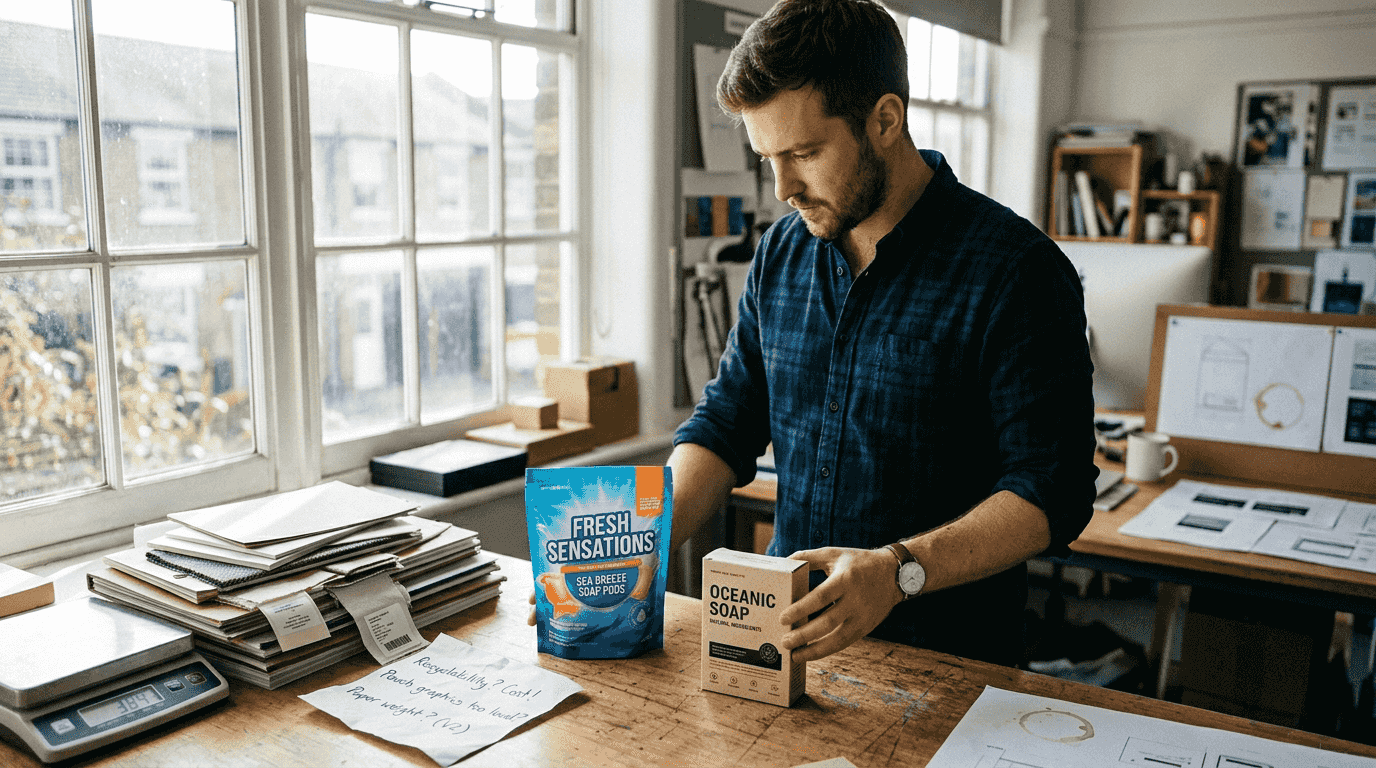
Sustainable packaging can reduce carbon emissions by up to 40 percent and waste by 30 percent compared to conventional approaches. Designers select materials and structures to minimize environmental impact while maintaining brand appeal and functional performance. This requires deep knowledge of material properties, manufacturing processes, and end-of-life considerations.
There is ongoing debate in the industry regarding the balance between aesthetics and functionality. Some argue visual impact should dominate to drive purchase. Others prioritize protective functionality and sustainability. The best designers integrate all three dimensions rather than treating them as competing priorities.
Designers must consider how packaging communicates in different contexts. A minimalist sustainable design might signal premium quality to some consumers while appearing cheap to others. Cultural factors, category expectations, and brand positioning all influence how design choices are perceived.
| Factor | Primary Impact | Key Trade-offs | Designer Considerations |
|---|---|---|---|
| Aesthetics | Shelf visibility and brand appeal | May require materials or structures that complicate sustainability | Balance visual impact with environmental goals |
| Functionality | Product protection and user experience | Can limit design creativity or increase material use | Ensure structure meets practical needs without over-engineering |
| Sustainability | Environmental footprint and brand values | May constrain material choices or increase costs | Select eco-friendly options that maintain performance and appeal |
Structural innovation often provides solutions that satisfy multiple requirements. A designer might develop a package shape that uses less material while creating distinctive shelf presence. Or they might specify a mono-material construction that simplifies recycling without sacrificing protection.
Material selection goes beyond choosing paper versus plastic. Designers evaluate barrier properties, printability, tactile qualities, and recyclability. They consider how materials age, how graphics reproduce on different substrates, and how structures perform across temperature and humidity ranges.
Pro Tip: Align packaging sustainability efforts with core brand values to ensure authenticity. Consumers quickly spot greenwashing when packaging claims don't match broader brand practices, so make environmental choices that reflect genuine commitment.
Iterative concept testing: reducing risks and maximizing impact
Concept testing is not a single event. Iterative testing is crucial for validating packaging concepts and catching issues early. Designers lead testing in multiple stages to build confidence before committing to production. This phased approach reduces late-stage rework and accelerates time to market.
Testing occurs across three primary stages: ideation, positioning, and optimization. Each stage serves specific validation purposes with increasing consumer sample sizes. Early ideation testing screens numerous concepts quickly with smaller groups. Later optimization testing validates refined concepts with larger, more representative samples.

Screen 10 to 20 concepts with 30 to 50 verified category purchasers per concept in the ideation stage. This initial screening identifies which design directions show promise and which fail to resonate. Designers learn what visual elements, messages, and structures connect with target consumers.
Positioning stage testing validates how concepts communicate intended brand attributes. Do consumers perceive your packaging as premium or value? Natural or scientific? Traditional or innovative? Designers test positioning variants to ensure packaging sends the right signals.
Optimization stage testing refines details with the largest consumer samples. This phase validates final design elements like color palettes, typography, imagery, and information hierarchy. Minor adjustments at this stage can significantly impact purchase intent.
| Testing Stage | Consumer Sample Size | Primary Activities | Key Outcomes |
|---|---|---|---|
| Ideation | 30 to 50 per concept | Screen 10 to 20 concepts for appeal and differentiation | Identify 2 to 3 strongest directions |
| Positioning | 100 to 150 per concept | Test 2 to 3 concepts for brand alignment and messaging | Validate positioning and refine details |
| Optimization | 200 to 300 | Test final concept with detail variations | Confirm purchase intent and optimize elements |
Practical steps for implementing iterative concept testing:
- Define success metrics before testing begins to maintain objectivity
- Recruit consumers who match target demographics and purchase behaviors
- Test concepts against competitive products to understand relative performance
- Use both closed-ended ratings and open-ended feedback for complete insights
- Analyze results across demographic segments to identify patterns
- Make data-driven refinements between testing rounds
- Document learnings to inform future packaging projects
Designers increasingly use AI-moderated interviews to gather deeper qualitative insights during concept testing. These tools enable probing follow-up questions at scale, revealing why consumers respond to specific design elements. The combination of traditional quantitative metrics and AI-enhanced qualitative feedback provides comprehensive validation.
Iterative testing compresses development timelines by catching problems early when changes are inexpensive. A concept that tests poorly in ideation can be abandoned or radically reworked before significant production investment. This fail-fast approach reduces risk and builds confidence in final concepts.
Discover expert packaging design services
Navigating the complex packaging concept creation process requires experienced designers who understand briefing, research, testing, and iterative refinement. Expert packaging design services provide access to professionals who have already created concepts for diverse brands and categories. These designers bring proven methodologies and fresh perspectives to your packaging challenges.
Partnering with specialists who understand the full concept development cycle helps you avoid common pitfalls. They know how to balance aesthetics with functionality and sustainability. They conduct market research efficiently and structure user testing for actionable insights. Most importantly, they translate your brand strategy into packaging concepts that perform on crowded retail shelves.
Pro Tip: Early collaboration with experienced designers saves time and resources by preventing costly revisions. Involve design expertise from the briefing stage rather than after strategic decisions are locked, allowing designers to contribute insights that shape direction from the start.
Frequently asked questions about designers in packaging concept creation
What stages of packaging concept creation do designers influence?
Designers influence packaging from initial briefing through final optimization. They lead research synthesis, concept ideation, iterative prototyping, user testing, and detail refinement. Their involvement spans strategic planning, creative exploration, and validation phases, ensuring concepts are both visually compelling and strategically sound.
How does user testing help improve packaging concepts?
User testing with target consumers catches design flaws early when changes are inexpensive. It validates that packaging communicates intended brand messages and stands out against competitors. Iterative testing can boost product acceptance by 20 to 30 percent by identifying and fixing issues before production.
Why is sustainability important in packaging design?
Sustainable packaging reduces environmental impact while aligning with consumer values and brand commitments. It can cut carbon emissions by up to 40 percent and waste by 30 percent. Designers balance sustainability with aesthetics and functionality to create responsible packaging that maintains shelf performance.
How many consumer samples are needed for reliable concept testing?
Sample sizes increase with testing stage maturity. Ideation requires 30 to 50 consumers per concept to screen multiple directions. Positioning needs 100 to 150 to validate brand alignment. Optimization uses 200 to 300 to confirm final details and purchase intent with statistical confidence.
What should a design brief include to ensure success?
A comprehensive brief defines target consumers, brand positioning, functional requirements, budget constraints, and success metrics. It includes competitive context, category insights, and material or sustainability requirements. Clear briefs align teams early and prevent costly revisions by establishing shared expectations before concept work begins.