
Miscommunication between CPG founders and freelance designers often leads to wasted budgets, missed deadlines, and creative work that misses the mark. The culprit? Unclear, unfocused design briefs that leave designers guessing at objectives and brand goals. This guide walks you through creating a clear, actionable design brief that aligns expectations, inspires creativity, and drives impactful packaging design outcomes.
Table of Contents
- Understanding The Importance Of A Clear Design Brief
- Preparing To Brief Designers: Gathering What You Need
- How To Structure And Write Your Design Brief
- Common Pitfalls And Troubleshooting When Briefing Designers
- Verifying And Iterating Your Design Brief For Optimal Results
- Streamline Your Design Projects With Offcut's Expert Platform
- FAQ
Key takeaways
| Point | Details |
|---|---|
| One-page focus | A concise brief keeps designers aligned on objectives without overwhelming them with unnecessary detail. |
| Strategic insight | Providing context about business problems and desired outcomes leads to more innovative design solutions. |
| Collaborative development | Involving team members in brief creation significantly improves quality and alignment. |
| Clear communication | Well-structured briefs prevent budget waste, missed deadlines, and misaligned creative work. |
Understanding the importance of a clear design brief
Your design brief is the foundation of any successful CPG packaging project. It guides freelance designers to understand your objectives, target audience, and brand personality while preventing costly misalignment. Research shows that creative quality drives nearly half of advertising-driven sales lift for CPG brands.
Without a solid brief, designers are left guessing at what you want. This guesswork leads to revisions, frustration, and creative work that fails to connect with your audience. A well-crafted creative brief is the most vital tool for brand directors in the CPG and beverage space.
Think of your brief as a strategic foundation rather than a prescriptive instruction manual. It should:
- Define the business problem your packaging needs to solve
- Clarify who you're speaking to and what message resonates
- Establish brand guardrails without stifling creative exploration
- Provide enough context for designers to propose innovative solutions
"The brief isn't about telling creatives what to make. It's about giving them the strategic insight they need to solve your business problems."
Investing time upfront in a focused, clear brief saves you from expensive revisions later. It ensures your freelance designer starts with the right direction, maximizing your creative budget and timeline.
Preparing to brief designers: gathering what you need
Before you write a single word of your brief, collect the materials and clarity you need. The design brief is a crucial starting point serving as a guide to understand needs and define objectives.

Start by identifying your project goals. Are you launching a new product, refreshing existing packaging, or entering a new market segment? Each scenario requires different strategic emphasis. Then define your target audience with specificity: demographics, psychographics, shopping behaviors, and pain points.
Gather these essential materials:
- Existing brand guidelines, logos, and approved color palettes
- Competitive product packaging for reference and differentiation
- Market research or consumer insights relevant to the project
- Previous packaging designs and performance data if available
- Messaging frameworks or brand voice documentation
| Material Type | Purpose | Example |
|---|---|---|
| Brand assets | Ensure visual consistency | Logo files, style guide, approved fonts |
| Market context | Guide positioning strategy | Competitor shelf photos, category trends |
| Research data | Support audience understanding | Consumer surveys, focus group findings |
| Performance metrics | Inform design decisions | Sales data from previous packaging |
Define project scope clearly. What specific deliverables do you need? Print-ready packaging files, digital mockups, or both? What's your timeline and budget? Being transparent about constraints helps designers propose realistic solutions.
Pro Tip: Create a simple one-page summary of your brand positioning before writing the brief. This clarity will make every other section easier to write and more focused.
Don't overwhelm your brief with every piece of information you have. Strategic insights matter more than exhaustive detail. Choose the facts and context that will genuinely help your designer understand the challenge and inspire creative solutions.
How to structure and write your design brief
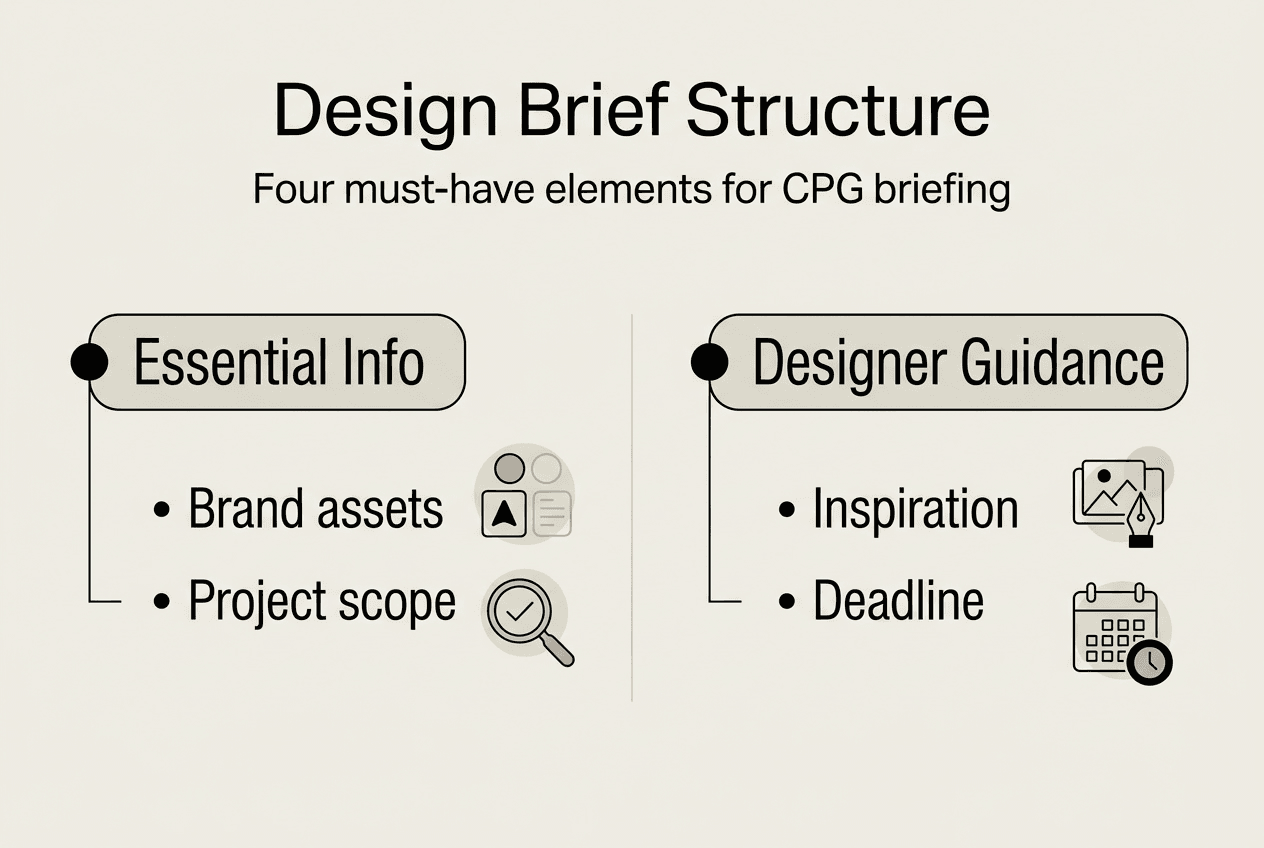
Now that you've gathered your materials, it's time to craft your brief. A strong creative brief should fit on a single page and include only what the creative team truly needs.
Follow this structure:
-
Project background and objectives – Explain in two to three sentences why this project exists and what success looks like. Focus on business outcomes, not just visual preferences.
-
Target audience definition – Describe who will buy this product. Go beyond demographics to include lifestyle, values, and shopping motivations that influence purchase decisions.
-
Key message and positioning – What single idea should your packaging communicate? How does your product differentiate from competitors on the shelf?
-
Brand personality and tone – Describe your brand's character using adjectives. Is it playful or premium? Approachable or aspirational? Give designers emotional direction.
-
Mandatory elements and constraints – List non-negotiables like logo placement, legal copy requirements, or production limitations. Be clear about what must stay fixed.
-
Desired outcomes and inspiration – Share the business problem you're solving. What emotional response do you want shoppers to have? Include visual references if helpful, but emphasize the why behind them.
Remember that a brief isn't about telling creatives what to make but giving strategic insight to solve business problems. Your job is to frame the challenge, not prescribe the solution.
Keep language simple and direct. Avoid jargon or internal acronyms your freelance designer won't understand. Every sentence should add value and clarity.
Pro Tip: After writing your brief, read it aloud. If anything sounds vague or confusing, rewrite it. Your designer should be able to visualize the challenge after one read-through.
End with a clear call to action. When do you need initial concepts? How should the designer submit work? What's your feedback and revision process? Setting these expectations upfront prevents confusion later.
Common pitfalls and troubleshooting when briefing designers
Even experienced founders make mistakes when briefing designers. Knowing what to avoid will save you time, money, and frustration.
The biggest mistake is overloading your brief with irrelevant details. Without a brief, teams guess at objectives, audiences, and messages, leading to misaligned work and wasted budget. But a brief stuffed with too much information has the same effect.
Avoid these common pitfalls:
- Vague objectives – Saying you want packaging that "pops" or "looks premium" gives designers nothing actionable. Define what success means in concrete terms.
- Prescriptive solutions – Don't tell designers exactly what colors, fonts, or layouts to use unless it's a brand mandate. You hired them for creative problem solving.
- Unclear audience – "Everyone" is not a target audience. Designers need specificity to make strategic creative choices.
- Missing constraints – If budget, timeline, or production limitations will impact the design, say so upfront. Surprises later waste everyone's time.
- No business context – Designers need to understand the problem they're solving, not just the visual output you want.
"Designers struggle with creating design briefs despite clear structural components. The challenge isn't knowing what to include but how to communicate it effectively."
Research confirms that designers struggle with creating design briefs despite clear structural components. This means you, as the founder, need to take ownership of clarity.
Another common issue is failing to inspire creativity. Your brief should excite designers about the challenge, not just list requirements. Share the vision of what this packaging could achieve for your brand and customers.
Finally, don't treat the brief as a static document. If you discover new information or receive feedback that changes the project scope, update the brief and share it with your designer immediately.
Verifying and iterating your design brief for optimal results
Your first draft is never your best draft. Before sharing your brief with a freelance designer, refine it through collaboration and feedback.
Share your draft brief with team members, advisors, or other stakeholders who understand your brand. Ask them specific questions: Is the objective clear? Does the target audience description match our research? Are we providing enough context without overwhelming detail?
Design briefs developed by multidisciplinary teams show significant quality improvements compared to individual efforts. Collaboration catches blind spots and adds perspectives you might miss working alone.
| Approach | Advantages | Disadvantages |
|---|---|---|
| Individual brief writing | Faster initial creation, single vision | May miss critical details, limited perspective |
| Collaborative brief development | Higher quality, multiple viewpoints, better alignment | Takes more time, requires coordination |
Use feedback loops to enhance your brief:
- Ask someone unfamiliar with your brand to read the brief. Can they understand the project goals?
- Have a team member check that all mandatory brand elements are listed.
- Verify that your target audience description matches your market research.
- Confirm timeline and budget expectations are realistic with your operations team.
Fostering team spirit through inclusive brief creation has another benefit: when multiple stakeholders contribute to the brief, they're more invested in the project's success. This buy-in makes feedback rounds smoother and decision making faster.
Once you've incorporated feedback, do a final review against this checklist: Does the brief fit on one page? Is every sentence necessary? Will a designer reading this understand the business problem and feel inspired to solve it?
Remember that iteration doesn't stop when you send the brief to your designer. Schedule a kickoff conversation to walk through the brief together, answer questions, and ensure alignment before creative work begins. This conversation often reveals small clarifications that prevent major revisions later.
Streamline your design projects with Offcut's expert platform
Crafting clear design briefs is just the beginning. You also need access to talented designers who understand CPG packaging and can deliver print-ready concepts quickly. That's where Offcut comes in.
Offcut is where great packaging designs go instead of a hard drive. Instead of paying agency rates for custom work, you get exclusive access to print-ready concepts created by experienced designers, ready to elevate your brand at a fraction of the cost. Founders like you get professional packaging designs that would otherwise collect dust on a designer's hard drive, while designers get paid for work they've already created.
Visit Offcut to browse our collection of exclusive packaging concepts. You'll find designs that align with your brand vision, all ready to adapt and bring to market. With the briefing strategies you've learned here, you can communicate effectively with designers to customize concepts for your specific needs, ensuring every dollar of your creative budget delivers maximum impact.
FAQ
How detailed should my design brief be?
Keep your brief concise, ideally one page. Include only essential information designers need to understand your goals, target audience, and brand constraints. Focus on strategic insight over exhaustive detail to inspire creativity without overwhelming.
What if I'm unsure about the target audience?
Be transparent in your brief about any uncertainties. Conduct market research when possible or reference existing customer data. Even partial audience insights help designers more than vague generalities, so share what you do know clearly.
How can I ensure my design brief encourages creativity?
Focus on the business problem and desired emotional response rather than prescribing specific visual solutions. Give designers freedom to propose creative approaches within your brand parameters. Share inspiration, but explain why it resonates rather than asking for copies.
How often should I update the design brief?
Review and revise the brief based on stakeholder feedback before sharing it with designers. During the design process, update it if project scope, objectives, or constraints change. Communicate updates immediately to keep everyone aligned and prevent wasted effort.