
Building a website should feel simple and creative no matter your skill level. Many tools out there claim to make the process easy with one click and a few choices. But not all solutions are built the same. Some focus on speed while others offer more control or creative freedom. The right match can completely change how you share your ideas online. Curiosity grows when you imagine what new features and designs are possible with a fresh approach. What surprises will these alternatives hold and which could be your new favorite way to launch a site
Table of Contents
Offcut
At a Glance
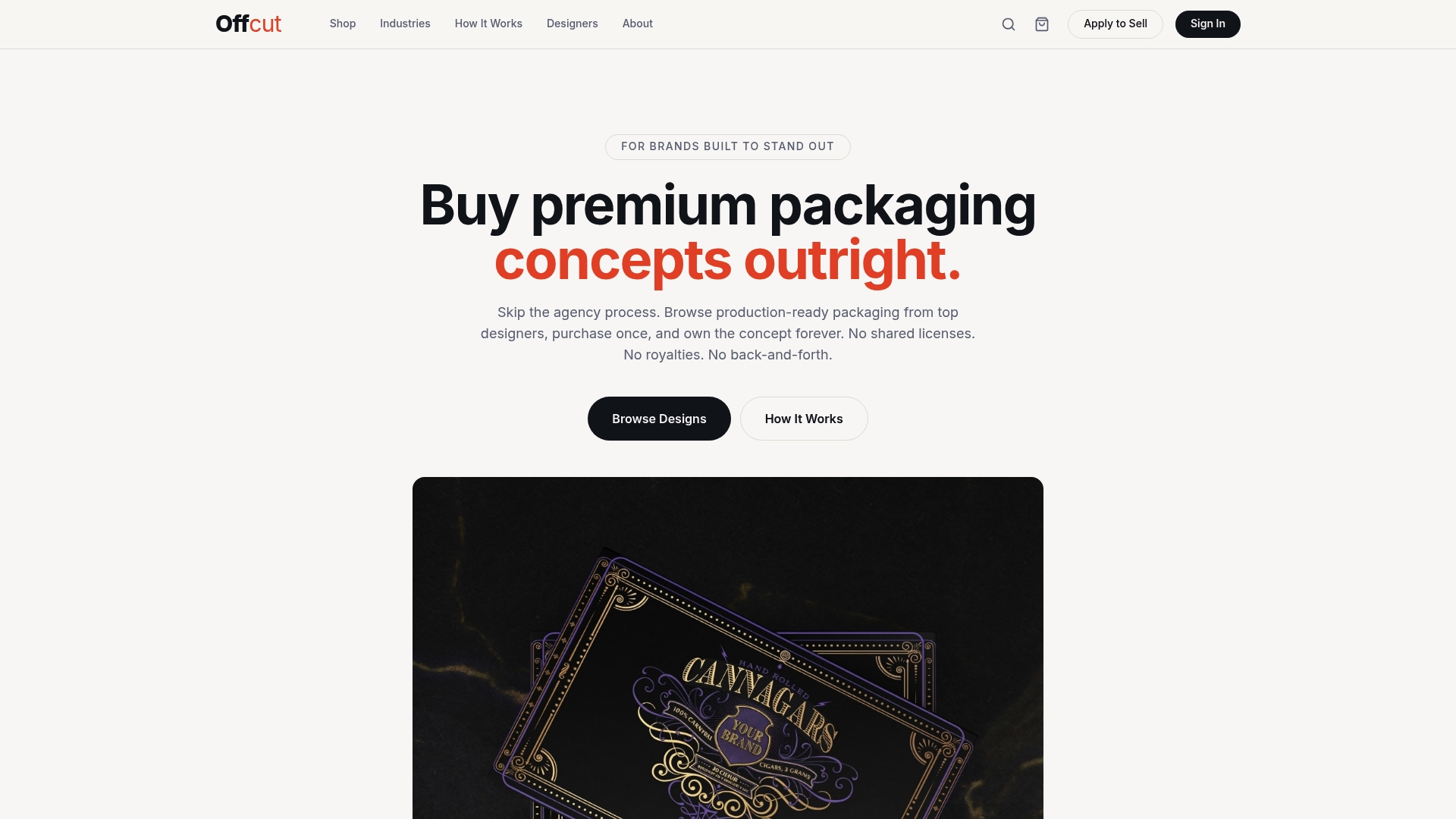
Offcut is the leading marketplace for premium packaging concepts where founders browse and buy exclusive, production ready designs and receive full ownership. It removes agency overhead and delivers print ready assets that brands can use immediately.
Core Features
Offcut offers a curated vault of exclusive, production ready packaging designs from an invite only roster of top designers. The platform provides full IP transfer, source files and specs, and print ready assets so brands can purchase one time and ship to production.
Pros
-
Own exclusive concepts: Buyers get exclusive, ready to use packaging concepts that do not circulate to competitors.
-
Full IP transfer: Purchases include full ownership with no ongoing royalties or licensing surprises.
-
High quality curation: The invite only model keeps the design pool top tier and reduces time spent vetting options.
-
Production ready assets: Each listing includes source files, dielines, and specs so teams can move to print quickly.
-
Supports designers: Designers can monetize unused concepts, creating a marketplace that rewards craftsmanship.
Who It's For
Offcut targets brands and businesses that need unique, high quality packaging with clear ownership rights, especially founders who want to skip agency retainer costs. Top tier packaging designers also benefit by selling exclusive concepts that would otherwise sit idle.
Unique Value Proposition
Offcut combines a strict curation process with one time ownership to deliver a clear alternative to bespoke agency work. For founders this means predictable costs, fast time to market, and legally clean transfer of IP. For designers it means fair pay for work that would otherwise collect dust.
Real World Use Case
A cannabis brand purchased a production ready vape cartridge packaging concept on Offcut for $450 and gained full ownership and branding rights. The brand applied the supplied dielines and specs directly to their contract manufacturer and launched retail ready packaging within weeks.
Pricing
Prices vary by design and reflect exclusivity and production readiness. Example listings include Cannabis Vape Cartridge Packaging for $450, CBD Capsule Container for $200, and Hemp Wrap Design for $300. Each price covers one time purchase and full IP transfer.
Website
Website: https://offcut.design
Lovable
At a Glance
Lovable is an AI powered app builder that lets non technical teams turn ideas into live websites and apps by chatting with AI in real time. The platform excels at fast prototyping and one click deploys for marketing and product teams.
Takeaway: Great for teams that need working prototypes quickly.
Core Features
Lovable converts conversational instructions into prototypes, templates, and deployed products while supporting team permissions and simple feedback loops.
- Chat to build: Create apps and websites by chatting with AI.
- Real time prototypes: Transform ideas into prototypes in real time.
- Feedback tools: Iterate and refine with simple feedback from stakeholders.
- One click deploy: Deploy applications easily with one click to get live previews.
- Customizable templates: Discover and customize templates for varied project needs.
Takeaway: Use templates and chat driven workflows to shorten the first draft cycle.
Pros
- User friendly interface: The interface is approachable for non technical users so designers and founders can build without coding knowledge.
- Rapid development: AI assistance reduces prototype time so teams can show concepts and validate ideas within hours.
- Team collaboration: The platform supports team collaboration with permissions so multiple stakeholders can edit, review, and approve changes.
- Flexible templates: Templates cover portfolios, SaaS, blogs, and commerce which reduces design overhead for common project types.
- Scalable: The system supports small projects and larger initiatives so teams can grow without switching tools.
Cons
- Limited technical detail: Publicly available content provides limited detailed technical specifications which makes deep technical evaluation difficult.
- AI driven design limits: Reliance on AI driven design can require manual adjustments for complex interactions or bespoke engineering work.
- Pricing variability: Pricing may vary based on usage and plan which can complicate forecasting for scaling teams.
Who It's For
Lovable fits businesses, teams, and individual creators seeking an easy to use, AI powered platform for building custom apps and websites without extensive coding. It is especially useful for marketers, product managers, and designers who must move from concept to launch fast.
Takeaway: Pick Lovable when you prioritize speed and collaboration over low level engineering control.
Unique Value Proposition
Lovable combines conversational AI, real time prototyping, and one click deployment into a single workflow that lets non developers ship working products quickly. Designers and marketers can own more of the build process while keeping developers involved for advanced features.
Takeaway: Reduce handoffs and get a live product faster.
Real World Use Case
A team of marketers uses Lovable to rapidly develop and deploy a new product landing page by collaborating in real time and iterating designs based on feedback. They move from first draft to live page within a single sprint, shortening campaign cycles.
Takeaway: Ideal for campaign launches and MVP landing pages.
Pricing
A free plan is available. Paid plans start at $25 per month for Pro and $50 per month for Business, with custom pricing for Enterprise plans based on needs and usage. Review plan limits for hosting and collaborators before committing.
Takeaway: Start on the free plan to test workflows and then scale to Pro or Business as needed.
Website: https://lovable.dev
Pory
At a Glance
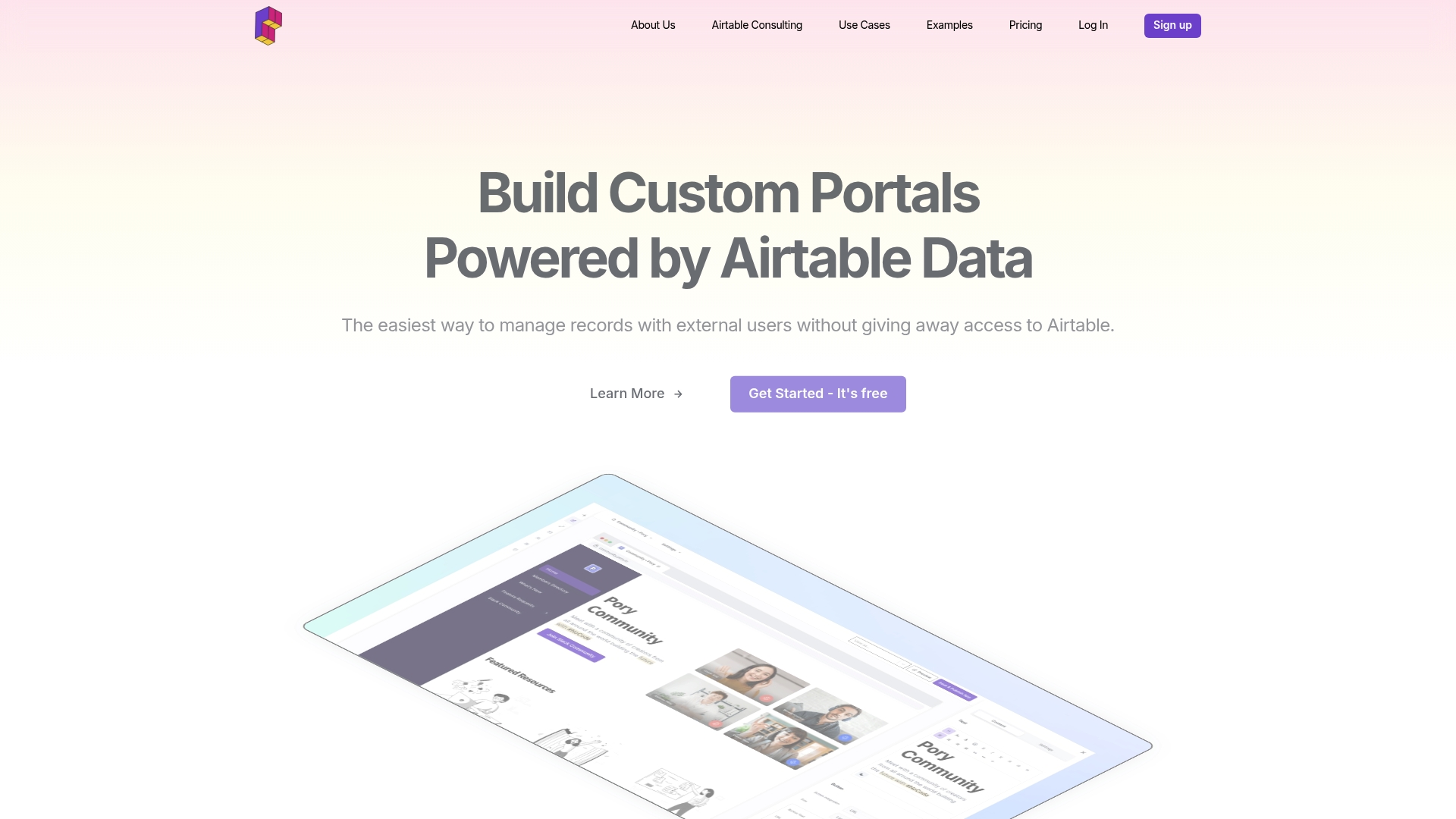
Pory is a no code portal builder that turns Airtable bases into shareable, branded portals without giving external users direct Airtable access. It focuses on easy setup with a drag and drop editor and straightforward permission controls.
Takeaway: Use Pory when you need fast, branded portals that sit on top of your Airtable data.
Core Features
Pory connects directly to one or more Airtable tables and bases and exposes records through customizable pages built with drag and drop blocks. The platform supports multiple portal types such as community, volunteer, customer, and vendor portals.
You can set user permissions for view create edit and delete, and apply custom branding and themes to match packaging or product identity.
Takeaway: The core shines at turning structured Airtable data into public or gated portals with visual control.
Pros
-
Easy to use interface: The drag and drop editor lets nontechnical team members assemble portals quickly without developer time or templates.
-
No coding required: You can build functional portals and publish them without writing JavaScript or managing hosting.
-
Highly customizable portals: Theme settings and block options let you apply brand colors, fonts, and layout choices that match packaging assets.
-
Seamless Airtable integration: Direct data sync means your portal reflects records and updates from Airtable with minimal setup.
-
Multiple permission levels supported: Role based controls let you expose only the fields and actions external users need.
Takeaway: Pory reduces build friction and hands control to designers and founders who want branded, data driven portals.
Cons
-
Pricing may be high for unlimited portal needs because the cost scales with portal count and advanced features sit behind higher tiers.
-
Limited to Airtable and no code tools which means your data source options are restricted if you use another database or custom backend.
-
Premium features require higher tier plans which can push small organizations toward the more expensive Professional or Unlimited offerings.
Takeaway: Budget and data flexibility are the main constraints when choosing Pory.
Who It's For
Pory fits businesses organizations and individuals who already use Airtable and need public or private portals without engineering resources. Product founders, packaging teams, and design studios can publish customer or vendor portals to share specs or assets quickly.
Takeaway: Pick Pory when Airtable is your single source of truth and you want visible, branded portals with minimal build time.
Unique Value Proposition
Pory’s strength is its focused workflow: convert Airtable records into branded portals with permissioned access and a visual editor. That makes it appealing for teams that keep product and packaging data in Airtable and want controlled sharing with partners or customers.
Takeaway: Pory removes the technical barrier between Airtable and an externally facing portal.
Real World Use Case
A non profit configures a volunteer portal to let volunteers sign up view roles and access resources while administrators manage records in Airtable. Volunteers never see the Airtable backend yet their sign ups and status update live.
Takeaway: It works well for membership or volunteer management where secure public access matters.
Pricing
Professional plans cost $99 per month per portal with an option for unlimited portals at $549 per month. Higher tier plans unlock premium features and increased usage limits.
Takeaway: Compare portal needs and feature requirements before committing to a tier.
Website: https://pory.io
Appy Pie
At a Glance
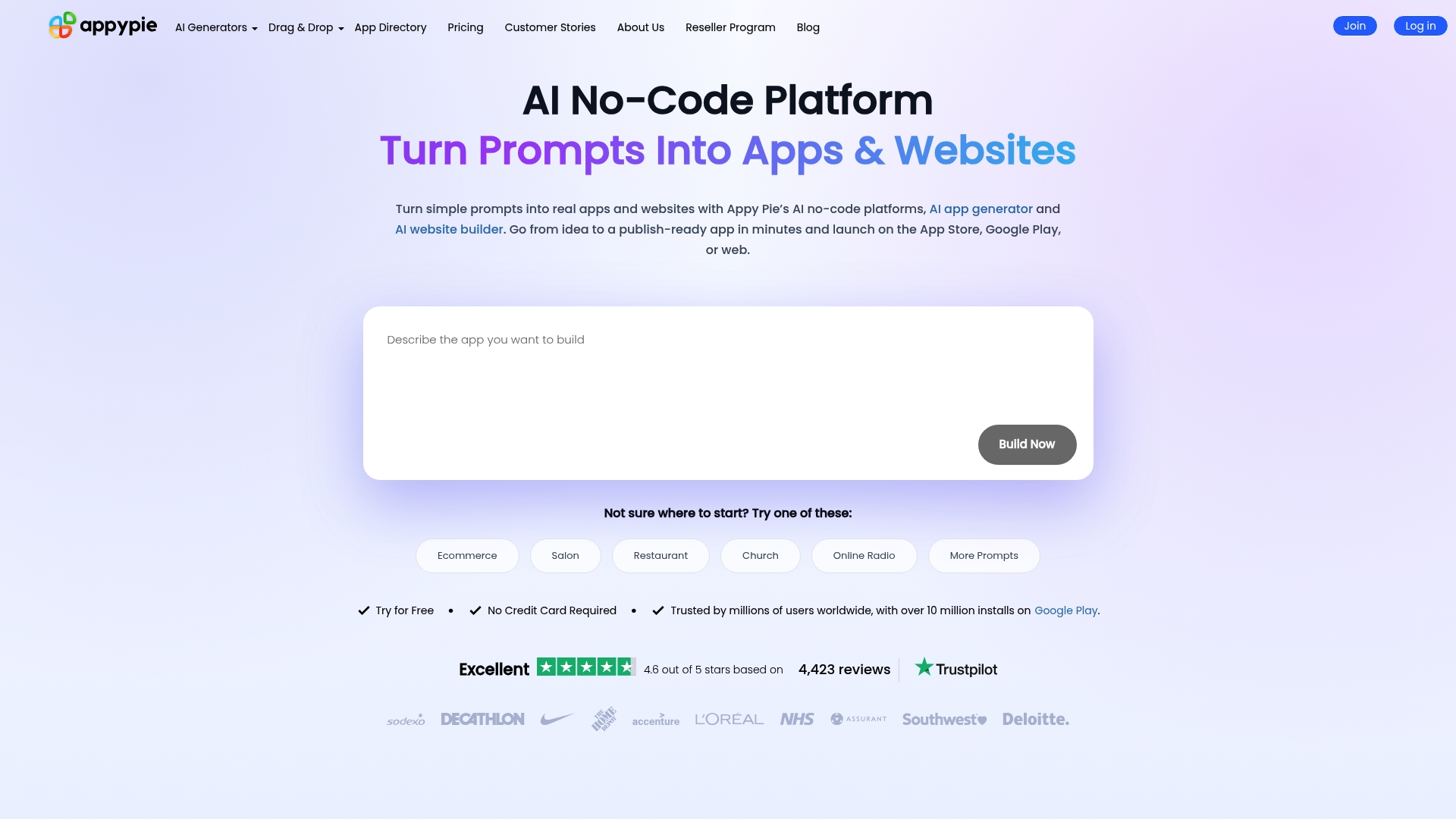
Appy Pie is an AI powered no code platform that helps nontechnical users build mobile apps and websites quickly. Its publishing assistance and enterprise security support make it a practical choice for business owners who need a fast, managed path to launch.
Core Features
Appy Pie combines AI powered generation with a Drag & Drop builder to produce apps for Android, iOS, and web. The platform includes industry templates, publishing assistance to app stores, and business features like payments, notifications, and analytics.
Pros
- No coding required: The platform offers a user friendly interface that lets entrepreneurs and designers create functional apps without a developer.
- Wide industry support: Pre designed templates cover e commerce, restaurants, booking systems, and more so you can start from an industry specific layout.
- Business focused features: Built in payments, notifications, and analytics support common operational needs for customer facing apps.
- Enterprise security and compliance: The service includes features and support tailored to organizations with stricter security requirements.
- Affordable entry plans: Pricing includes a free trial and flexible subscription options that lower the cost of trying the service.
Cons
- Some advanced features require higher tier plans, which raises the monthly cost for agencies or larger projects.
- The platform depends on internet connectivity for AI generation and publishing workflows, limiting offline work.
- Customization is limited compared to traditional development, which can restrict unique interactions or complex integrations.
Who It's For
Small to medium sized businesses, entrepreneurs, educators, and content creators who need to launch apps or websites without hiring a developer will get the most value. Graphic designers and CPG founders who want quick, presentable prototypes for packaging or brand presentations will appreciate the speed.
Unique Value Proposition
Appy Pie blends rapid, template based app creation with managed publishing and enterprise grade support. For founders who value time to market and predictable security controls, the platform provides a low friction route from concept to live app.
Real World Use Case
A restaurant owner can use Appy Pie to build a mobile ordering app with payment processing, notifications, and analytics to reduce call orders and speed service. The owner can publish to app stores and update menus without developer help.
Pricing
Plans start from $16 per app per month when billed annually for the Basic plan and offer upgrade paths for additional features and support. A free trial is available so you can test templates and publishing workflows before committing.
Website: https://appypie.com
Glide
At a Glance
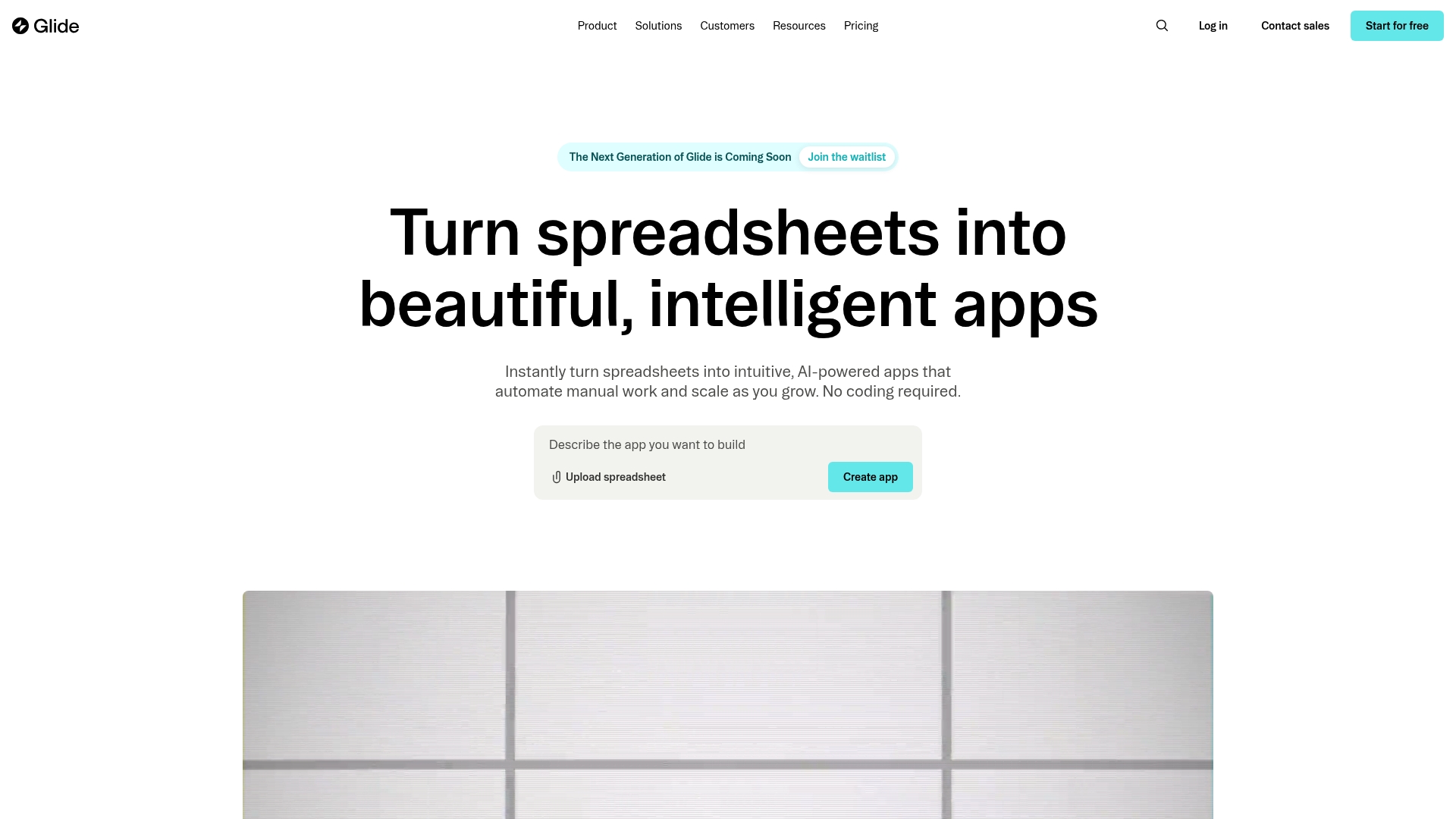
Glide turns spreadsheets into polished, useful apps without writing code and does so at scale for teams and solo founders. The platform is approachable for designers and founders who need quick branded tools, though advanced customization takes time to master.
Core Features
Glide lets you turn spreadsheets into apps and build interfaces with a no code editor that connects to Google Sheets, Airtable, and SQL.
- Glide AI brings AI powered features for smarter data handling and content generation.
- Workflow automation uses triggers and logic procedures to reduce manual steps.
- Responsive modern components deliver an interface that works on phones and desktops.
- Paid plans include custom branding and custom domains for professional presentation.
- Platform supports real time data sync and compliance with SOC II, GDPR, and CCPA.
Pros
- User friendly interface: The visual editor makes app layout and data binding fast, letting designers prototype without developer help.
- Flexible pricing options: A free tier lets you test ideas and paid plans scale to Business and Enterprise needs without losing momentum.
- Broad data integrations: Direct connections to Google Sheets, Airtable, and SQL reduce data migration work for packaging and inventory projects.
- AI and automation support: Built in AI features and workflow triggers speed repetitive tasks and improve internal tooling efficiency.
- Enterprise readiness: Security and compliance features make Glide suitable for larger teams and regulated workflows.
Cons
- Pricing structure can be complex and costly for larger teams. Multiple tiers and add ons require careful budgeting for enterprise use.
- Limited deep customization compared to custom built apps. Designers who need pixel perfect control will hit platform limits.
- Advanced features require experimentation and learning. Teams should plan time for training before deploying mission critical tools.
Who It's For
Glide is ideal for business professionals, entrepreneurs, and product designers who need to build internal tools, dashboards, or customer facing apps quickly. It suits packaging founders who want inventory or vendor apps without hiring developers.
Unique Value Proposition
Glide’s main advantage is speed of delivery from spreadsheet to working app with professional polish and security. For founders and designers who value time and iteration, Glide provides a repeatable path from concept to deployed tooling.
Real World Use Case
Royal Greyhound uses Glide to unite scheduling, equipment, performance, and HR data in a single app that staff can access on phones. That unified view saved administrative time and reduced scheduling conflicts across a large team.
Pricing
Glide offers a free plan to experiment. Paid plans start at $199 per month for Business and Enterprise plans are available with custom pricing for larger deployments.
Website: https://glideapps.com
Adalo
At a Glance
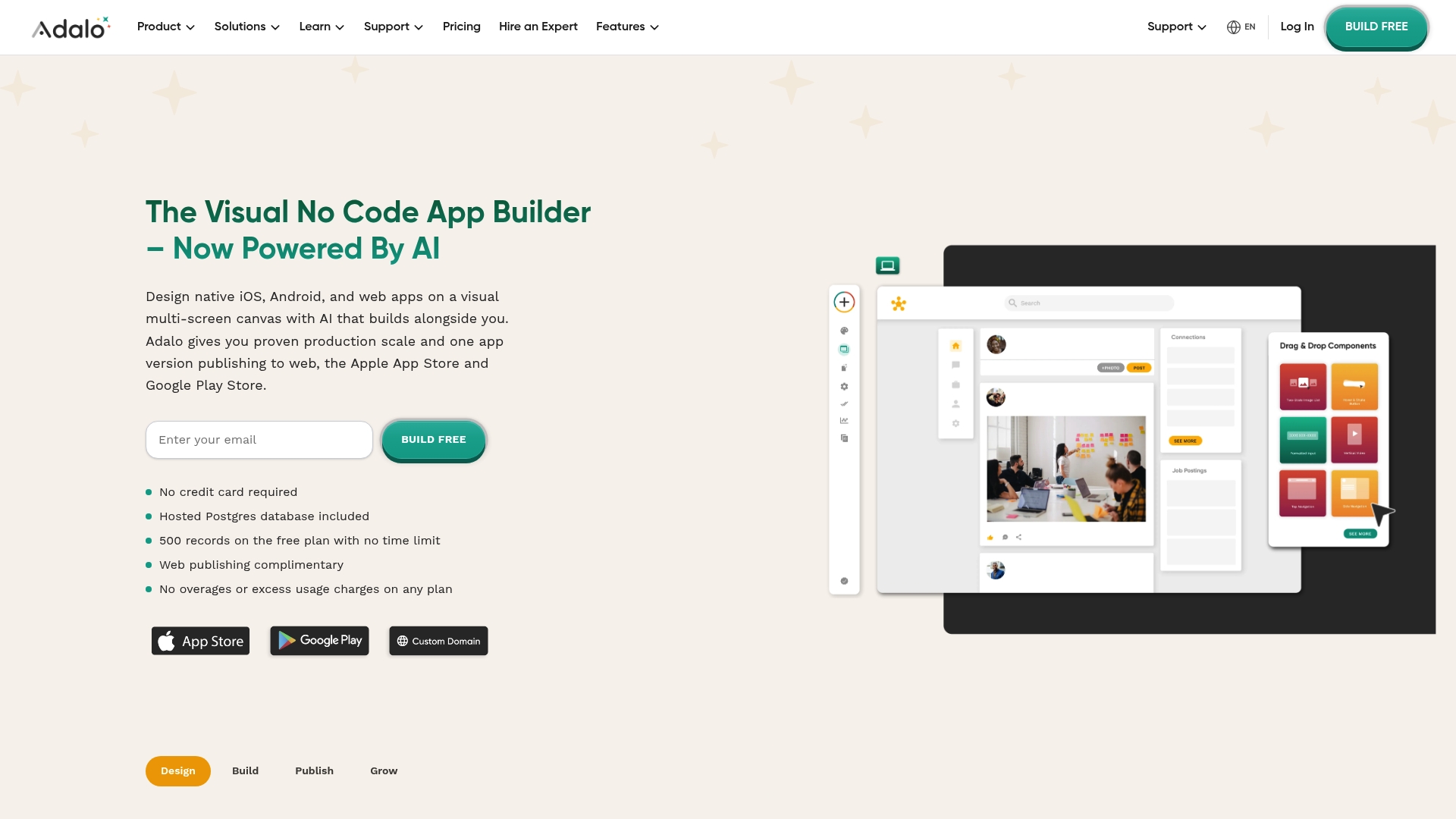
Adalo is a visual, AI powered platform that lets you design, build, and publish native iOS, Android, and web apps from a single project without coding. It moves fast for founders and designers who need working prototypes that look polished.
Core Features
Adalo provides a visual multi screen canvas and AI assistance for layout and content suggestions. The platform offers a no code drag and drop design environment, native app publishing for iOS and Android, responsive web publishing, and integrations with Airtable, Google Sheets, Xano? and APIs via REST and Zapier.
Pros
- No coding required lowers the barrier so entrepreneurs and designers can iterate without hiring developers.
- AI powered design and editing speeds layout decisions and reduces back and forth between concept and production.
- Flat rate pricing prevents unexpected usage overages and keeps budgeting predictable for small teams.
- Multiple platform publishing lets you deploy one project across iOS, Android, and the web, saving development time.
- Third party integrations connect to Airtable, Google Sheets, Xano? and REST APIs so your app can use real product and inventory data.
Cons
- Limited advanced customization exists compared to hand coded apps, which constrains unusual UI patterns or performance tuning.
- Some capabilities appear behind paid plans, so testing complex features often requires upgrading from the free tier.
- Dependence on platform stability and updates means you are tied to Adalo’s release schedule for bug fixes and new features.
Who It's For
Adalo works best for entrepreneurs, freelancers, agencies, and small to medium businesses who need database driven apps without building a development team. Consumer packaged goods founders and graphic designers can use Adalo to prototype product companion apps, loyalty tools, or simple e commerce experiences quickly.
Unique Value Proposition
Adalo’s core advantage is converting visual ideas into publishable apps fast while handling cross platform deployment for you. The combination of visual design, AI assistance, and direct publishing to app stores shortens the path from concept to customer testing.
Real World Use Case
A startup founder used Adalo to design and launch a native mobile app in just a few weeks without hiring developers, enabling rapid testing and iteration. A packaging designer could mirror that approach to produce a product demo app for retailers or a brand experience for focus groups.
Pricing
A free plan is available with limited records for early experiments. Paid plans start at $36 per month aimed at founders and entrepreneurs, with higher tiers available for teams and businesses that need more capacity and features.
Website: https://adalo.com
AppSheet
At a Glance
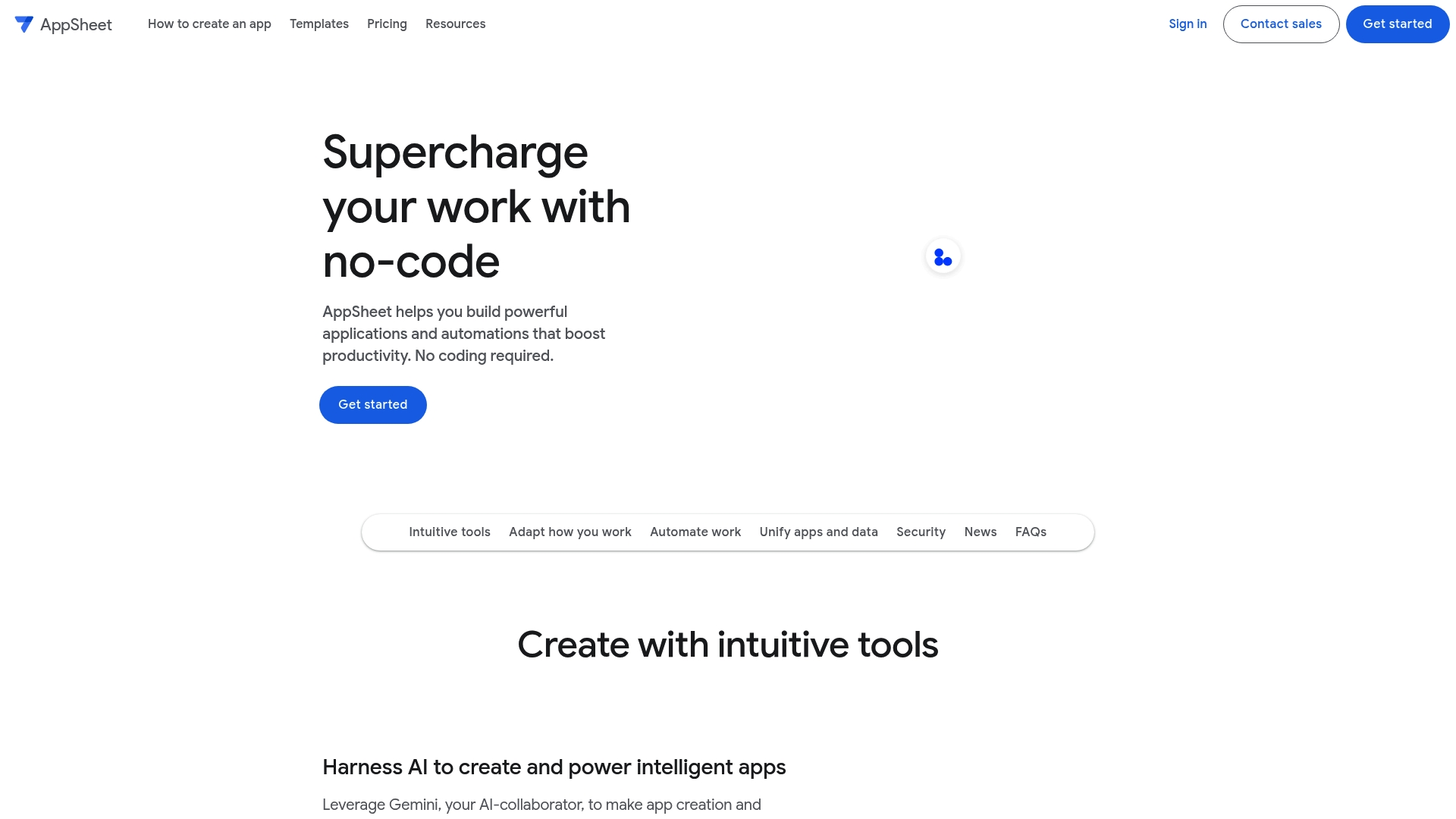
AppSheet is a robust no code platform that lets packaging founders and designers build apps and automated workflows without writing code. It pairs AI assisted app creation with deep Google Workspace integration, making rapid prototyping and data capture practical for product teams.
Core Features
AppSheet focuses on fast app assembly, data management, and governance for teams that manage packaging and product data.
- No code app development and automation that connects to SQL, BigQuery, and REST APIs for centralized product data.
- AI assisted app creation with Gemini to speed initial layouts and screen flows for inventory or presentation apps.
- Data collection tools including forms, signatures, and photos to capture packaging proofs and field notes.
- Workflow automation for notifications, triggers, and approvals that keep samples moving through production.
- Security and governance with role based access control and compliance policies for enterprise environments.
Pros
- Rapid app development: AppSheet enables fast prototyping so you can go from brief to working app in days rather than weeks.
- Strong Google Workspace integration: Native integration reduces setup time if your team stores briefs, assets, and sheets in Google Drive.
- Robust automation capabilities: Built in triggers and notifications automate approvals and data collection across teams and suppliers.
- Enterprise grade governance: Role based access and compliance features help control sensitive art files and formulation data.
- Wide data source support: Connections to SQL, BigQuery, and REST APIs let you unify sales, inventory, and artwork metadata.
Cons
- Cost can scale quickly: Pricing may become a consideration for larger teams or when enterprise features are required.
- Advanced features demand skill: Learning expressions and complex logic requires time and technical attention from designers or admins.
- Connectivity dependency: Many functions rely on internet access, which can limit field work in low coverage locations.
Who It's For
AppSheet suits organizations and individuals who need to build custom applications and automate workflows without code, especially teams already invested in Google Workspace. Packaging founders who want fast, controlled ways to collect proofs and manage inventory will find it practical.
Unique Value Proposition
AppSheet combines no code development, AI assisted app generation, and enterprise governance into a single platform. That mix lets design teams produce brand presentation tools and package trackers that scale from small runs to full enterprise deployments.
Real World Use Case
Airbus used AppSheet to build an inventory logistics app in a few days instead of months, showing how a complex operational need can be solved rapidly. Packaging teams can mirror that speed to manage samples, approvals, and vendor checklists.
Pricing
Starter plan at $5 USD per user per month, Core at $10 USD per user per month, Enterprise Plus at $20 USD per user per month, with additional licensing options for larger organizations.
Website: https://appsheet.com
Bubble
At a Glance
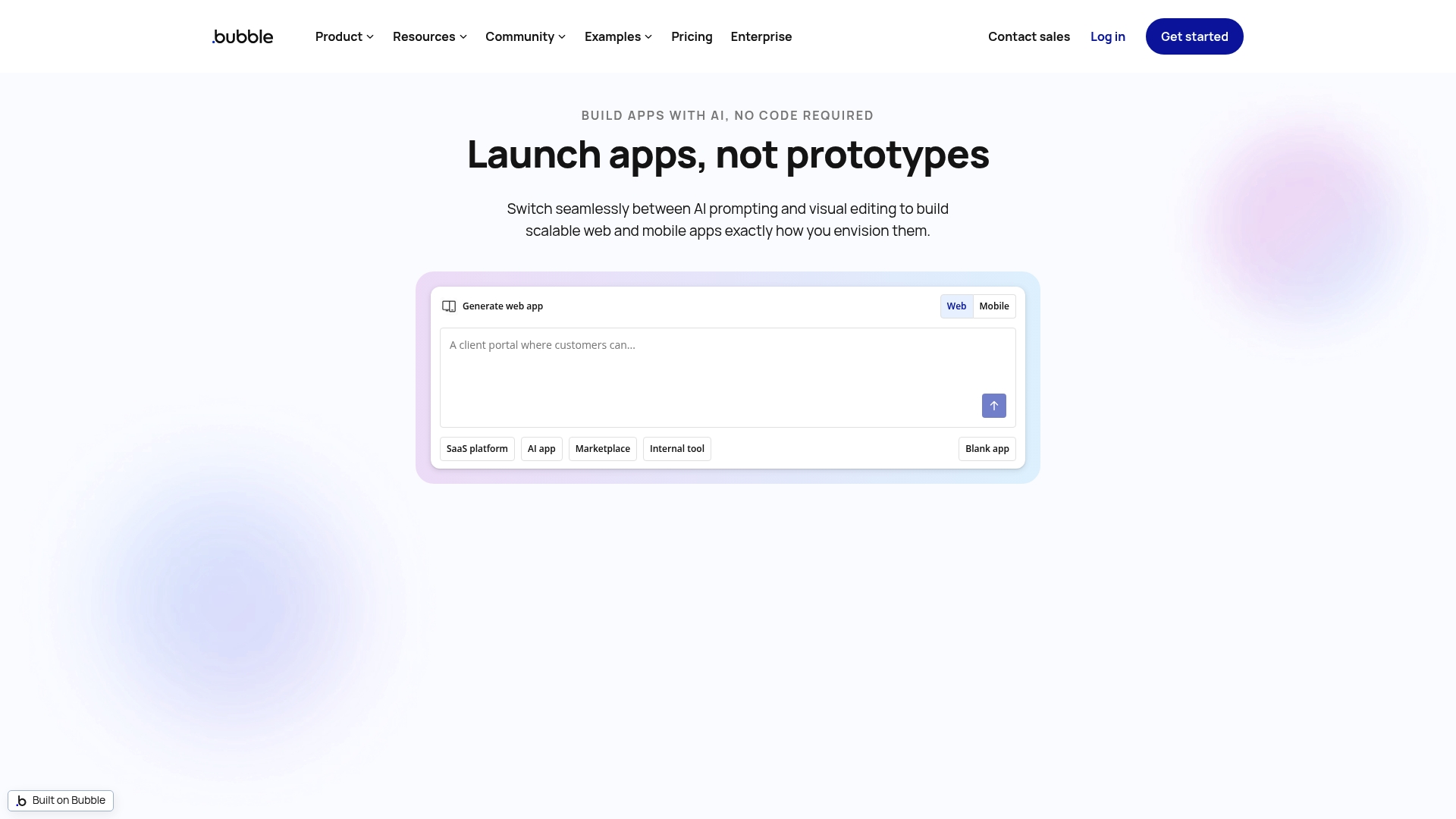
Bubble offers a visual platform to build web iOS and Android apps without coding, with plans that scale from free to enterprise. Its workload based pricing and native mobile publishing tools make it a practical choice when you need to move from prototype to production.
Core Features
Bubble enables you to build web iOS and Android apps without coding while providing a free plan and several subscription tiers. Key capabilities include a component library, API connector, debugger, on device testing, and React Native integration for native mobile publishing.
The platform supports team collaboration with version control, sub apps, multiple app editors, and custom branches on higher tier plans. Security features include two factor authentication and options for custom hosting. Workload add ons and overages handle scaling needs.
Pros
- No coding required: Non developers can assemble complex app logic and user interfaces through visual tools without writing code.
- Flexible scaling: The workload based pricing model plus additional workload tiers and overage options help you match costs to actual usage.
- Native mobile development: React Native integration enables publishing to iOS and Android without rebuilding the app from scratch.
- Range of plans: Free, Starter, Growth, Team and Enterprise tiers let you start small and upgrade as teams and traffic grow.
- Community and learning resources: Tutorials templates and a plugin ecosystem reduce build time and provide design and development building blocks.
Cons
- Pricing can become expensive: As app workload rises additional tiers or overages can push monthly costs well above startup budgets.
- Learning curve for advanced features: Mastering version control custom branches and complex workflows requires time and practice.
- Free plan limitations: The free plan restricts professional app development features so production teams will likely need a paid tier.
Who It's For
Bubble is suited for individuals startups agencies and enterprises that want to build scalable web and mobile applications without hiring a traditional development team. For CPG entrepreneurs and graphic designers it works well for creating product microsites internal tools and interactive packaging previews without long development cycles.
Unique Value Proposition
Bubble combines visual app building with workload aware pricing and native publishing tools so teams can prototype rapidly and scale deliberately. The mix of collaboration features and security controls makes it suitable for agency workflows and growing startups that need professional app capabilities without heavy engineering overhead.
Real World Use Case
A startup launches a social networking app on Bubble using the free tier to validate product market fit. As user demand grows the team upgrades to Growth or Team for collaboration advanced version control and added workload capacity to support scaling.
Pricing
Start building for free. Paid plans begin with Starter at $59 per month and scale through Growth Team and Enterprise with custom pricing. Additional workload can be purchased or paid as overages to handle peak demand.
Website: https://bubble.io
Product Development Tools Comparison
This table provides an overview of various tools to assist in product development, highlighting their key features, advantages, disadvantages, target users, and pricing. Choose the tool that best aligns with your project needs.
| Tool | Key Features | Advantages | Disadvantages | Pricing |
|---|---|---|---|---|
| Offcut | Exclusive premium packaging designs, full IP transfer, production-ready assets | Offers unique, exclusive concepts; supports designers; simplifies production | Limited to packaging designs | Prices vary (e.g., $200-$450 per design based on project details) |
| Lovable | AI-powered app builder, real-time prototyping, one-click website/app deployment | User-friendly; supports team collaboration; rapid prototyping | Dependency on AI design limits complex features | Free plan available; Paid plans start at $25/month |
| Pory | Airtable integration, drag-and-drop editor, branded portal creation | Customizable portals; user-friendly interface; multiple permission levels | Higher tiers required for advanced needs | Professional: $99/month per portal; Unlimited: $549/month |
| Appy Pie | AI-driven platform, pre-designed templates, app publishing assistance | Easy-to-use; wide industry support; competitive starting price | Customization limits for complex functionalities | Plans from $16/month per app; free trial available |
| Glide | Spreadsheet-to-app conversion, real-time data sync, security features | No-code solution; rich component library; integrates with multiple data sources | Good for simple apps but limited for deep customization | Free plan available; Paid plans start at $199/month |
| Adalo | Visual app building, cross-platform deployment, AI-powered assistance | Supports native and responsive platforms; third-party integrations | Advanced features behind paid plans | Plans from $36/month; free plan available |
| AppSheet | Google Workspace integration, workflow automation, data governance | Strong automation and security; wide data source support | Advanced features require learning | Plans range from $5 to $20/user/month, depending on features |
| Bubble | No-code development, scalable architecture, team collaboration tools | Workload-based pricing; community support; free plan available | Advanced workflows require learning time | Paid plans begin at $59/month; free plan available |
This table encapsulates key aspects of each tool to support you in selecting the most suitable choice for your project.
Discover Packaging Design Solutions Beyond Website Builders
The article highlights challenges marketers and founders face when selecting AI-powered app builders like Lovable for fast prototyping and launch. While Lovable accelerates web and app development, many packaging founders struggle to find exclusive, production ready packaging concepts without the high costs and delays of agency work. If you want to own unique, print-ready packaging designs that instantly elevate your brand with clear intellectual property rights, Offcut offers a tailored solution.
Experience a new level of ease and exclusivity. Offcut’s curated marketplace delivers exclusive packaging that helps founders avoid costly agency retainers and complicated licensing. Explore exclusive packaging concepts designed for fast production and full ownership.
Ready to bridge the gap between rapid digital prototyping and outstanding physical packaging? Visit Offcut’s homepage now to find premium packaging designs that complement your fast paced product launches and branding efforts.
Frequently Asked Questions
What are some top alternatives to Lovable for building websites and apps?
Offcut, Pory, and Appy Pie are among several alternatives that offer unique features for creating websites and applications easily. Explore these platforms to see which one fits your specific project needs and user interface preferences.
How do I choose the right one-click website builder from the alternatives listed?
Evaluate the features of each alternative based on your team's requirements, such as ease of use, customization options, and whether they support team collaboration. Consider testing a few platforms with free trials to see which resonates best with your workflow.
Can I create a mobile app with these alternatives?
Yes, many alternatives like Appy Pie and Adalo allow you to create mobile apps as well as websites using no coding skills. Start by identifying your app requirements and choose a platform that offers the necessary templates and publishing capabilities.
Are these alternatives suitable for non-technical users?
Absolutely! Platforms like Glide and Pory are designed with user-friendly interfaces, making them accessible for non-technical users looking to create polished apps or websites. Begin by exploring their drag-and-drop functionalities to see how easily you can build your project.
How quickly can I launch a website or app using these alternatives?
Depending on the complexity of your project, you can often launch a basic website or app within a few days using these one-click alternatives. Identify a straightforward project to start with, and follow the step-by-step guides provided by each platform to expedite your launch process.
What should I consider regarding pricing when selecting an alternative?
Consider your budget alongside the features and scalability each platform offers. Many alternatives have tiered pricing, so assess your long-term needs and project scale to choose the most cost-effective option.