
Your product sits on a crowded shelf, invisible among competitors. Buyers walk past without a second glance. Poor packaging design costs you sales every single day, even when your product quality exceeds the competition. Effective packaging captures attention in seconds, communicates value instantly, and builds trust that converts browsers into buyers. This guide walks you through a proven step by step process to create packaging that drives purchasing decisions, tailored specifically for startup founders and brand managers in consumer packaged goods. You'll learn preparation essentials, execution tactics, optimization tools, and verification methods to ensure your packaging delivers measurable results.
Table of Contents
- Understanding The Packaging Design Problem And Preparation
- Step By Step Packaging Design Execution For Startups
- Tools And Approaches To Optimize Your Packaging Design
- Common Mistakes And Verifying Your Packaging Design Success
- Discover Packaging Design Solutions With Offcut
- Frequently Asked Questions
Key takeaways
| Point | Details |
|---|---|
| Packaging drives buying decisions | Research shows 72% of consumers make purchase choices based on packaging design alone. |
| Three core functions matter most | Packaging must protect products, support easy use, and communicate brand value clearly. |
| Architecture shapes brand consistency | Choosing between custom, hybrid, or monolithic packaging systems impacts scalability and profitability. |
| AI accelerates design optimization | Modern testing tools predict sales impact with 80% accuracy while cutting development time significantly. |
| Channel-specific design drives growth | Tailoring pack formats to retail environments increases consumer appeal and maximizes sales efficiency. |
Understanding the packaging design problem and preparation
Packaging design influences whether consumers choose your product or walk away empty handed. Studies confirm 72% of consumers base buying decisions on packaging alone, and that decision happens in just three to seven seconds at the shelf. Your packaging competes for attention against dozens of alternatives in that tiny window. Understanding this reality changes how you approach every design choice.
Before diving into design execution, you need foundational knowledge about packaging architecture. There are three packaging architecture types: custom, hybrid, and monolithic. Custom architecture gives each product unique packaging, maximizing differentiation but increasing costs and complexity. Hybrid architecture shares some elements across products while allowing variation, balancing flexibility with efficiency. Monolithic architecture uses identical packaging across your entire line, maximizing brand consistency and production efficiency but limiting individual product expression. Your choice depends on product variety, budget constraints, and brand strategy.
Every package must fulfill three core functions: protection, use support, and communication. Protection ensures products reach consumers intact and maintain quality throughout shelf life. Use support means packaging facilitates easy opening, dispensing, storage, and disposal. Communication conveys brand identity, product benefits, usage instructions, and required legal information instantly. Failing any function undermines your entire packaging investment.
Material selection impacts every aspect of your packaging performance. Consider these factors when choosing materials:
- Production cost and minimum order quantities
- Manufacturing timeline and supply chain reliability
- Environmental impact and recycling capabilities
- Structural integrity for shipping and storage
- Consumer perception of quality and value
- Compatibility with printing and finishing techniques
Consumer perception drives packaging success more than technical specifications alone. Buyers form instant judgments about product quality, brand trustworthiness, and value proposition based purely on visual design. Understanding your target audience's expectations, preferences, and shopping behavior informs every color choice, typography decision, and imagery selection. Research shows packaging that aligns with consumer expectations while offering pleasant surprises performs best.
Pro Tip: Create a packaging brief documenting your brand story, target consumer profile, key product benefits, and competitive landscape before starting design work. This foundation prevents costly revisions and keeps your team aligned throughout the process. Learn more about creating effective briefs in our guide on how to brief designers for cpg brands 2026 guide.
Step by step packaging design execution for startups
Executing effective packaging design requires a systematic approach that balances creativity with strategic thinking. Follow these steps to create packaging that converts browsers into buyers.
-
Define your brand story and core messaging. Effective packaging tells your brand story, conveys quality, and builds trust instantly. Identify the three most important messages your packaging must communicate. Write these messages in simple language your target consumer uses, not industry jargon. Prioritize ruthlessly because cluttered packaging confuses buyers and reduces impact.
-
Map your visual hierarchy. Determine what consumers should see first, second, and third when viewing your package. Product name typically dominates, followed by key benefit or differentiator, then supporting details. Test your hierarchy by showing rough sketches to target consumers and asking what they notice first. Adjust until the viewing sequence matches your strategic priorities.
-
Select materials balancing cost, experience, and sustainability. Calculate total cost including materials, printing, assembly, and shipping. Request samples from multiple suppliers to evaluate quality firsthand. Consider how materials feel in consumer hands because tactile experience influences perceived value significantly. Balance sustainability goals with budget realities, recognizing that eco-friendly materials often cost more but appeal to growing consumer segments.
-
Design for your specific sales channels. Winning companies tailor pack formats to fit the economic logic of retail channels. E-commerce requires packaging that ships efficiently and arrives intact, often favoring bulk formats that reduce per unit shipping costs. Dollar stores demand smaller pack sizes at attractive price points. Premium retailers expect packaging that signals quality and justifies higher prices. Mass merchants need packaging that stands out in crowded aisles while fitting standard shelf dimensions.
-
Create multiple design alternatives. Develop three to five distinct design directions exploring different visual approaches to your brand story. Avoid creating variations that differ only in minor details. Each alternative should represent a genuinely different strategic choice in tone, emphasis, or aesthetic direction. This range gives you options to test and helps identify which approach resonates most strongly with target consumers.
-
Gather consumer feedback systematically. Show designs to target consumers individually, not in groups where dominant opinions skew results. Ask open ended questions about what they notice, what they think the product does, and how they perceive quality and value. Listen for unprompted reactions rather than leading them toward specific answers. Document exact words consumers use because their language reveals how they think about your category.
-
Refine based on feedback patterns. Look for consistent themes across multiple consumer interviews rather than reacting to individual opinions. Prioritize changes that address fundamental comprehension issues over aesthetic preferences. Test refined designs with a fresh group of consumers to verify improvements worked as intended.
Pro Tip: Budget 20% more time than you initially estimate for packaging design projects. Unexpected delays in supplier samples, printing tests, or regulatory approvals happen frequently. Building buffer time reduces stress and prevents rushed decisions that compromise quality. Explore packaging design tips boost consumer appeal 2026 for additional guidance on creating compelling designs.
Tools and approaches to optimize your packaging design
Traditional consumer research for packaging involves expensive focus groups, lengthy timelines, and subjective interpretation. Modern approaches using artificial intelligence and rapid testing methods deliver better insights faster and more affordably.
AI-driven packaging design optimization correlates 80% with in-market sales uplift, providing objective predictions about which designs will perform best. These tools analyze thousands of consumer responses to packaging alternatives, identifying specific design elements that drive purchase intent. Unlike traditional research that asks consumers what they prefer, AI tools measure actual behavioral responses that predict real buying decisions more accurately.
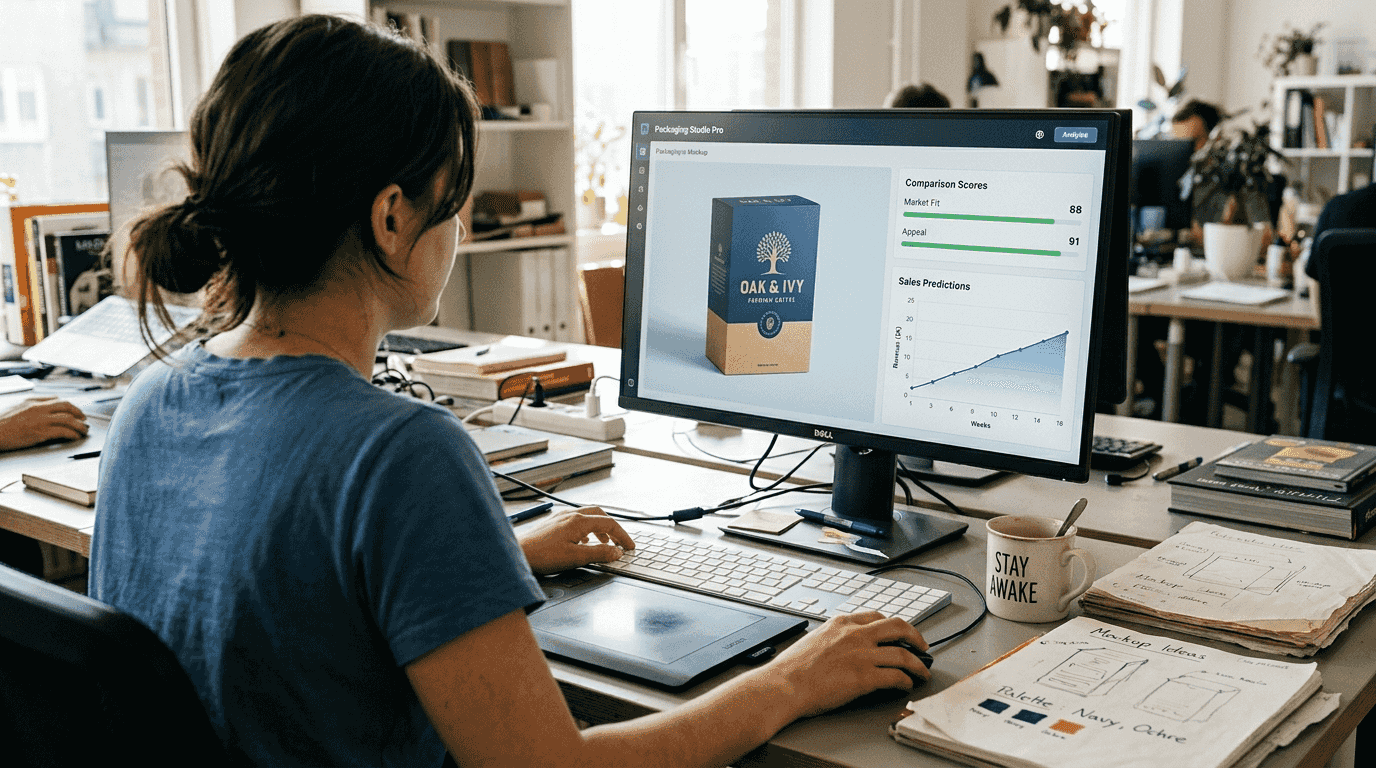
Early-stage testing accelerates development and shortens time to market significantly. Testing rough concepts before investing in finished designs helps you eliminate weak directions quickly. Digital testing platforms allow you to evaluate ten design alternatives for the cost of traditional research on two options. This expanded testing capacity increases your odds of finding breakthrough designs that dramatically outperform competitors.
Consider these optimization approaches for different startup stages:
| Startup Stage | Recommended Testing Approach | Typical Investment |
|---|---|---|
| Pre-launch with limited budget | Informal consumer interviews, online surveys | $500 to $2,000 |
| Growth stage with revenue | Digital testing platforms, small-scale in-store tests | $5,000 to $15,000 |
| Scaling with established distribution | AI optimization tools, quantitative research panels | $15,000 to $50,000 |
Optimization tools provide several advantages over relying purely on designer intuition:
- Objective data reduces personal bias in design decisions
- Quantified performance predictions enable confident investment choices
- Rapid iteration cycles compress months of traditional research into weeks
- Comparative testing reveals which specific elements drive performance differences
- Historical benchmarks show how your designs compare to category norms
Faster optimization translates directly into measurable business benefits. Launching with validated packaging reduces the risk of costly redesigns after production. Shorter development cycles mean you reach market sooner, capturing sales that would otherwise go to competitors. Data-driven confidence in your packaging allows you to invest marketing dollars more aggressively because you know the packaging will convert the traffic you generate.
Pro Tip: Start testing packaging concepts as soon as you have rough sketches, not after investing in polished designs. Early feedback costs less to incorporate and prevents you from falling in love with designs that won't perform. The designers role packaging concept creation explains how to structure early stage creative development for maximum flexibility.
Common mistakes and verifying your packaging design success
Startups make predictable mistakes in packaging design that undermine sales performance. Recognizing these errors helps you avoid expensive failures.
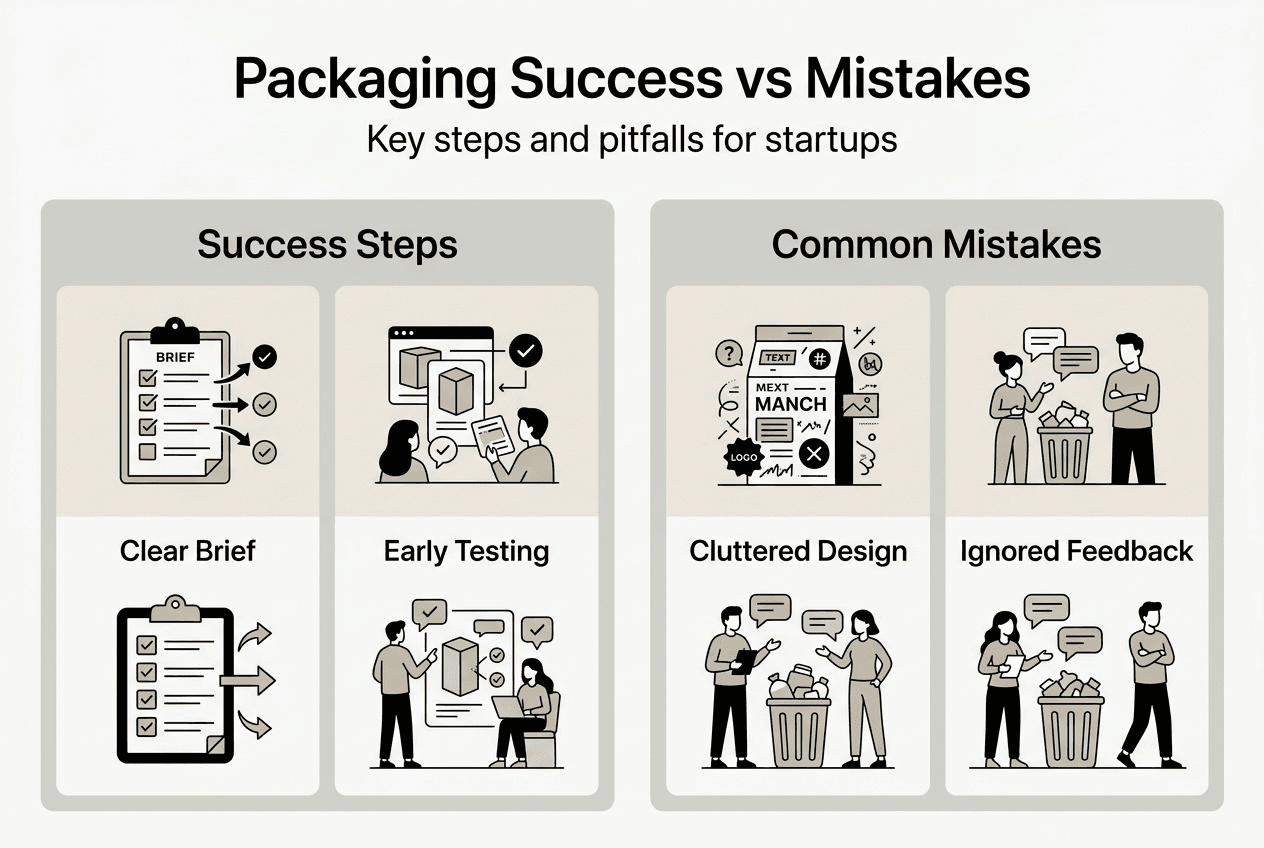
Overcomplicating design reduces clarity and shelf impact dramatically. Trying to communicate too many messages dilutes all of them. Consumers can't process complex information in three seconds, so cluttered packaging gets ignored. If buyers can't understand products quickly, the packaging fails its job completely. Simplify ruthlessly, focusing on the single most important message that differentiates your product.
Ignoring channel-specific consumer behavior limits success across different retail environments. Shoppers behave differently in dollar stores versus premium grocers versus online marketplaces. Packaging optimized for one channel often underperforms in others. Dollar store shoppers prioritize value and portion size. Premium retail customers seek quality signals and brand story. Online buyers can't touch products, so packaging must communicate through images alone. Failing to adapt packaging strategy to channel realities leaves money on the table.
Focusing only on short-term tweaks misses transformational growth opportunities. Incremental price pack architecture changes often fail while transformational approaches build growth. Making small adjustments to existing packaging rarely generates significant sales lift. Bold rethinking of packaging architecture, format, or positioning creates breakthrough results. Startups should favor transformational approaches because you have less legacy infrastructure constraining innovation compared to established brands.
Verify packaging design success using multiple validation methods:
- Track sales velocity compared to category benchmarks and previous performance
- Monitor consumer reviews mentioning packaging positively or negatively
- Measure repeat purchase rates indicating initial packaging attracted right customers
- Compare retailer reorder patterns showing distribution partners have confidence
- Test packaging recall and comprehension with target consumers systematically
Regularly update packaging to reflect market changes and consumer feedback. Set a calendar reminder to review packaging performance every six months. Consumer preferences evolve, competitors launch new designs, and retail environments shift. Packaging that performed well at launch may need refreshment to maintain competitive advantage. Budget for periodic updates as part of ongoing marketing investment, not as emergency spending when sales decline.
| Mistake Type | Impact on Sales | Correction Strategy |
|---|---|---|
| Cluttered messaging | 30% to 50% reduction in shelf visibility | Simplify to one primary message, two supporting points maximum |
| Wrong channel format | 20% to 40% lost sales opportunity | Develop channel-specific packaging variants with tailored value propositions |
| Incremental thinking | Minimal improvement, wasted investment | Pursue transformational redesign addressing fundamental positioning |
Pro Tip: Create a packaging scorecard tracking five key metrics: sales per distribution point, consumer complaint rate, retailer feedback scores, packaging cost as percentage of COGS, and consumer comprehension test scores. Review this scorecard quarterly to catch problems early and identify improvement opportunities. Additional insights on effective packaging strategies appear in packaging design tips boost consumer appeal 2026.
Discover packaging design solutions with Offcut
Offcut connects startups and brand managers with high-quality packaging designs ready to purchase immediately. The platform eliminates lengthy design cycles by offering exclusive, print-ready concepts created by professional designers. Instead of waiting months for custom agency work, you access diverse design options that differentiate your brand and accelerate launch timelines. Designers earn compensation for work that would otherwise remain unused, while founders get expert packaging solutions at a fraction of traditional agency costs. This approach reduces both time and financial investment in the packaging design process, helping you reach market faster with designs proven to capture consumer attention. Learn more about how Offcut works or explore the Offcut designers page to see available design talent.
Frequently asked questions
How long does the packaging design process typically take for startups?
Typical packaging design takes six to twelve weeks for straightforward projects, extending to four to six months for complex products requiring extensive testing or regulatory approval. Iterative testing phases add two to four weeks per round but significantly improve final quality and market performance. Budget extra time for supplier sampling, printing tests, and unexpected delays that occur in most projects.
What are the most important elements to include on product packaging?
Packaging must protect the product physically, clearly communicate usage instructions and key benefits, and include all required branding and legal information. Clarity and simplicity in messaging are critical for building consumer trust and driving engagement. Prioritize product name, primary benefit, and usage occasion over secondary details that clutter the design.
How can startups test packaging design before launch?
Startups can use small-scale consumer surveys, in-store mockups with target shoppers, and AI-driven testing platforms to gather feedback before committing to production. Early testing reduces risk dramatically and accelerates design improvement by identifying problems when they're still inexpensive to fix. Digital testing tools provide quantitative performance predictions for a fraction of traditional research costs.
Why is tailoring packaging design to sales channels important?
Different retail channels serve distinct consumer segments with unique shopping behaviors, price expectations, and purchase drivers. Tailoring packaging sizes, formats, and value propositions to specific channels improves consumer attractiveness and maximizes sales efficiency across your distribution network. A single packaging approach rarely performs optimally in dollar stores, premium retailers, and e-commerce simultaneously. Learn more about strategic packaging decisions in designers role packaging concept creation.
Recommended
- Packaging design tips to boost consumer appeal in 2026
- How designers shape packaging concept creation
- How to brief designers for CPG brands: a 2026 guide
- How It Works | OffCut — Buy Packaging Designs
- Marketplace Strategy Guide 2025: Essential Steps for Success - Affinsy Blog | Affinsy
- Custom Home Project Workflow: Step-by-Step Guide for Success