
TL;DR:
- Upcycling involves transforming discarded materials into higher-value products without breaking them down, supporting sustainability. It preserves material integrity and reduces environmental impacts more effectively than recycling, which often results in downcycling. Successful upcycling requires careful planning, minimal new inputs, and a design mindset that emphasizes resourcefulness and restraint.
Upcycling is defined as the process of transforming discarded or unwanted materials into new products with higher functional, aesthetic, or economic value. The term was popularized by Reiner Pilz in 1994 and has since become a cornerstone of the circular economy. Unlike recycling, which breaks materials down into raw inputs, upcycling preserves or improves the original material's value. That distinction matters: recycling a glass bottle melts it down; upcycling that same bottle turns it into a lamp. For anyone drawn to sustainability and hands-on creativity, understanding the upcycling definition is the first step toward making a real environmental impact.
What is upcycling and how does it differ from recycling?
Upcycling and recycling both divert waste from landfills, but they operate on opposite ends of the value spectrum. Recycling typically involves breaking a material down to its base components, which often results in a lower-quality output. That process is called downcycling. Upcycling skips the breakdown entirely and instead finds a new, higher-value use for the material as it is.
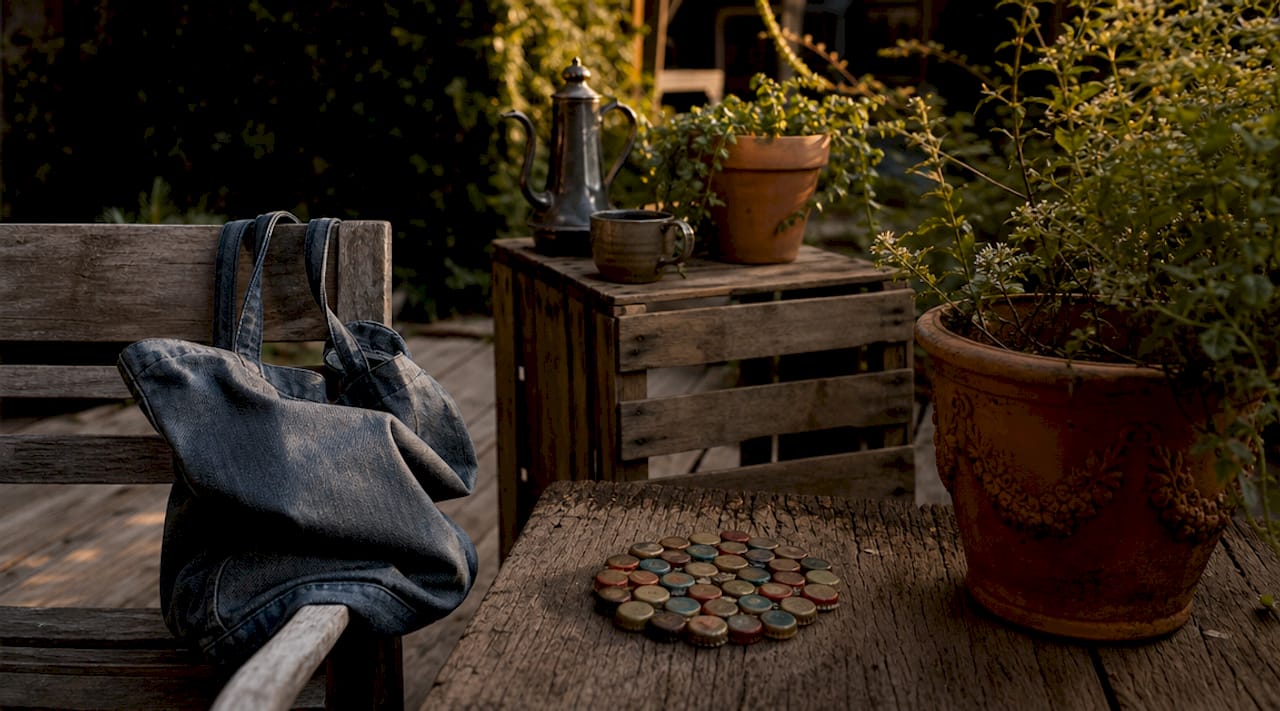
A worn denim jacket becomes a tote bag. A wooden pallet becomes a garden bench. A stack of wine corks becomes a trivet. In each case, the material gains a second life without losing its structural identity. This is what separates upcycling from conventional waste management: it treats the original material as an asset, not a liability.
The circular economy framework, championed by organizations like the Ellen MacArthur Foundation, places upcycling at the top of the material value hierarchy. Keeping materials in use at their highest possible value reduces the need to extract, process, and manufacture new resources. That reduction has measurable consequences for energy use, emissions, and resource depletion.
What environmental and economic benefits does upcycling offer?
The environmental case for upcycling is grounded in hard numbers. Reusing one pound of clothing can avoid 3 to 4 pounds of CO2 emissions while reducing the volume of waste sent to landfills that generate methane. Methane is roughly 80 times more potent than CO2 over a 20-year period, so keeping textiles out of landfills carries outsized climate benefits.
The economic benefits are equally real. Upcycling projects range from zero-cost hobby efforts to premium artisanal goods, supporting local makers and shifting consumer behavior from passive purchasing toward active creation. A furniture restorer who sources pieces from estate sales and resells them at craft markets is participating in a local economy that recycling infrastructure simply cannot support.
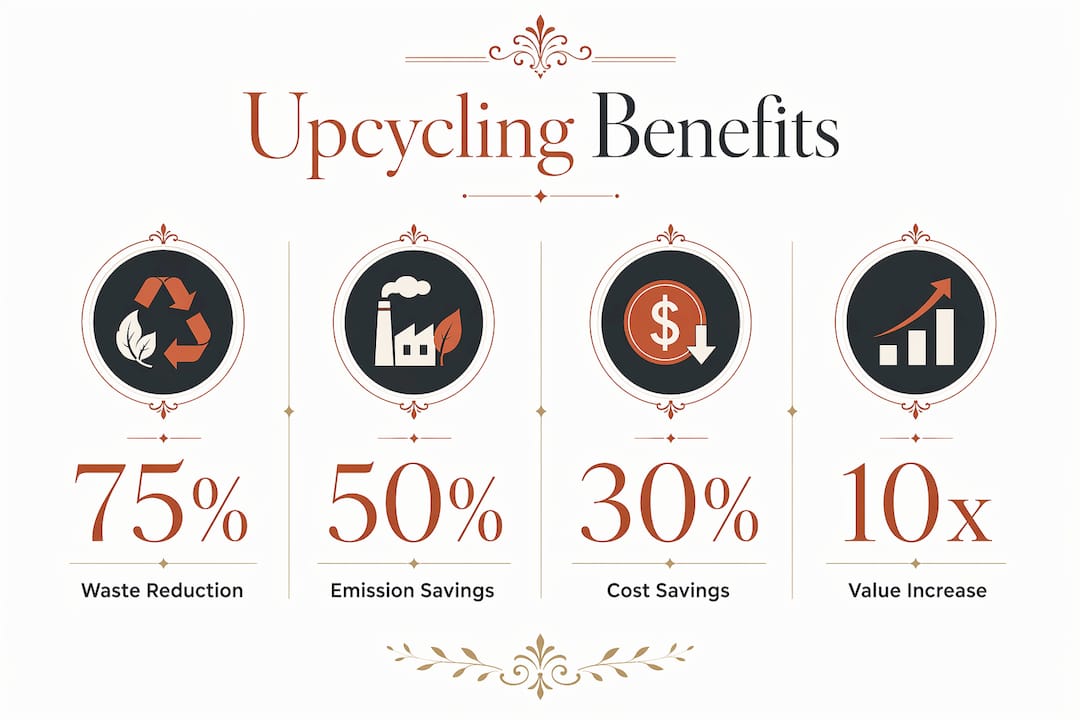
Researchers have developed the Sustainability Benefit Factor (SBF) to measure these combined gains. The SBF evaluates environmental, economic, and social impact relative to the performance improvement of the upcycled product. A higher SBF score means the process adds genuine value with less adverse impact. This metric gives designers, manufacturers, and individual crafters a way to compare approaches and make smarter material choices.
The benefits of upcycling stack up across three categories:
- Environmental: Reduced landfill waste, lower methane emissions, decreased demand for virgin raw materials, and smaller manufacturing carbon footprints.
- Economic: Lower production costs for artisans, new revenue streams from discarded materials, and reduced consumer spending on new goods.
- Social: Skill-building, community engagement, and a cultural shift toward valuing craftsmanship over disposability.
"Upcycling's greatest contribution is not just diverting waste. It is reframing how we assign value to materials in the first place."
How does upcycling work in practice?
Most upcycling projects follow a recognizable pattern, even when the materials and outcomes vary widely. The process starts with identifying a discarded or underused item, evaluating its condition, and imagining a new function or form. Execution involves cleaning, modifying, and finishing the material with as few new inputs as possible.
Common materials suited to upcycling include:
- Textiles: Old jeans, curtains, and shirts become bags, quilts, or upholstery fabric.
- Furniture: Worn chairs, dressers, and tables are sanded, repainted, or reupholstered into statement pieces for upcycled home decor.
- Packaging: Cardboard boxes, glass jars, and tin cans become organizers, planters, or decorative containers.
- Plastics: Bottles and containers are cut and reshaped into garden tools, bird feeders, or storage solutions.
- Wood: Pallets, crates, and offcuts become shelving, wall art, or outdoor furniture.
One of the most underestimated realities of upcycling projects is the time spent on preparation. Material prep consumes up to 60 to 70% of project time, covering cleaning, removing adhesives, stripping old finishes, and assessing structural soundness. Beginners consistently underestimate this phase, which leads to abandoned projects and wasted effort.
Pro Tip: Before committing to a project, spend 15 minutes on a "prep audit." Check for mold, test joints for stability, and identify any coatings that require chemical stripping. This single step will tell you whether a project is worth your time.
The most successful upcycling projects use reclaimed hardware and minimal new materials. Swapping out drawer pulls with salvaged brass handles costs nothing and adds character. Repainting a dresser with leftover wall paint keeps the resource footprint low. The goal is transformation through ingenuity, not through spending.
What are the challenges and misconceptions about upcycling?
The most persistent misconception about upcycling is that any act of creative reuse is automatically sustainable. It is not. Not all upcycling is sustainable; high-energy processes, toxic solvents, or excessive new materials can increase a project's carbon footprint beyond what would have been generated by simply buying new.
Several specific pitfalls undermine sustainability gains:
- Toxic inputs: Spray paints with volatile organic compounds (VOCs), solvent-based adhesives, and chemical strippers all carry environmental costs that offset the benefit of reusing a material.
- Over-designing: Adding costly new items like specialty hardware, imported fabrics, or premium finishes can make an upcycled product more resource-intensive than a new one.
- Ignoring design intent: Products not designed for disassembly are harder and more energy-intensive to upcycle. Designing for upcycling ideally starts before disposal, with products built for easy repair or repurposing.
- Skipping material evaluation: Using structurally compromised materials creates safety risks and short-lived products, which defeats the purpose of keeping materials in use.
Pro Tip: When choosing finishes, look for water-based paints and natural waxes. They perform well on most surfaces and carry a fraction of the environmental load of solvent-based alternatives.
The design-first mindset is worth emphasizing. Circular economy principles suggest that the best time to plan for upcycling is during the original product's design phase, not after it reaches the end of its life. For individual crafters, this translates to a practical habit: before discarding anything, spend 60 seconds asking whether it has a second use. That pause is where most good upcycling ideas originate. Packaging designers who think about repurposing old packaging designs from the start create materials that are far easier to give a second life.
How to get started with upcycling projects
Starting well matters more than starting big. A failed first project discourages future attempts, while a small, well-executed one builds confidence and skill. Follow this sequence for your first upcycling project:
- Source your material. Start with something you already own: a piece of furniture you were going to discard, a stack of glass jars, or a pile of old clothing. Sourcing from what you have eliminates cost and reduces the environmental footprint of acquisition.
- Assess structural integrity. Stress test materials by applying pressure to joints, checking for cracks, and looking for signs of water damage or rot. A chair that wobbles under light pressure is not a safe candidate for a seating project without significant reinforcement.
- Plan your prep work. Identify every cleaning, stripping, or repair step before you begin. Estimate the time honestly. If prep will take four hours, schedule four hours. Rushing this phase is the most common reason upcycling projects fail.
- Choose minimal, low-impact inputs. Select water-based finishes, reclaimed hardware, and natural materials wherever possible. Every new item you add to a project reduces its sustainability credentials.
- Execute with a value-add mindset. Ask what makes this object better than it was. A plain wooden crate becomes more useful with added rope handles. A glass jar becomes more appealing with a hand-painted label. The goal is to increase value, not just change appearance.
- Evaluate and document. Once complete, assess what worked and what did not. Photograph the before and after. This habit builds a personal reference library that makes future projects faster and more effective.
Creative upcycling ideas do not require advanced skills. Some of the most impactful projects are also the simplest: turning a worn leather belt into cabinet handles, converting a vintage suitcase into a side table, or transforming mismatched ceramic tiles into a mosaic trivet. The constraint of working with what exists is often what produces the most original results.
Key takeaways
Upcycling produces higher-value outcomes than recycling by preserving material integrity, reducing emissions, and supporting local economies without requiring industrial processing.
| Point | Details |
|---|---|
| Upcycling vs. recycling | Upcycling preserves or improves material value; recycling breaks materials down into lower-quality outputs. |
| Environmental impact | Reusing one pound of clothing avoids 3 to 4 pounds of CO2 emissions and reduces landfill methane. |
| Sustainability limits | High-energy processes or excessive new inputs can make upcycling less sustainable than buying new. |
| Prep time is the real work | Material preparation takes 60 to 70% of project time and is the most underestimated phase for beginners. |
| Design-first thinking | Planning for reuse before disposal maximizes value recovery and aligns with circular economy principles. |
Why upcycling changed how I think about materials
I used to see a broken chair as a disposal problem. Now I see it as a design brief. That shift did not happen overnight, and it did not come from reading about sustainability. It came from finishing a project and realizing the result was genuinely better than what I started with.
What most articles on this topic miss is the role of constraint. When you cannot buy your way to a solution, you think harder. A limited material palette forces creative decisions that a fully stocked workshop never would. The best upcycled pieces I have seen, from reclaimed timber shelving to patchwork denim jackets, carry a visual logic that comes directly from working within limits.
The mistake I see most often is treating upcycling as a cost-cutting exercise rather than a design discipline. People grab whatever is available, skip the prep work, and wonder why the result looks improvised. Upcycling done well requires the same rigor as any other design process: clear intent, honest material assessment, and restraint with new inputs.
The broader shift I find genuinely exciting is watching upcycling move from a niche hobby into a recognized design methodology. The Sustainability Benefit Factor is one signal of that maturation. When researchers start building metrics around a practice, it means the practice is being taken seriously. That is good news for anyone who has been doing this work quietly for years.
— Myles
How Offcut supports sustainable design thinking
If upcycling has taught you anything, it is that good design does not require starting from scratch. The same principle drives Offcut.

Offcut is where print-ready packaging concepts go instead of a designer's hard drive. Founders get exclusive, professionally designed packaging at a fraction of agency cost. Designers get paid for work that would otherwise sit unused. It is the upcycling logic applied directly to the design industry: take something of real value that would otherwise be wasted and put it to work. If you are thinking about sustainable packaging design or want to explore concepts built with material efficiency in mind, Offcut is the place to start.
FAQ
What is the upcycling definition in simple terms?
Upcycling is the process of converting discarded or unwanted materials into new products with greater value, whether functional, aesthetic, or economic. It differs from recycling because it preserves the material's original form rather than breaking it down.
What items can be upcycled at home?
Almost any durable material can be upcycled, including furniture, clothing, glass jars, cardboard packaging, wooden pallets, and plastic containers. The key factor is structural soundness: materials with significant damage or contamination are harder to transform safely.
How does upcycling help the environment?
Upcycling reduces landfill waste, lowers methane emissions from decomposing materials, and cuts demand for virgin resources. Reusing one pound of clothing, for example, avoids 3 to 4 pounds of CO2 emissions compared to manufacturing new fabric.
Is upcycling always sustainable?
Not automatically. Projects that rely on high-energy processes, toxic solvents, or large quantities of new materials can carry a higher environmental cost than simply buying a new product. Sustainable upcycling prioritizes minimal new inputs and low-impact finishes.
How is upcycling different from recycling?
Recycling breaks materials down into raw inputs, often producing a lower-quality output in a process called downcycling. Upcycling skips the breakdown and finds a new, higher-value use for the material in its existing form, preserving more of its embodied energy and value.