
TL;DR:
- Focus on preserving core brand cues like colors, logos, and shapes during packaging updates.
- Incorporate sustainability through lightweighting and mono-materials to cut costs and enhance recyclability.
- Test in realistic shelf environments before rollout to ensure recognition and purchase intent are maintained.
Your packaging design has real equity built into it. Customers recognize the color, the logo placement, the shape on shelf. But the design feels dated, costs are climbing, and sustainability pressure is real. Starting over from scratch is expensive and risky. The smarter play is strategic repurposing: refreshing what needs updating while protecting what earns you recognition and sales. This guide walks you through exactly how to assess, update, test, and roll out repurposed packaging designs in a way that saves money, reduces waste, and keeps your brand equity intact.
Table of Contents
- Assess what to keep and what to change
- Incorporate sustainability and cost efficiency
- Develop, prototype, and test refreshed packaging
- Maximize ROI with context-driven rollout
- Why most packaging redesigns fail—and how to approach repurposing differently
- Ready to repurpose designs with confidence?
- Frequently asked questions
Key Takeaways
| Point | Details |
|---|---|
| Preserve brand cues | Always keep recognizable colors, shapes, and logos to avoid confusing your customers. |
| Layer in sustainability | Repurposing old designs is a chance to switch to lighter, recyclable, and cost-saving materials. |
| Test before rollout | Use real-world context testing to ensure your updated design boosts intent rather than harming recognition. |
| Phased deployment works | Roll out in test markets or stages to minimize risk and learn quickly before a full launch. |
Assess what to keep and what to change
Before touching a single design file, you need a clear picture of what your packaging is actually doing for you. Not every element carries equal weight. Some are doing heavy lifting for recognition. Others are just there because they were always there.
Repurposing old packaging designs means refreshing visual elements while keeping core brand equities for recognition. That distinction matters more than most founders realize. Brand equity lives in specific cues, not the overall look, and those cues are what you protect at all costs.
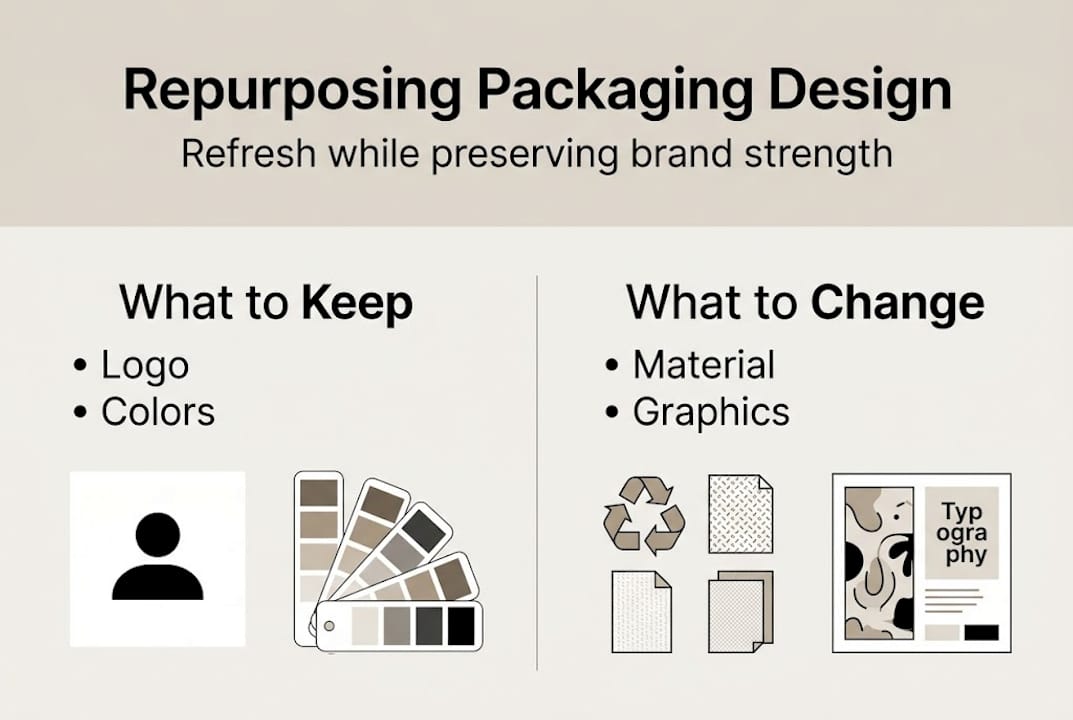
The first step is separating your design into two buckets: core brand equities and flexible visual elements. Core equities are the things customers use to identify your product without reading the label. Flexible elements are the supporting cast that can evolve without breaking recognition.
Core equities to preserve:
- Brand colors (especially if distinctive in your category)
- Logo mark and wordmark
- Distinctive structural shapes or packaging formats
- Any iconic visual device customers associate specifically with you
Flexible elements safe to update:
- Typography and font weight
- Background patterns or textures
- Benefit callouts and hierarchy
- Photography or illustration style
- Secondary color accents
A useful real-world reference here is Weiman, which improved purchase lift by enhancing benefit visuals and product imagery while keeping its core brand assets untouched. The result was a fresher shelf presence without any loss of recognition. That is the goal: visible improvement, zero equity damage.
Understanding brand impact through packaging updates requires honest category benchmarking too. Look at your competitors and identify where your current design is falling behind in terms of readability, hierarchy, or shelf standout. Then cross-reference that with what your loyal customers already recognize.
| Element | Keep | Safe to update |
|---|---|---|
| Brand color palette | Yes | Only add, never remove |
| Logo | Yes | Minor refinements only |
| Distinctive shape | Yes | No |
| Typography | Partial | Weight, size, style |
| Benefit messaging | No | Yes, fully |
| Photography/illustration | No | Yes, fully |
For consumer appeal tips, focus updates on clarity and shopability first. Customers make shelf decisions in under three seconds, so hierarchy and legibility improvements often deliver the biggest lift.
Pro Tip: Update only one major design element at a time during testing. This gives you clean feedback on what is actually driving any change in performance, rather than guessing which of five changes moved the needle.
Incorporate sustainability and cost efficiency
Once you know what to preserve, it is time to layer in sustainability and efficiency for greater brand and cost wins. The good news is that a packaging refresh is one of the best moments to make these moves, because you are already opening the files and briefing production.
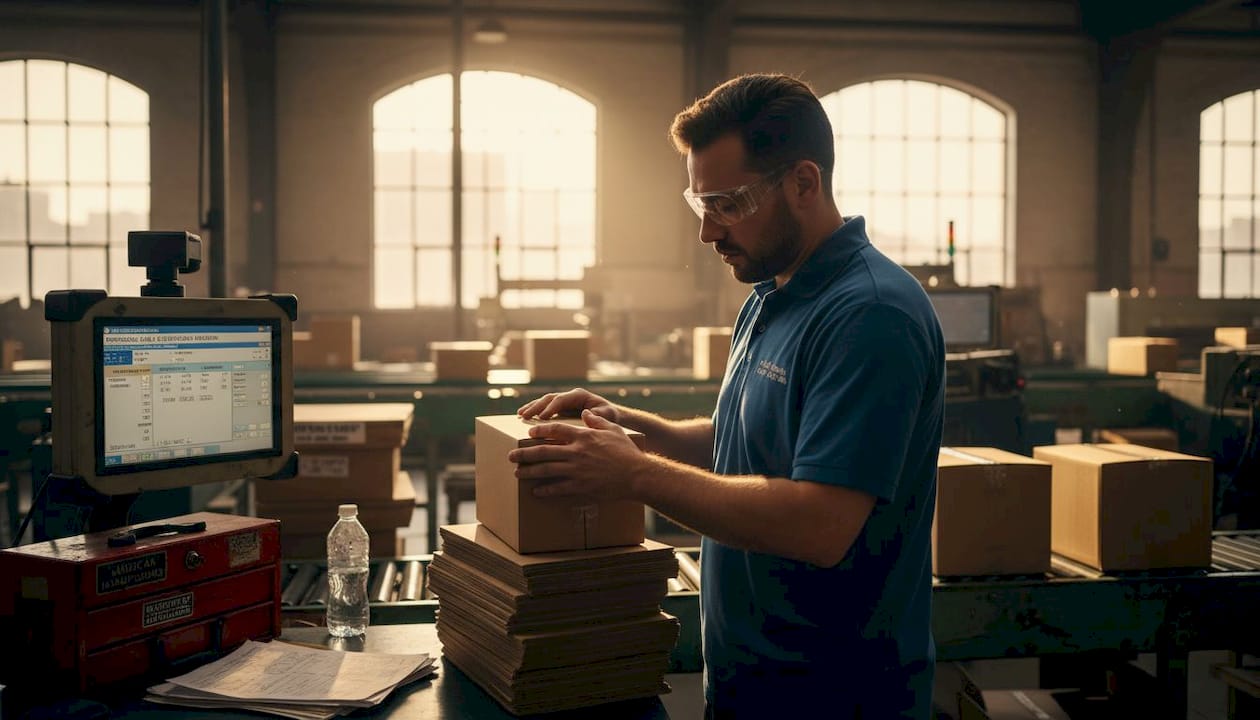
Lightweighting, mono-materials, and right-sizing can cut costs and enable recyclability at the same time. Conagra's redesign work demonstrated this clearly: structural changes that reduce material use also reduce shipping weight, which compounds savings across every pallet you move.
PepsiCo's results are equally instructive. Mono-PP cubes and plastic reduction yield real-world savings that show up on the balance sheet, not just in sustainability reports. These are not feel-good moves. They are operational improvements that happen to also be good for the planet.
Here is a practical breakdown of approaches and their impact:
| Strategy | Typical cost impact | Sustainability benefit | Complexity |
|---|---|---|---|
| Lightweighting | 5-15% material savings | Reduces carbon per unit | Low |
| Mono-material switch | Moderate upfront cost | Enables full recyclability | Medium |
| Right-sizing | Reduces filler/void fill | Less waste per shipment | Low |
| Recycled content | May increase unit cost | Reduces virgin material use | Medium |
| Refill/reuse format | Higher redesign cost | Significant lifecycle gains | High |
Exploring cost-effective packaging ideas early in your refresh process helps you identify which structural changes align with your production capabilities. Not every brand needs to overhaul its format. Sometimes right-sizing a box by 10% is the highest ROI move available.
To implement sustainable features without blowing up your timeline, follow this sequence:
- Audit your current material spec and identify the single largest waste or cost driver
- Request alternative material samples from your current supplier before sourcing new ones
- Model the cost delta at your actual production volumes, not theoretical minimums
- Prototype the new spec alongside your visual refresh to evaluate both together
- Confirm recyclability claims with your certifier before printing anything on pack
Understanding the packaging lifecycle helps you prioritize which stage to optimize first. For most CPG founders, the biggest gains come from upstream material choices, not end-of-life labeling. And for category-specific context, sustainable CPG design considerations vary significantly by format and retail channel.
Pro Tip: Weigh the initial cost premium of sustainable materials against the loyalty and PR value they generate. For brands selling to environmentally conscious consumers, the payback period is often shorter than the spreadsheet suggests.
Develop, prototype, and test refreshed packaging
With a sustainability-driven concept in hand, the focus shifts to making and validating the new design. This is where many CPG founders either rush or overthink. Both are expensive mistakes.
Start with digital prototypes before committing to physical samples. Use realistic shelf renders and planogram mockups so you can evaluate the design in context, not just on a white background. The way your pack looks next to six competitors is the only view that matters.
The process should follow a clear sequence:
- Create high-fidelity digital mockups with all updated elements applied
- Place the design in virtual shelf environments alongside real competitor SKUs
- Run recognition and readability tests with target shoppers, not design colleagues
- Gather feedback specifically on brand recognition, key message clarity, and purchase intent
- Iterate on the design based on findings, then repeat shelf testing with the revised version
- Produce physical prototypes for final tactile and print quality evaluation
Testing in realistic shelf contexts for purchase intent, recognition, and readability is crucial. Out-of-context preference tests, where you show a shopper two designs on a plain background, are almost useless. They measure preference, not performance.
The Tropicana case is the most cited cautionary tale in packaging for a reason. A 20% sales drop followed the removal of iconic visual cues that customers had used to identify the product for years. The new design tested well in isolation. It failed on shelf because the recognition cues were gone.
"The lesson from Tropicana is not that bold redesigns are bad. It is that removing the cues customers use to find you is always bad, regardless of how the new design looks in a studio."
The role of packaging concept creation in this phase is to generate options worth testing, not to produce a final answer. Give yourself two or three directions that each preserve your core equities differently, then let the shelf testing data decide. For founders working with tighter budgets, concept packaging strategies can significantly reduce the cost of this iteration phase.
Maximize ROI with context-driven rollout
Now that design updates are validated, it is time to deploy strategically and learn from the results. How you roll out matters almost as much as what you roll out.
| Rollout strategy | Risk level | Learning value | Best for |
|---|---|---|---|
| Pilot (single SKU or region) | Low | High | First major refresh |
| Phased by channel | Medium | Medium | Multi-channel brands |
| Full launch | High | Low until post-launch | High-confidence updates |
| Test market | Low | High | New format or structure |
Prioritizing consumer testing in context over isolated preference is what separates successful refreshes from costly missteps. The brands that see the strongest post-launch results are the ones that treated rollout as a learning phase, not a finish line.
Once you launch, build feedback loops immediately:
- Track velocity data by SKU and region in the first 60 days
- Monitor retailer feedback on shelf performance and reorder rates
- Set up a simple customer feedback mechanism tied to the new packaging
- Compare purchase intent scores from testing against actual conversion data
- Document every decision and its outcome for the next refresh cycle
CPG brands that approach repurposing with this kind of rigor consistently report stronger outcomes than those chasing trend-driven redesigns. The discipline of packaging workflow strategies is what makes repurposing scalable across a portfolio, not just a one-time win.
For teams managing multiple SKUs, a structured packaging portfolio workflow ensures that learnings from one refresh inform the next. And staying current on innovative packaging trends helps you identify which updates will have the longest shelf life before they need revisiting.
Why most packaging redesigns fail—and how to approach repurposing differently
Here is the uncomfortable truth: most packaging redesigns fail not because of bad design, but because of the wrong brief. Founders go in asking "how do we make this look more modern?" instead of asking "what is this design currently doing for us, and what specific problem are we solving?"
Chasing trends for their own sake is how you end up with a Tropicana situation. Refreshes succeed when preserving recognition while enhancing shopability and claims, not when following creative trends blindly. That is not a creative opinion. It is what the data consistently shows.
The brands that get the most value from repurposing are the ones that start with equity mapping, not mood boards. They know exactly what they own in the consumer's mind before they change anything. Every decision flows from that foundation.
If you are thinking about updating for brand impact, the first question is always: what do customers already love about this packaging? The second is: what is getting in the way of them buying more? Start there, and your brief writes itself. For cost-effective branding inspiration, the best starting point is always your existing design assets, not a blank canvas.
Pro Tip: Never run preference tests in isolation. Always test new packaging designs in a realistic shelf or purchase environment. Out-of-context tests measure what people say they like. Shelf tests measure what they actually buy.
Ready to repurpose designs with confidence?
You now have a clear process: assess your equities, layer in sustainability, prototype and test in realistic environments, and roll out with a feedback loop built in. The strategy is solid. The next question is where to find the design concepts worth building on.
Offcut is built for exactly this moment. Instead of commissioning expensive agency work from scratch, founders can access print-ready packaging concepts that have already been developed by experienced designers. These are not generic templates. They are real concepts that deserve a real product. If you are a designer with unused packaging work sitting in a folder, selling unused packaging concepts through Offcut turns that work into income. For founders, it means a faster, more cost-effective path to a refreshed shelf presence without starting over.
Frequently asked questions
What are the risks of changing too much in a packaging refresh?
Changing all core brand cues at once can confuse customers and cause significant sales drops. Tropicana's rebrand resulted in a 20% sales decline after removing the visual cues customers relied on to identify the product.
Which design elements should I always preserve?
Always protect core equities like brand colors, logos, and distinctive shapes. Repurposing means updating visuals while keeping the recognition cues that customers use to find your product on shelf.
How does sustainable packaging save money?
Optimizing materials through lightweighting or switching to mono-materials lowers costs by reducing production weight and shipping expenses. Mono-PP cubes and lightweight designs reduce both material use and logistics costs per unit.
How can I know if my repurposed design will work?
Test new designs with real shoppers in realistic shelf environments and measure purchase intent and recognition before a full launch. Testing in realistic shelf contexts gives you performance data, not just preference data.