
Most packaging professionals think their job ends when the product ships. That's a costly misconception. The packaging lifecycle extends far beyond production, encompassing design, material sourcing, consumer use, and end-of-life disposal. Each stage directly impacts your product's market success, environmental footprint, and bottom line. Understanding this complete journey transforms how you approach packaging decisions, opening opportunities for innovation, cost savings, and sustainability improvements that competitors miss.
Table of Contents
- Key takeaways
- Defining the packaging lifecycle: stages and significance
- Materials and sustainability considerations across the packaging lifecycle
- Design strategies for lifecycle optimization in packaging
- Applications of packaging lifecycle knowledge for business growth and sustainability
- Explore OffCut's packaging design solutions
- Frequently asked questions about packaging lifecycle
Key Takeaways
| Point | Details |
|---|---|
| Lifecycle approach | Viewing packaging through all stages reveals how decisions in design, production, use, and disposal shape cost, sustainability, and market success. |
| Designer role across stages | Designers should be involved from concept through end of life to steer choices that reduce waste and improve environmental performance. |
| End of life impact | End of life options and consumer disposal behavior determine whether materials recycle, compost, or end up in landfills, affecting footprint. |
| Material choice tradeoffs | Material selection creates cascading effects on production energy, transport emissions, consumer experience, and disposal outcomes, requiring tradeoffs based on product needs. |
| Map stages to uncover opportunities | Mapping the five stages helps reveal hidden costs and sustainability gaps to address early in the process. |
Defining the packaging lifecycle: stages and significance
The packaging lifecycle consists of five interconnected stages that determine your product's success. Concept design, material selection, production, distribution, use, and end-of-life processing form a continuous loop where decisions in one phase ripple through all others. This holistic view separates successful brands from those struggling with sustainability claims or market fit.
Stage one begins with concept development. Your design team establishes structural requirements, visual identity, and functional specifications. This phase sets constraints for everything that follows. A poorly conceived design creates production headaches, increases material waste, and limits end-of-life options. Smart brands invest time here because corrections cost exponentially more later.
Material selection follows concept approval. You're choosing between plastics, paper, glass, metals, or bio-based alternatives. Each material carries distinct production requirements, cost structures, and environmental profiles. Plastic offers durability and light weight but faces recycling challenges. Paper provides recyclability but may lack moisture resistance. Your choice affects manufacturing processes, shipping costs, and consumer disposal behavior.

Production transforms raw materials into finished packaging. Manufacturing efficiency depends on design complexity, material properties, and production volume. Simple designs with fewer components reduce waste, lower costs, and speed production. Complex multi-material packages look impressive but create recycling nightmares and drive up manufacturing expenses.
Distribution and use represent the package's active life. Your packaging protects products through shipping, warehousing, retail display, and consumer handling. Durability requirements vary by distribution channel. E-commerce demands different protection than retail shelf display. Consumer interaction during use affects brand perception and repurchase decisions.
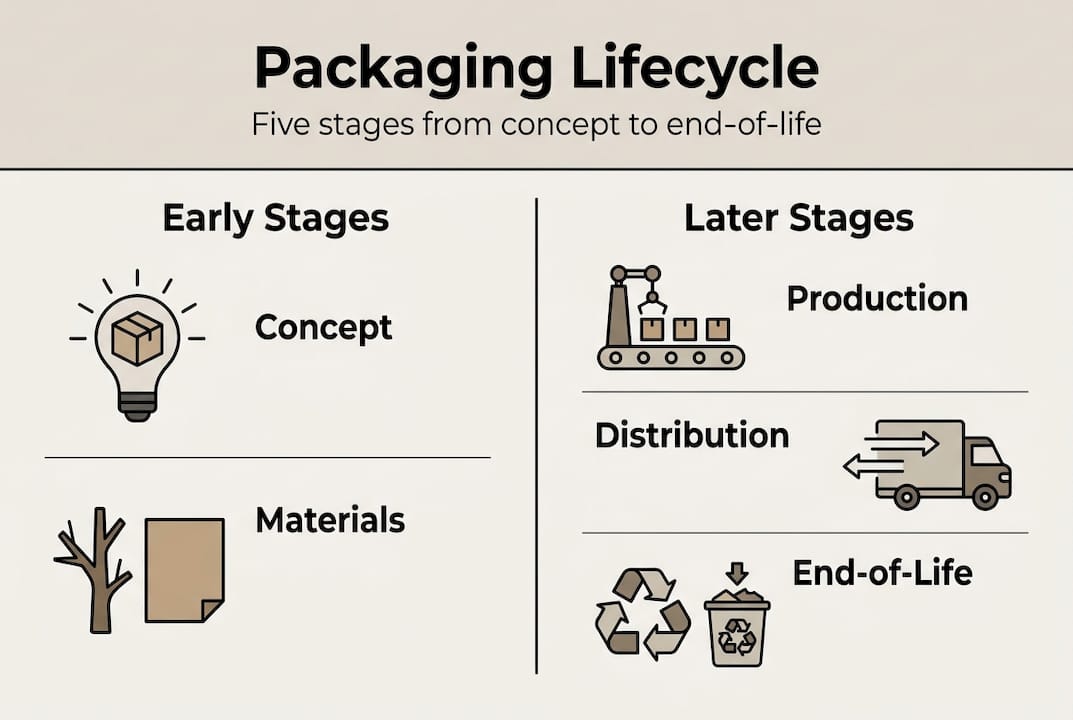
End-of-life processing closes the loop. Packages enter waste streams through consumer disposal decisions. Recyclability, compostability, or landfill destination depends on material choice, local infrastructure, and consumer education. Brands that ignore this stage face growing regulatory pressure and consumer backlash.
Pro Tip: Map your current packaging through all five stages to identify hidden costs and sustainability gaps. Most brands discover optimization opportunities they never considered.
Understanding these stages matters because each presents intervention points. You can't fix end-of-life problems without addressing design decisions. You can't reduce production costs without reconsidering materials. The designer's role in packaging concept creation extends across every phase, making their early involvement critical for lifecycle success.
Materials and sustainability considerations across the packaging lifecycle
Material choice creates cascading effects throughout the packaging lifecycle. Your selection during design determines production energy consumption, transportation emissions, consumer experience, and disposal outcomes. No single material wins every category, forcing strategic tradeoffs based on product requirements and brand values.
| Material | Production Impact | Use Phase | End-of-Life Options | Best Applications |
|---|---|---|---|---|
| PET Plastic | High energy, petroleum-based | Lightweight, durable, moisture resistant | Widely recyclable, 29% recycling rate | Beverages, personal care, food containers |
| Corrugated Paper | Moderate energy, renewable source | Lightweight, customizable, limited moisture resistance | 89% recycling rate, biodegradable | Shipping boxes, retail packaging, dry goods |
| Glass | Very high energy, sand-based | Heavy, premium feel, excellent barrier | Infinitely recyclable, 33% recycling rate | Premium beverages, cosmetics, specialty foods |
| Aluminum | Extremely high initial energy | Lightweight, excellent barrier | 73% recycling rate, infinite reuse | Beverages, aerosols, specialty packaging |
| Compostable Bioplastics | Moderate energy, plant-based | Variable durability, moisture sensitive | Industrial composting required, limited infrastructure | Food service, short-term use products |
Plastic dominates consumer packaging for practical reasons. It's lightweight, reducing transportation emissions. It's moldable into complex shapes. It provides excellent moisture and oxygen barriers. But plastic faces serious end-of-life challenges. Most plastic packaging uses virgin resin because recycled content affects clarity and strength. Recycling infrastructure varies dramatically by region, and contamination rates remain high.
Paper and cardboard offer compelling sustainability narratives. High recycling rates and renewable sourcing appeal to environmentally conscious consumers. Paper works beautifully for dry goods and shipping containers. However, paper requires moisture barriers for many applications, often applied as plastic coatings that complicate recycling. Ink and adhesive choices affect recyclability more than most brands realize.
Glass delivers premium positioning and infinite recyclability. It's chemically inert, making it ideal for products where material interaction matters. But glass is heavy, increasing transportation emissions and breakage risks. Production requires extreme temperatures, consuming significant energy. Glass makes sense for premium products where weight and cost matter less than perception and reusability.
Bioplastics and compostable materials promise breakthrough sustainability. Made from corn, sugarcane, or other plant sources, they offer renewable alternatives to petroleum plastics. Reality is more complex. Many bioplastics require industrial composting facilities that don't exist in most communities. Consumer confusion leads to contamination of recycling streams. Performance often lags conventional plastics for demanding applications.
Your material decision should balance functionality, cost, and environmental impact across the full lifecycle. A lightweight plastic package that enables product preservation might have lower total environmental impact than heavier alternatives requiring more transportation energy. Optimizing end-of-life options such as recyclability or compostability must start with material selection, not as an afterthought.
Pro Tip: Conduct a lifecycle assessment comparing material options for your specific product and distribution model. Results often contradict assumptions about which materials are truly more sustainable.
Consider how consumers interact with your packaging. Resealable features extend product life, reducing food waste that dwarfs packaging's environmental impact. Easy-open designs improve user experience but may compromise recyclability. These tradeoffs require careful analysis within your packaging design strategy to boost consumer appeal while maintaining lifecycle integrity.
Design strategies for lifecycle optimization in packaging
Smart design choices during concept development determine 80% of your packaging's lifecycle performance. You can't retrofit sustainability or efficiency after finalizing structural design. The most impactful interventions happen early, when you still have flexibility to make fundamental changes without cost penalties.
Integrate lifecycle thinking from the first sketch. Ask how each design element affects production, use, and disposal. That decorative element might look attractive but could complicate manufacturing or recycling. Question every component's necessity. Minimalist design isn't just aesthetic, it's strategic lifecycle optimization.
Key design principles for lifecycle excellence:
- Minimize material variety within a single package to simplify recycling
- Design for disassembly when multiple materials are unavoidable
- Eliminate unnecessary layers, windows, and decorative elements that complicate processing
- Choose adhesives and inks compatible with recycling streams
- Optimize structural design to reduce material usage without compromising protection
- Consider package reusability or repurposing in your design concept
Modular design approaches offer flexibility across the lifecycle. Separable components allow consumers to recycle different materials properly. A jar with a metal lid and paper label enables each material to enter its optimal waste stream. Integrated designs where plastic windows are heat-sealed into paper create recycling headaches that most consumers simply throw away.
Structural efficiency reduces material consumption without sacrificing performance. Advanced design software and prototyping let you test thinner walls, optimized shapes, and material distribution. Every gram of material eliminated multiplies across production volumes into significant cost savings and environmental improvements. Step-by-step packaging design approaches help systematically identify these opportunities.
User experience design extends beyond aesthetics into lifecycle impact. Packages that are difficult to open frustrate consumers and damage brand perception. But overly complex opening mechanisms may use excess material or complicate recycling. The sweet spot balances easy access with minimal material and clear disposal guidance.
Clear end-of-life instructions dramatically improve proper disposal rates. Most consumers want to recycle but face confusion about what goes where. Simple, visible instructions on packaging increase recycling compliance. Specify whether components separate, which materials are recyclable in curbside programs, and what requires special handling.
Collaboration between designers, engineers, and sustainability experts catches problems early. Designers focused purely on aesthetics might specify materials or structures that create production or recycling challenges. Engineers optimizing for manufacturing efficiency might sacrifice user experience. Cross-functional review during concept development prevents costly revisions and ensures designer briefs for CPG brands address all lifecycle considerations.
Pro Tip: Create a lifecycle checklist for design reviews covering production feasibility, material efficiency, user experience, and end-of-life outcomes. Use it before finalizing any packaging concept.
Whitespace and visual hierarchy affect lifecycle performance in unexpected ways. Cluttered designs often drive brands to add windows, foils, or embossing that complicate recycling. Strategic use of whitespace in packaging design creates visual impact without additional materials or processes, improving both aesthetics and lifecycle profile.
Test prototypes through the complete lifecycle, not just production. Evaluate how packages perform in shipping, how consumers interact with them, and how easily they separate for recycling. Physical testing reveals problems that look fine on screen but fail in real-world conditions.
Applications of packaging lifecycle knowledge for business growth and sustainability
Lifecycle awareness transforms from abstract concept into competitive advantage when applied systematically. Brands that understand and optimize their packaging lifecycle outperform competitors on cost, sustainability, and market positioning. The knowledge becomes actionable through structured implementation.
Product-market fit improves when packaging aligns with consumer values across the lifecycle. Today's consumers, especially younger demographics, research brand sustainability claims. They reject greenwashing but reward authentic lifecycle improvements. Transparent communication about your packaging choices builds trust that translates into loyalty and premium pricing power.
Regulatory compliance grows more complex as governments worldwide implement extended producer responsibility laws. These regulations hold brands accountable for packaging's end-of-life costs and environmental impact. Proactive lifecycle optimization positions you ahead of regulatory curves, avoiding scrambling for compliance when new rules take effect. Better understanding of the packaging lifecycle helps CPG startups and small businesses create sustainable products meeting evolving expectations.
Cost savings emerge from lifecycle optimization in unexpected places:
- Reduced material usage lowers raw material costs
- Simplified designs decrease manufacturing complexity and labor
- Lighter packaging cuts transportation expenses
- Improved durability reduces product damage and returns
- Recyclable materials may qualify for tax incentives or lower disposal fees
- Standardized components enable bulk purchasing and inventory efficiency
Brand reputation benefits compound over time. Sustainability leadership attracts media coverage, industry awards, and consumer advocacy. Your packaging becomes a marketing asset rather than a necessary cost. Retailers increasingly favor brands with strong sustainability profiles, improving shelf placement and promotional opportunities.
Implementing lifecycle thinking requires structured steps:
- Audit current packaging across all five lifecycle stages to establish baseline performance and identify improvement opportunities
- Set measurable goals for material reduction, recyclability rates, and carbon footprint that align with business objectives and market positioning
- Engage designers early in product development to integrate lifecycle considerations from concept rather than retrofitting later
- Test prototypes through complete lifecycle scenarios including production, distribution, use, and disposal to catch problems before full production
- Educate consumers about proper disposal through clear on-package instructions and digital content that increases recycling compliance
- Monitor performance metrics and iterate designs based on real-world data from production efficiency, consumer feedback, and disposal outcomes
Collaboration with experienced designers accelerates lifecycle improvements. Designers who understand production constraints, material properties, and end-of-life implications bring solutions you might not discover internally. They've solved similar challenges for other brands and can adapt proven approaches to your specific needs. Platforms that connect brands with designers expand your access to specialized expertise without full-time hiring costs.
Supply chain partners play critical roles in lifecycle success. Manufacturers can suggest production-friendly design modifications that maintain your vision while improving efficiency. Material suppliers offer emerging options that might better serve your lifecycle goals. Recycling facilities provide insights into what actually gets recycled versus landfilled, informing more realistic end-of-life planning.
Measurement and transparency demonstrate commitment beyond marketing claims. Track metrics like material usage per unit, recycling rates where data exists, and carbon footprint across lifecycle stages. Share progress publicly, including challenges and setbacks. Authenticity resonates more than perfection. Consumers and retailers recognize that sustainability is a journey, not a destination.
Small businesses and startups have advantages in lifecycle optimization that larger competitors lack. You can move quickly without navigating complex approval chains. You can build sustainability into your brand DNA from launch rather than retrofitting established systems. Your agility becomes competitive advantage when you sell unused packaging concepts and iterate rapidly based on lifecycle insights.
Explore OffCut's packaging design solutions
Applying packaging lifecycle knowledge requires access to design expertise that understands these complex tradeoffs. OffCut connects CPG brands with professional designers who've created packaging concepts optimized for real-world lifecycle performance. Instead of starting from scratch or paying agency retainers, you access print-ready designs that designers created but clients never used.
The platform works for both sides of the packaging equation. Brands discover exclusive concepts at a fraction of typical design costs, accelerating time to market while maintaining quality. Designers monetize work that would otherwise sit unused on hard drives, earning income from concepts they've already created. This marketplace approach makes professional packaging design accessible to startups and small businesses that couldn't otherwise afford it.
Whether you're selling unused packaging concepts as a designer or searching for lifecycle-optimized designs as a brand, OffCut facilitates connections that benefit everyone. The platform's focus on packaging specifically means every concept considers production feasibility, material efficiency, and market appeal. Learn how OffCut works for packaging designs to see how it fits your packaging development process.
Frequently asked questions about packaging lifecycle
What are the main stages of the packaging lifecycle?
The packaging lifecycle includes five stages: concept design, material selection, production, distribution and use, and end-of-life processing. Each stage influences cost, sustainability, and product success. Design decisions made early determine outcomes in later stages, making upfront lifecycle planning critical.
How does material choice affect packaging sustainability?
Material selection impacts energy consumption during production, transportation emissions, consumer experience, and disposal options. No material is universally best. Plastics offer light weight but recycling challenges. Paper provides recyclability but needs moisture barriers. Glass enables infinite recycling but weighs more. Optimal choice depends on your product, distribution model, and end-of-life infrastructure.
Why should designers be involved early in packaging development?
Designers influence 80% of packaging's lifecycle performance through initial concept decisions. Early involvement allows them to optimize for production efficiency, material usage, user experience, and recyclability simultaneously. Retrofitting sustainability or efficiency after design finalization costs significantly more and achieves inferior results.
What makes packaging truly recyclable in practice?
Recyclability requires more than using recyclable materials. Packages must be designed for easy material separation, use recycling-compatible adhesives and inks, avoid excessive contamination, and match local recycling infrastructure capabilities. Clear consumer instructions increase proper disposal rates. Many technically recyclable packages end up in landfills due to design complexity or consumer confusion.
How can small businesses compete on packaging sustainability?
Small businesses have agility advantages over larger competitors. You can integrate lifecycle thinking from launch, iterate designs quickly, and build authentic sustainability narratives. Focus on material efficiency, clear end-of-life instructions, and transparent communication. Partner with designers who understand lifecycle optimization to access expertise without full-time hiring costs.