
Packaging design can make or break a product launch, yet most small businesses and designers face the same dilemma: how to create standout packaging without draining budgets. The right inspiration balances innovation with affordability, transforming constraints into creative opportunities. This article presents packaging design ideas evaluated through practical criteria, sustainable material innovations, style comparisons, and prototyping strategies. Whether you're a designer seeking to monetize unused concepts or a founder building your first product line, these insights will help you navigate packaging decisions that enhance branding while respecting cost realities.
Table of Contents
- Key takeaways
- Criteria for selecting packaging design inspiration
- Innovative sustainable packaging ideas for small businesses
- Balancing minimalist and maximalist packaging designs
- Prototyping and partnership strategies for packaging success
- Discover packaging design opportunities with Offcut
- FAQ
Key Takeaways
| Point | Details |
|---|---|
| Cost conscious design | Choosing concepts within typical D2C budgets of 3 to 6 percent of revenue and 1 to 5 dollars per order keeps costs in check. |
| Sustainable materials matter | Compostable options and mono material structures reduce waste and appeal to eco conscious shoppers. |
| Prototyping reduces risk | Early testing with dielines and small production runs catches flaws before full scale production. |
| Brand and market fit | Evaluate designs against your brand story and audience to ensure resonance and practical manufacturability. |
Criteria for selecting packaging design inspiration
Choosing the right packaging inspiration starts with understanding your constraints and goals. Cost is the first filter: packaging budgets for D2C brands typically range from 3-6% of revenue, with per-order costs between $1-5 depending on category. Small businesses launching their first product line should aim for the lower end of this spectrum, reserving premium materials for established brands with proven unit economics.
Sustainability matters beyond environmental ethics. Material choices directly impact both production costs and brand perception, especially among younger consumers who prioritize eco-conscious purchases. Compostable materials, mono-material structures, and plastic alternatives can differentiate your brand while potentially reducing waste management expenses. The key is finding suppliers who offer sustainable options without requiring prohibitive minimum order quantities.
Design style represents another crucial decision point. Minimalist approaches reduce printing costs and material waste while building premium trust, whereas maximalist designs increase shelf visibility and appeal to impulse buyers. Your target market should dictate this choice: luxury wellness products benefit from clean simplicity, while youth-focused snacks often demand bold graphics and vibrant colors. Consider how your packaging will appear both on retail shelves and in social media unboxing videos.
Prototyping early saves money and headaches. Work with experienced printers who understand small production runs and can guide you through technical requirements like bleed areas, color profiles, and structural limitations. Testing dielines before committing to full production runs prevents expensive mistakes and allows you to refine designs based on real-world handling. The best packaging inspiration means nothing if it cannot be manufactured within your budget and timeline.
Pro Tip: Create a simple scorecard rating potential designs on cost, sustainability, brand alignment, and production feasibility. This framework prevents emotional decisions and keeps your team focused on packaging that actually works for your business model.
Brand story alignment completes the criteria framework. Your packaging should communicate your unique value proposition at a glance, whether that's artisanal craftsmanship, scientific innovation, or playful irreverence. Review packaging design tips that boost consumer appeal to ensure your inspiration translates into designs that resonate with your specific audience and product category.
Innovative sustainable packaging ideas for small businesses
Sustainable packaging innovations eliminate plastic while offering design flexibility previously unavailable to small brands. Seaweed-based polybags represent a breakthrough for fashion and textile businesses, providing the protective qualities of traditional plastic mailers with complete compostability. Brands like Ales Grey have pioneered this material, proving that ocean-derived packaging can meet durability standards while decomposing naturally within weeks.
Kraft paper with mono print technology offers another cost-effective sustainable option. Unlike traditional multi-layer packaging that cannot be recycled, mono-material structures use a single substrate that simplifies end-of-life processing. WUKA demonstrates this approach with period care packaging that maintains product protection while achieving full recyclability. The printing process allows for rich graphics without compromising environmental credentials, making it ideal for brands that need visual impact alongside sustainability claims.
Flexible compostable pouches serve food, supplement, and personal care brands seeking alternatives to conventional plastic packaging. Pioppo and similar suppliers now offer these materials at minimum order quantities accessible to startups, typically starting around 1,000 units. The pouches provide barrier properties for moisture and oxygen while breaking down in commercial composting facilities, addressing both product protection and environmental concerns.
Comparing sustainable packaging options reveals distinct advantages for different business models:
| Material Type | Compostability | Typical MOQ | Cost Range | Best For |
|---|---|---|---|---|
| Seaweed polybags | Home compost | 500-1,000 | $0.15-0.30 | Apparel, textiles |
| Kraft mono print | Recyclable | 1,000-2,500 | $0.20-0.45 | Beauty, wellness |
| Flexible pouches | Commercial compost | 1,000-3,000 | $0.25-0.60 | Food, supplements |
| Mushroom packaging | Home compost | 500+ | $0.40-0.80 | Premium fragile goods |
The environmental benefits extend beyond marketing claims. Reducing plastic waste lowers disposal costs and potential regulatory compliance expenses as municipalities implement stricter packaging rules. Brands can also leverage sustainability credentials in wholesale negotiations, as major retailers increasingly favor suppliers with documented environmental commitments. Understanding the packaging lifecycle helps you communicate these benefits effectively to both customers and distribution partners.
Pro Tip: Request material samples from multiple suppliers and conduct real-world testing with your actual products. Sustainable materials perform differently under various conditions, and hands-on evaluation prevents surprises during full production runs.
Small businesses should prioritize sustainable options that align with their product category and customer values. A premium skincare brand gains credibility with kraft mono print, while a direct-to-consumer snack company might choose compostable pouches that protect freshness. The key is matching material innovation to your specific brand story while maintaining cost discipline. Explore why sustainable design matters for CPG brands to understand how these choices impact long-term brand equity.
Balancing minimalist and maximalist packaging designs
Minimalist packaging design delivers measurable performance advantages in specific contexts. Minimalist approaches achieve 22% higher click-through rates in e-commerce environments where clean aesthetics signal premium quality and build consumer trust. Brands like Aesop and Glossier have built entire identities around restrained typography, ample whitespace, and muted color palettes. This style reduces printing costs by limiting color separations and simplifies production with fewer design elements that could misalign during manufacturing.
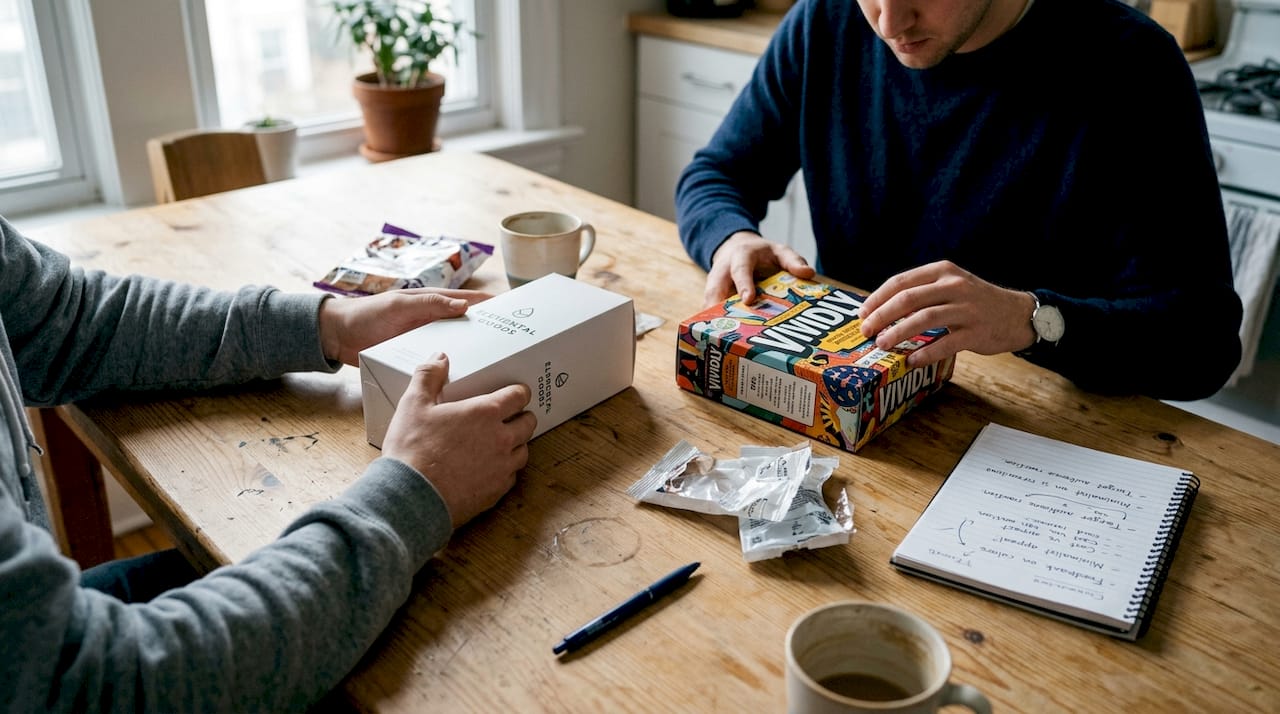
Maximalist design serves different strategic goals. Bold graphics, vibrant colors, and dense visual information increase shelf visibility in crowded retail environments where products compete for attention in milliseconds. Gen Z consumers particularly respond to maximalist packaging that feels authentic, playful, and Instagram-worthy. Snack brands, energy drinks, and youth-focused beauty products often embrace this approach, accepting higher printing costs in exchange for impulse purchase conversion.
Hybrid strategies combine elements from both philosophies to adapt across market segments. A brand might use minimalist primary packaging with maximalist outer boxes, or employ clean layouts with strategic pops of color that maintain sophistication while improving scanability. This flexibility allows companies to test different approaches without completely redesigning their packaging architecture, reducing risk while gathering market feedback.
| Design Approach | Primary Benefit | Cost Impact | Best Channel | Target Demographic |
|---|---|---|---|---|
| Minimalist | Premium perception, sustainability | Lower printing costs | E-commerce, specialty retail | Millennials 30-45, luxury buyers |
| Maximalist | Shelf visibility, social shareability | Higher printing costs | Mass retail, convenience stores | Gen Z 18-29, impulse buyers |
| Hybrid | Market flexibility, testing capability | Medium costs | Multi-channel brands | Broad demographic appeal |
The challenge with minimalist design lies in differentiation. As more brands adopt clean aesthetics, standing out becomes harder without sacrificing the simplicity that defines the approach. Maximalist packaging faces opposite pressures: maintaining visual coherence while incorporating enough elements to achieve desired impact. Both styles require skilled execution to avoid looking cheap or amateurish.
Consider your product category and distribution strategy when choosing design direction. Wellness supplements sold through health food stores benefit from minimalist credibility, while candy targeting kids needs maximalist energy. Your packaging should match customer expectations for the category while finding subtle ways to differentiate. Review strategies for enhancing CPG packaging with whitespace design if pursuing minimalist approaches, or explore comprehensive step-by-step packaging design processes for building any style from scratch.
Pro Tip: Create mockups of your product in both minimalist and maximalist styles, then conduct preference testing with your target audience. What you personally prefer often differs from what drives purchasing decisions in your specific market segment.
Prototyping and partnership strategies for packaging success
Prototyping with dielines and consumer tests prevents expensive mistakes that plague packaging launches. Start by requesting dieline templates from your printer, which provide exact dimensions and fold specifications for your chosen packaging format. Import these templates into design software to ensure your artwork fits properly with appropriate bleed areas and safety margins. This technical foundation prevents artwork from being cut off or misaligned during production.
The prototyping process should follow these sequential steps:
- Create digital mockups using your dieline templates to visualize how flat artwork translates to three-dimensional packaging.
- Print physical samples on your home printer or through a local print shop to evaluate color accuracy and readability at actual size.
- Assemble prototype boxes or bags to test structural integrity, ease of opening, and overall user experience with your product inside.
- Conduct three-second tests with target consumers, showing them your prototype for brief moments to gauge immediate impression and key message retention.
- Refine designs based on feedback, focusing on elements that confused viewers or failed to communicate intended brand attributes.
- Order small production runs from your printer to test commercial printing quality before committing to large quantities.
Three-second tests deserve special attention because they simulate real-world shopping behavior. Consumers make packaging decisions incredibly quickly, especially in retail environments. Show your prototype to 10-15 people in your target demographic for exactly three seconds, then ask what they remember and what the product seemed to be. If they cannot articulate your key differentiator or mistake your product category, your design needs simplification.
Partner selection dramatically impacts packaging success rates. Choose printers and agencies with documented experience in small production runs, ideally those who have worked with startups in your product category. Request references and samples of previous work to verify quality standards. Experienced partners anticipate common problems like color shifts between digital proofs and final prints, guiding you toward solutions before issues arise.
Pro Tip: Budget 15-20% of your total packaging investment for prototyping and testing. This upfront expense prevents reprints that cost far more than initial sampling, while giving you confidence that your final design will perform as intended.
Avoiding common packaging pitfalls requires learning from others' mistakes. Inadequate bleed areas cause white edges on finished products. Ignoring printer color gamut limitations leads to disappointing final colors. Choosing materials incompatible with your product causes degradation or contamination. Review print-ready design essentials to understand technical requirements, and study why packaging designs fail to recognize red flags before they derail your project.
Iterative refinement separates successful packaging from mediocre executions. Expect to create three to five prototype versions before finalizing your design, each incorporating feedback and technical adjustments. This process feels slow but saves money and reputation damage from launching packaging that underperforms. The brands with the most compelling packaging invested time in getting details right before scaling production.
Discover packaging design opportunities with Offcut
Great packaging concepts often never see production, sitting unused in designer hard drives while small businesses struggle to afford custom agency work. Offcut solves both problems by creating a marketplace where designers monetize their existing packaging ideas and founders access professional concepts at a fraction of traditional costs. The packaging concept selling platform gives designers a revenue stream from work that would otherwise generate zero return, while businesses discover print-ready designs tailored to their needs.
The platform fosters community collaboration that benefits everyone in the packaging ecosystem. Designers showcase their creativity and build portfolios while earning from concepts they have already created. Small businesses skip the lengthy agency process and high minimums, accessing exclusive designs that competitors cannot replicate. This model democratizes quality packaging design, making professional branding accessible to startups and solo founders who previously could not afford custom work. Explore the Offcut homepage to see how unused packaging concepts become valuable assets for both creators and brands.
FAQ
What are the most cost-effective packaging materials for small businesses?
Kraft paper with mono print, seaweed-based polybags, and flexible compostable pouches offer the best balance of cost and environmental benefits for small businesses. These materials typically start at minimum order quantities between 500-1,000 units with per-unit costs from $0.15-0.60 depending on complexity. Reducing plastic usage also lowers waste management expenses and appeals to eco-conscious consumers. Learn more about sustainable design for CPG brands to understand how material choices impact long-term brand value.
How can I balance minimalist and maximalist design in packaging?
Use minimalist design when building premium brand perception and trust, particularly for wellness, beauty, and luxury products sold through e-commerce channels. Maximalist approaches work better for impulse-driven categories like snacks and beverages targeting Gen Z consumers in retail environments. Hybrid strategies let you test both approaches across different SKUs or package components, maintaining design flexibility while gathering market feedback. Explore whitespace design techniques to master minimalist execution that stands out without sacrificing simplicity.
What are best practices for prototyping packaging designs?
Prototype early using printer-supplied dielines to ensure artwork fits correctly with proper bleed and safety margins. Conduct three-second tests with target consumers to verify immediate comprehension and brand message retention. Partner with experienced printers who specialize in small production runs to reduce technical errors and reprinting costs. Budget 15-20% of total packaging investment for sampling and iteration before committing to large orders. Review print-ready design essentials to understand technical requirements that prevent common production problems.
How do I choose between different sustainable packaging materials?
Match material properties to your product requirements and brand positioning. Seaweed polybags work well for textiles and apparel that need moisture protection. Kraft mono print suits beauty and wellness products where recyclability matters to consumers. Flexible compostable pouches serve food and supplements requiring barrier properties against oxygen and moisture. Request samples from multiple suppliers and test with your actual products under realistic conditions before selecting a material. Consider both home compostability and commercial composting infrastructure in your target markets when making final decisions.
What should I look for when selecting a packaging design partner?
Prioritize partners with documented experience in small production runs and your specific product category. Request references from previous clients and samples demonstrating quality standards you expect. Verify they understand technical requirements like color management, material limitations, and structural design for your packaging format. Choose partners who offer prototyping services and iterative feedback rather than one-shot design deliveries. Strong packaging partners anticipate problems before they occur and guide you toward solutions that work within your budget and timeline constraints.