
A single packaging redesign can tank sales by up to 19% or send them soaring year over year. That swing has nothing to do with the product inside. It comes down to whether the package was built around a real concept or just made to look nice. For entrepreneurs and brand owners in the consumer packaged goods space, understanding concept packaging is the difference between a product that moves off the shelf and one that collects dust on it. This article breaks down what concept packaging actually means, how it shapes buying decisions, and how to develop winning designs without burning through your budget.
Table of Contents
- Defining concept packaging: More than visuals
- How concept packaging influences purchase decisions
- Key components of effective concept packaging
- Cutting design costs: Iterative testing and AI tools
- Applying concept packaging: From idea to shelf
- Discover smarter packaging solutions with Offcut
- Frequently asked questions
Key Takeaways
| Point | Details |
|---|---|
| Concept packaging drives sales | Strategically designed packaging concepts can lead to significant increases in purchase intent and overall sales. |
| Shelf context is critical | Testing concepts where buying decisions happen ensures designs are optimized for real-world impact. |
| Iterative testing cuts costs | Using 3-round iterative testing and AI tools helps reduce design costs, avoiding expensive missteps. |
| Scalability ensures growth | Effective packaging concepts are adaptable across SKUs, supporting brand expansion and operational efficiency. |
Defining concept packaging: More than visuals
Concept packaging is not graphic design with a fancier name. It is the strategic, early-stage development of how a package looks, feels, communicates, and performs on shelf. That means decisions about shape, structure, color palette, typography, and brand hierarchy all happen before a single file is opened in design software.
Standard graphic design starts with a brief and produces artwork. Concept packaging starts with a question: what does this product need to do on shelf to win? The role of designers in this process goes far beyond decoration. They are solving a commercial problem with visual tools.
This package-first thinking compresses innovation cycles dramatically. When you define the concept before production, you avoid the expensive back-and-forth that happens when a design looks great in isolation but fails in a competitive retail environment. Packaging redesigns can cause a 19% sales drop or a significant uplift depending entirely on the approach taken.
Here is what concept packaging addresses that standard design often skips:
- Shelf context: How does the package look next to competitors, not just on a white background?
- Brand differentiation: What visual cues make this product instantly recognizable?
- Consumer behavior: What triggers a shopper to pick it up?
- Production feasibility: Can the concept actually be printed and manufactured at scale?
- Scalability: Does the design system work across multiple SKUs and formats?
The use of whitespace in packaging is one example of a concept-level decision that affects all of the above. It is not just an aesthetic choice. It signals premium positioning, improves readability, and reduces print costs.
How concept packaging influences purchase decisions
Shopping decisions happen fast. Most consumers do not deliberate at the shelf. They scan, react, and grab. That reality changes how you should think about packaging entirely.
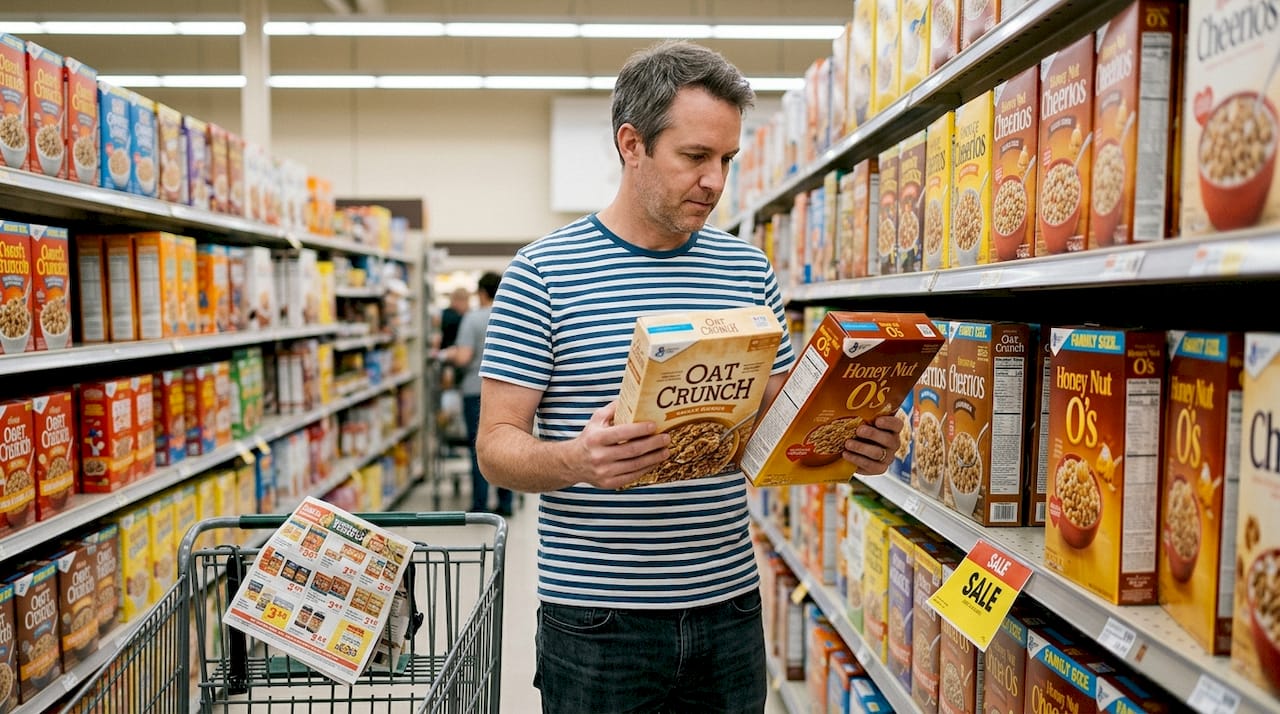
70 to 76% of purchase decisions are made at the shelf, according to POPAI. That means your package is your primary salesperson in most retail environments. Testing in a competitive shelf context is not optional. It is the only way to know if your concept actually works.
Neuroscience tools and AI are now accessible enough for growing brands to use during concept development. Eye-tracking, emotional response mapping, and predictive AI can tell you where attention goes, what emotions a design triggers, and whether a shopper is likely to pick it up. These tools take the guesswork out of increasing packaging appeal before you spend a dollar on production.
The results from real concept redesigns are hard to ignore:
"Fresh Scents saw a +66 point increase in purchase intent after a concept-driven redesign. Tailwind gained +36 points. WildPaw gained +45 points. AI tools predicted 80%+ sales uplift before a single unit hit the shelf."
Those are not marginal improvements. They are brand-defining shifts driven entirely by packaging strategy.
| Factor | Good concept packaging | Poor packaging |
|---|---|---|
| Shelf visibility | Stands out in competitive context | Blends into category noise |
| Brand clarity | Instantly communicates brand identity | Confusing or generic visuals |
| Purchase intent | Triggers emotional and rational response | Fails to engage shopper |
| Scalability | Works across SKUs and formats | Requires redesign per product |
| Production cost | Optimized for print and manufacturing | Expensive to produce at scale |
Understanding why design fails is just as important as knowing what works. Most packaging failures trace back to designing in isolation, without shelf context or consumer validation.
Key components of effective concept packaging
Effective concept packaging is built in layers. Each layer serves a specific function, and skipping one creates a gap that shows up at the shelf.
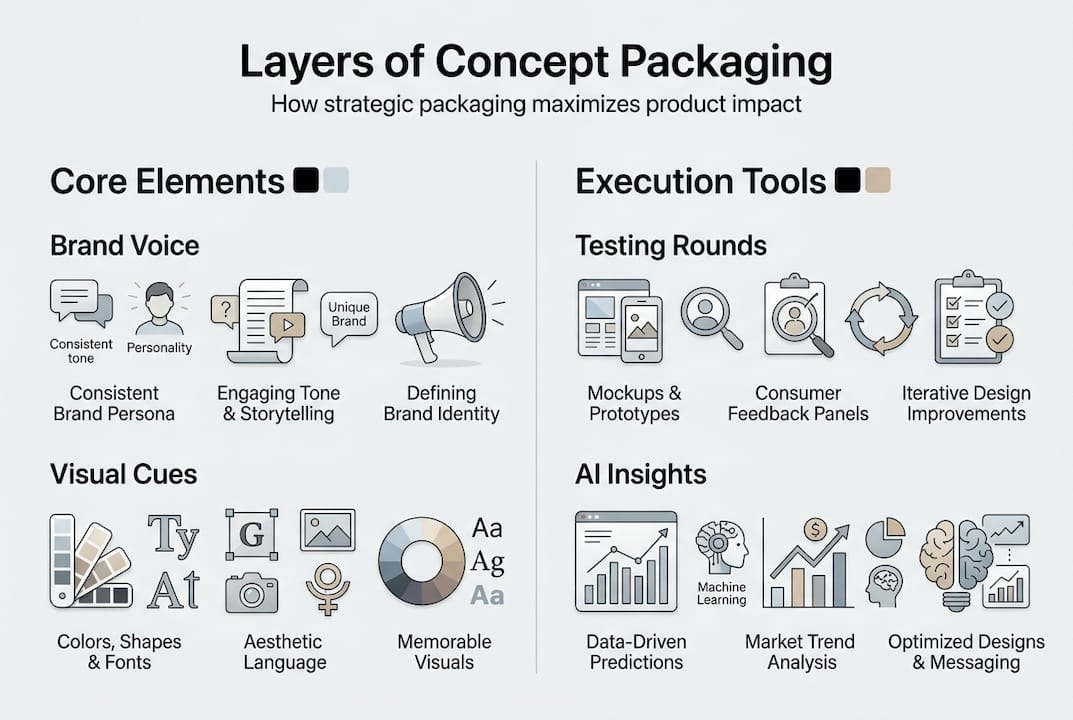
The first layer is attention. Color and shape are processed before any text is read. Your concept must win the visual scan before it can communicate anything else. Prioritize attention cues like color and shape first, then build brand signals on top of that foundation.
Here are the five components every effective concept must address:
- Attention cues: Color contrast, shape differentiation, and visual hierarchy that stop the shopper's eye.
- Brand signals: Consistent use of logo, typography, and color that builds recognition across touchpoints.
- Functional details: Ease of use, opening mechanisms, and production feasibility that affect real-world performance.
- Scalability: A design system that adapts cleanly across SKUs, sizes, and retail formats without losing brand integrity.
- Validation: Consumer testing that confirms purchase drivers, not just aesthetic preferences.
Pro Tip: Do not validate packaging by asking people if they like it. Ask whether they would buy it, and test it next to the actual competitors they would see on shelf. Preference and purchase intent are very different signals.
The technical side matters too. Print-ready design essentials like bleed settings, color profiles, and file formats are concept-level decisions that affect cost and quality. And using vector graphics from the start ensures your concept scales without quality loss across every format it will ever appear in.
Cutting design costs: Iterative testing and AI tools
The biggest cost in packaging development is not the design itself. It is the rework. Brands that skip early-stage testing end up paying for it later in reprints, relaunches, and lost sales velocity.
Iterative testing solves this by catching problems early, when changes are cheap. A 3-round iterative testing process combined with AI and neuroscience tools and competitive benchmarking is one of the most effective ways to reduce design costs without sacrificing quality.
| Testing stage | What it catches | Cost impact |
|---|---|---|
| Round 1: Concept screening | Weak attention cues, poor differentiation | Low cost to fix |
| Round 2: Shelf simulation | Visibility gaps in competitive context | Medium cost to fix |
| Round 3: Purchase intent validation | Messaging failures, low conversion signals | High cost if caught late |
AI tools now predict shelf performance before production. They analyze color response, visual hierarchy, and emotional triggers to flag issues that would otherwise only surface after launch. This is not a luxury for big brands. It is a cost-saving tool for any founder who cannot afford a failed launch.
Pro Tip: Benchmark your concept against the top three competitors in your category before finalizing. If your design does not stand out in that specific context, it will not stand out on shelf regardless of how good it looks in isolation.
Here is where iterative testing pays off most:
- Early concept screening eliminates weak ideas before any production investment
- Shelf simulation testing reveals visibility problems that studio reviews miss
- AI-assisted prediction reduces the number of physical prototypes needed
- Competitive benchmarking ensures differentiation is real, not assumed
Building a step by step packaging design process from the start also helps you plan for the full packaging lifecycle, so you are not redesigning from scratch every time you add a SKU.
Applying concept packaging: From idea to shelf
Knowing the theory is one thing. Getting a concept from sketch to retail shelf is where most brands either gain an edge or lose time and money. The workflow matters as much as the design itself.
A package-first approach speeds innovation and avoids the aesthetic-only trap that derails so many CPG launches. Here is a practical workflow that works for early-stage brands and growing ones alike:
- Start with shelf context. Before sketching anything, study the category. What does the shelf look like? What colors dominate? Where is the white space? Your concept needs to win in that specific environment.
- Align with brand values. The concept must reflect what the brand stands for, not just what looks current. Trends fade. Brand identity compounds.
- Create multiple directions. Develop at least three distinct concept directions before narrowing. Diversity at this stage prevents tunnel vision later.
- Test iteratively. Use AI tools for early screening, then move to shelf simulation and consumer panels. Each round should answer a specific question, not just collect general feedback.
- Validate purchase drivers. Confirm that the final concept drives purchase intent, not just positive sentiment. These are not the same thing.
- Finalize for production. Prepare files for print, confirm scalability across formats, and document the design system for future SKUs.
Pro Tip: Build your design system documentation before you go to print. Defining your color codes, font files, and spacing rules now saves significant time and money when you expand the line.
If you are building a portfolio or pitching to retail buyers, attracting CPG clients requires showing concept-level thinking, not just finished artwork. Buyers and brand managers want to see that you understand the shelf, not just the screen.
Discover smarter packaging solutions with Offcut
If you have made it this far, you already think about packaging differently than most founders. You know it is a strategic asset, not a line item. The next step is finding concepts that are built with that same thinking, without paying agency rates to get there.
Offcut is where great packaging designs go instead of a hard drive. Founders get exclusive, print-ready concepts at a fraction of agency cost. Designers get paid for work that would otherwise sit unused. Whether you are looking for a fresh concept for a new product or want to explore what is possible before committing to a full design engagement, Offcut gives you access to real, shelf-ready thinking. If you are a designer with unused concepts collecting dust, you can sell packaging concepts and turn that work into revenue. It is a smarter way to move faster and spend less.
Frequently asked questions
What is concept packaging in consumer goods?
Concept packaging is the strategic early-stage development of package ideas focused on shelf appeal, brand identity, and consumer behavior. Done well, it can drive significant sales uplift. Done poorly, redesigns can drop sales by up to 19%.
Does concept packaging reduce design costs?
Yes. 3-round iterative testing combined with AI tools catches problems early when they are cheap to fix, cutting overall development time and avoiding costly post-launch corrections.
How does concept packaging affect consumer purchases?
Significantly. Concept-driven redesigns have increased purchase intent by up to 66 points in documented case studies, with AI tools predicting 80%+ sales uplift before production.
What are the main steps of concept packaging?
Start with shelf context analysis, develop attention-focused design directions, validate through iterative testing, and finalize a scalable system for production. A package-first approach keeps every step grounded in commercial reality rather than aesthetic preference.