
TL;DR:
- A brand packaging strategy is a comprehensive plan that aligns packaging with brand identity, functionality, and marketing goals, influencing customer perception and brand equity. It emphasizes early, cross-functional decision-making, material selection, design systems, and manufacturability to ensure consistency, sustainability, and effective consumer engagement. Proper strategic planning minimizes redesign costs, enhances brand coherence, and transforms packaging into a powerful marketing tool.
A brand packaging strategy is the structured plan that determines how your product packaging communicates brand identity, protects the product, and supports marketing objectives across every channel and customer touchpoint. Most brands treat packaging as a finishing step. The ones that win treat it as a core business decision, made early and revisited often. Packaging is the primary physical touchpoint influencing brand narrative and customer perception, which means every material choice, color decision, and structural format either builds or erodes brand equity. This guide gives brand managers and marketing professionals a practical framework for getting it right.
What is a brand packaging strategy and why does it matter?
A brand packaging strategy is not just a design brief. It is a holistic plan that integrates branding, functionality, materials, operations, and marketing flexibility into a single decision framework. Shopify and VistaPrint both position packaging as an investment decision that affects customer experience and operational efficiency across the entire product lifecycle. That framing changes how you approach every conversation about boxes, labels, and finishes.
Consumers form initial opinions about products within 90 seconds, with 90% of that judgment based on color and visual design. Your packaging has roughly two seconds to communicate what your brand stands for before a shopper moves on. That is not a design problem. It is a strategic one, and it requires the same rigor you apply to pricing or positioning.
How to define clear packaging goals aligned with brand identity
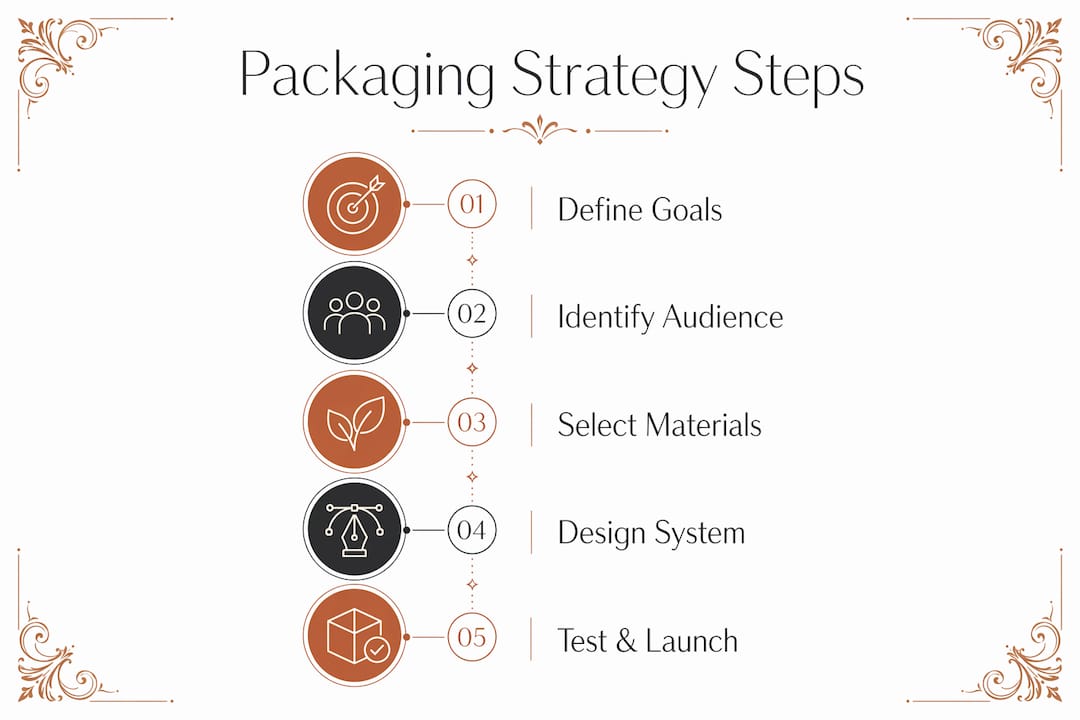
Before any designer opens a file, you need goals that are specific enough to make decisions against. Vague objectives like "look premium" or "stand out on shelf" produce vague results. Skipping discovery and jumping straight to design leads to more revision cycles and incoherent packaging. Front-loading strategy reduces that waste significantly.
Start by answering four questions for every packaging project:
- What does this packaging need to protect? Define the physical requirements first. Temperature sensitivity, fragility, and shipping conditions all constrain your material and structural options before aesthetics enter the picture.
- Who is the primary buyer, and where do they encounter this product? A DTC brand shipping direct to consumers has different priorities than a CPG brand competing on a Whole Foods shelf. Your visual identity for CPG must work at arm's length, not just in a studio photograph.
- What single message must land on the front panel? Strong packaging design uses no more than 2-3 typefaces and a single dominant front panel message for consumer clarity. One message. Not three.
- How does this packaging support the next 18 months of product launches? Packaging goals set in isolation create redesign costs later. Build flexibility in from the start.
The 3-3-3 marketing rule is a useful filter here: define your three core messages, your three primary audience segments, and your three key distribution channels before briefing any designer. This forces prioritization and prevents the "just add it to the label" creep that clutters packaging over time.
Pro Tip: Write your packaging goals as testable statements. "The front panel communicates our core benefit in under three seconds" is testable. "Looks premium" is not.
How does a packaging design system improve brand consistency?
A packaging design system is a documented set of rules governing color, typography, structure, and hierarchy across every SKU in your product line. Without one, each new product launch becomes a negotiation between designers, brand managers, and printers, and the result is a shelf presence that looks like five different brands.

The business case is direct. Design systems reduce redesign costs by 30-40% by unifying brand storytelling across packaging tiers and eliminating redundant creative work. That saving compounds over time as your product line grows.
Here is how a design system compares to ad hoc packaging development:
| Factor | Ad hoc packaging | Design system approach |
|---|---|---|
| New SKU launch time | 6-10 weeks per project | 2-4 weeks using templates |
| Brand consistency | Varies by designer and brief | Enforced by documented rules |
| Redesign frequency | High, triggered by inconsistency | Low, updates apply system-wide |
| Cost per launch | Full agency fee each time | Incremental cost on existing system |
| Shelf coherence | Inconsistent across line | Unified family appearance |
Building the system starts with defining tier logic. Tier logic means assigning specific visual treatments to product categories, price points, or customer segments, so your entry-level line and your premium line feel related but distinct. Defined tier logic and templates allow brands to extend product lines efficiently without losing identity coherence or increasing costs.
Pro Tip: Document your design system in a packaging brand guide separate from your general brand guidelines. Include print-ready color specs, approved structural templates, and material callouts. Designers and printers need different information than digital teams.
What materials and structures best support brand impact and sustainability?
Material selection is where brand strategy meets physical reality. The wrong substrate undermines a premium positioning no matter how good the graphics are. The right one communicates quality before the consumer reads a single word.
Evaluate every material decision against three criteria:
- Aesthetics and tactile quality. Uncoated kraft communicates sustainability and craft. High-gloss laminate communicates mass-market accessibility. Soft-touch matte communicates luxury. Each finish sends a signal, and that signal must match your brand positioning.
- Protection and structural integrity. Primary packaging holds the product. Secondary packaging groups units for retail. Shipping packaging protects both in transit. Each layer has different performance requirements, and conflating them creates either over-engineering or damage claims.
- Environmental impact and regulatory exposure. Mono-material engineering simplifies packaging to one fiber type, improving curbside recyclability and reducing Extended Producer Responsibility fees. As EPR legislation expands across US states and the EU, mono-material design protects your brand from rising environmental taxes and supply chain complexity.
Applying first principles thinking in packaging means asking what the packaging must fundamentally do before following industry norms. A brand that defaults to rigid plastic because competitors use it may be carrying unnecessary cost and sustainability liability. Start from the product's actual protection needs, then select the lightest material that meets them.
Why manufacturability must be part of your packaging strategy from day one
The most expensive packaging mistake is a design that cannot be produced at scale without modification. Design for Manufacturability (DFM) aligns design intent with machine capabilities and material limitations early, preventing production failures and unnecessary costs. Most brands discover DFM problems at the prototype stage, which is expensive. Some discover them after placing a production order, which is catastrophic.
The four most common production failures in packaging projects follow a predictable pattern:
- Ignoring machine tolerances. A structural design that works in a CAD file may not fold cleanly at 400 units per minute on a production line. Collaboration between designers and manufacturers early in the process is required to optimize machine tolerance and color matching.
- Specifying incompatible colors. Pantone colors that look identical on screen can print differently on kraft versus coated stock. Always validate color on the actual substrate before approving final artwork.
- Skipping prototype testing. Early validation through prototypes increases packaging reliability in production. A physical prototype reveals structural weaknesses, label placement issues, and opening experience problems that no digital render will catch.
- Launching without a traveling brief. A traveling packaging brief includes dimensions, material specs, print constraints, and business requirements. It travels with the project from designer to printer to manufacturer, eliminating the assumptions that cause last-minute changes and cost overruns.
"Packaging decisions made without production input are design decisions made in a vacuum. The brief that includes structural specs, material callouts, and machine constraints is the brief that survives contact with a factory floor."
If you want to avoid the most common production failures, the packaging design mistakes that brands repeat in 2026 are well documented and entirely preventable with the right process.
How to use packaging as a marketing tool for consumer engagement
Packaging is the only marketing channel your customer physically handles. That makes it uniquely powerful for building emotional connection and driving organic brand amplification. The brands that understand this design their packaging surfaces intentionally, not just functionally.
Color and typography are the fastest levers. Color choices influence consumer perception at a neurological level before any copy is read. Typography communicates personality. A serif font signals heritage and authority. A geometric sans-serif signals modernity and precision. Neither is right or wrong. Both must be deliberate.
Three specific tactics that move packaging from functional to magnetic:
- User-generated content surface strategy. Designing package surfaces for photography and social media sharing turns unboxing into an organic marketing channel. This means considering interior surfaces, tissue paper, and inserts as photographic elements, not just filler.
- Unboxing moment engineering. The sequence in which a customer opens your packaging is a narrative. Brands like Apple and Glossier have built cult followings partly on the ritual of opening. Define the reveal sequence and design each layer to build anticipation.
- Brand authenticity signals. Handwritten-style typography, founder notes, and behind-the-scenes production details printed inside the box create a sense of relationship. These details cost almost nothing to print and generate disproportionate loyalty.
Pro Tip: Before finalizing packaging, photograph it with a smartphone under natural light. If it does not look shareable in that context, it will not generate UGC regardless of how good it looks in a studio.
Key takeaways
A brand packaging strategy works when design, production, and brand identity are integrated from the first brief, not assembled at the end of a product launch.
| Point | Details |
|---|---|
| Define goals before design | Set testable packaging objectives tied to protection, messaging, and distribution before briefing any designer. |
| Build a design system | Documented color, typography, and tier logic reduces redesign costs by 30-40% and compounds brand equity across SKUs. |
| Select materials strategically | Match substrate to brand positioning and evaluate mono-material options to reduce EPR fees and sustainability risk. |
| Apply DFM principles early | Align design intent with machine capabilities before prototyping to prevent costly production failures. |
| Design for organic sharing | Treat interior surfaces and unboxing sequences as marketing channels to drive UGC and brand amplification. |
Where most packaging strategies actually break down
I have reviewed packaging projects across CPG, DTC, and retail, and the failure point is almost never the design. It is the sequence. Brands hire a designer before they have answered the four goal-setting questions. They approve artwork before they have spoken to a manufacturer. They launch a product line without a design system and then spend twice the budget trying to create coherence retroactively.
The other pattern I see consistently is treating packaging strategy as a brand manager's job alone. Production, finance, and logistics all have constraints that shape what is possible. When those teams are not in the room during the strategy phase, you get beautiful packaging that costs 40% more than budgeted or arrives damaged because the structural brief did not account for last-mile handling.
The brands that get packaging right treat it the way they treat product development: with a cross-functional brief, a staged validation process, and a clear owner for each decision. The creative work is the easy part. The system around it is what determines whether that creative work survives contact with a factory, a retailer, and a consumer.
The most underrated move in packaging strategy is also the simplest: do the discovery before you do the design. Research your audience's actual purchase context, map your competitors' shelf presence, and define your brand's non-negotiables before a single concept is sketched. That 20% of upfront work eliminates 60% of the revision cycles downstream.
— Myles
How Offcut helps brand managers move faster on packaging
Brand managers working on packaging strategy face a specific problem: great design concepts exist, but accessing them through traditional agencies is slow and expensive.
Offcut is built for exactly this situation. Founders and brand managers get access to exclusive, print-ready packaging concepts at a fraction of agency cost, while designers get paid for work that would otherwise sit unused on a hard drive. If you are building a packaging design system, launching a new SKU, or trying to close the gap between your brand vision and what you can actually afford to produce, explore Offcut's packaging concepts and see what is available for your category. The work is already done. You just need to find the right fit.
FAQ
What is a brand packaging strategy?
A brand packaging strategy is a structured plan that aligns packaging design, materials, and production with brand identity and business objectives. It covers everything from visual design and structural format to manufacturability and marketing function.
How does packaging design affect consumer perception?
Consumers form initial opinions about products within 90 seconds, with 90% of that judgment based on color and visual design. Packaging must communicate brand identity in approximately two seconds to influence buying decisions effectively.
What is a packaging design system?
A packaging design system is a documented set of rules governing color, typography, structure, and hierarchy across all SKUs in a product line. Design systems reduce redesign costs by 30-40% and maintain brand coherence as product lines expand.
Why does Design for Manufacturability matter in packaging?
DFM aligns design intent with machine capabilities and material limitations before production begins. Brands that skip this step routinely face costly last-minute changes, color mismatches, and structural failures that delay launches and inflate budgets.
How can packaging drive organic marketing and social sharing?
Designing package surfaces intentionally for photography, including interior surfaces and unboxing sequences, turns the opening experience into a shareable media moment. This approach amplifies brand awareness through user-generated content without additional media spend.