
TL;DR:
- Packaging agencies transform products into retail and e-commerce-ready packaging by managing strategy, design, compliance, and production from start to finish. They act as strategic partners, influencing brand competitiveness, sustainability, and operational performance through technical expertise and early involvement. Engaging agencies early in product development ensures optimal structural, visual, and compliance outcomes, avoiding costly revisions and delays.
A packaging agency converts your product into retail and e-commerce-ready packaging by handling strategy, design, compliance, and production from start to finish. Most brand owners treat packaging as a final step. The agencies that consistently deliver results treat it as the first commercial decision. When you understand the full role of packaging agencies, you stop seeing them as vendors and start seeing them as the people responsible for whether your product gets picked up off the shelf or left behind.
What do packaging agencies actually do for your brand?
A packaging agency's core function spans pack structure, label planning, visual identity, shelf impact, production readiness, and compliance support before launch. That scope is wider than most brand owners expect when they first engage one. The functions of packaging agencies go well beyond making something look attractive.
Here is what a full-service packaging agency delivers:
- Packaging strategy: Defines product positioning, visual hierarchy, and how your brand identity translates to physical and digital surfaces.
- Technical design: Produces print-ready artwork including pack structure, dielines, label layouts, and color specifications for each print process.
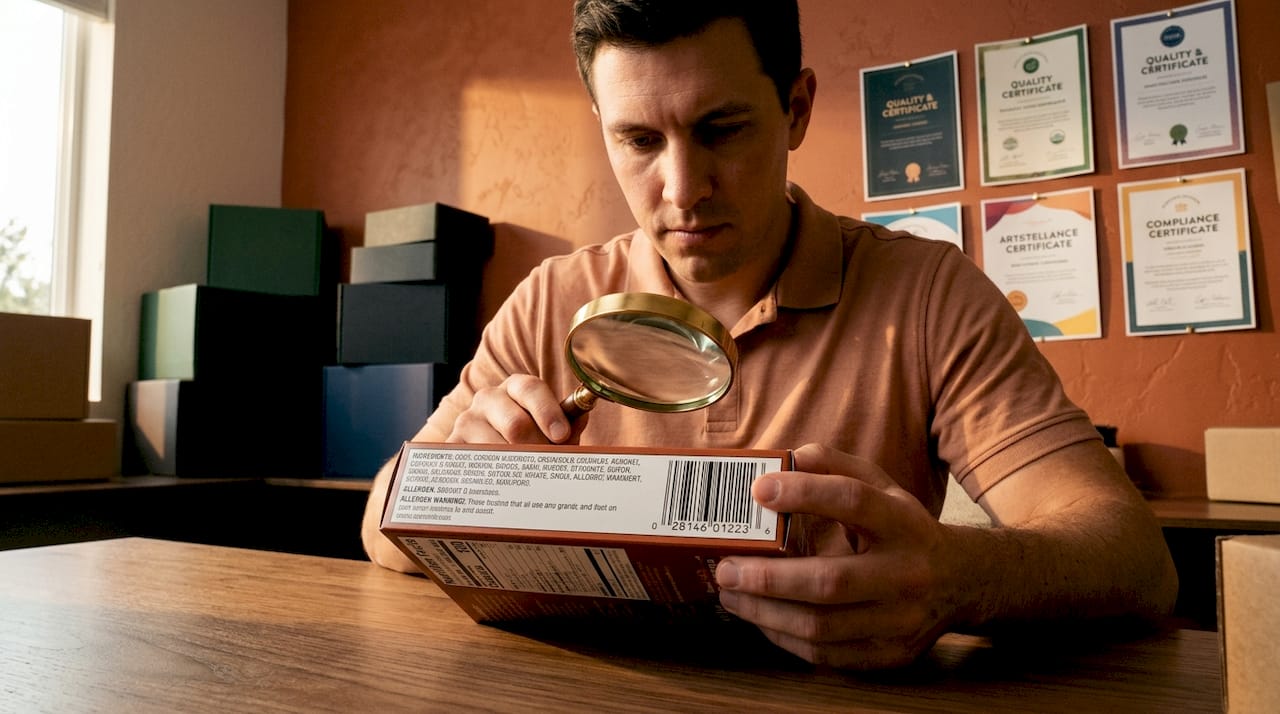
- Compliance support: Handles mandatory declarations, regulatory text, nutrition panels, barcodes, and legal copy accuracy for each market.
- Production coordination: Manages supplier relationships, color management across substrates, press checks, and final approvals.
- Brand integration: Aligns packaging assets with your broader marketing materials, social content, and digital product imagery.
The importance of packaging design becomes clear when you realize that a misaligned barcode or a missing allergen declaration can pull a product from retail shelves entirely. Agencies that treat compliance as a design system rather than a last-minute checklist prevent those failures before they happen.
Pro Tip: Brief your packaging agency on your retail and e-commerce channels simultaneously. Packaging that photographs well for Amazon listings often requires different structural and color decisions than packaging optimized for physical shelf presence.
Why packaging agencies are becoming strategic partners, not just vendors
Packaging decisions made today influence brand competitiveness, sustainability outcomes, and operational performance years ahead. That is not a design observation. It is a business continuity statement, and it explains why the most growth-focused brands now treat their packaging agency the way they treat their legal counsel or their CFO: as a long-term partner with a seat at the table.
The shift is driven by three converging pressures. Material science is reshaping what packaging can be made from, and agencies now need genuine expertise in recyclability, substrate compatibility, and manufacturing realities to give useful advice. Regulatory environments are tightening globally, with the EU Packaging and Packaging Waste Regulation (PPWR) setting phased compliance deadlines from August 2026 onward, requiring signed Declarations of Conformity and detailed packaging documentation. And consumer expectations around sustainability have moved from preference to purchase driver.
"Partnerships between brands and packaging experts are now essential for scalability, innovation, and meeting sustainability goals." — Packaging Europe
Packaging agencies now combine creative, technical, and regulatory expertise in ways that isolated design studios simply cannot replicate. For brand owners, this means the benefits of packaging services extend far beyond a finished file. You get a partner who can tell you which material choice will fail a recycling stream test, which label format will trigger a compliance review in Germany, and which structural format will reduce damage rates in last-mile delivery.
What does the packaging design process look like with an agency?
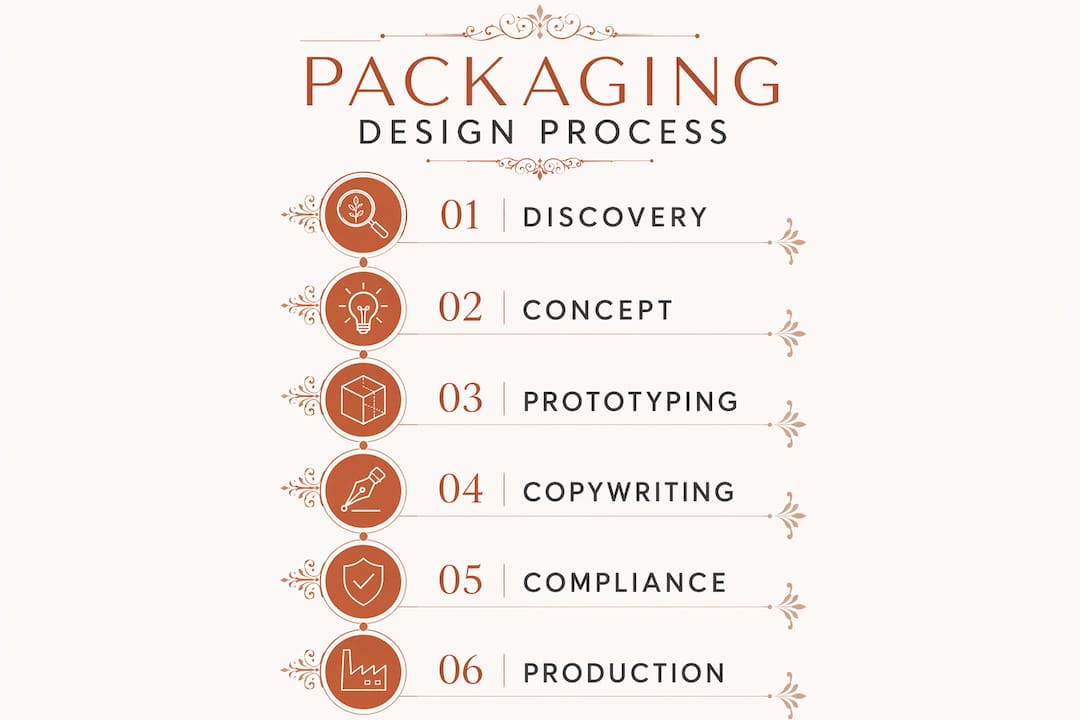
A full packaging redesign led by an agency typically spans three to four months, with defined phases covering strategy, concept development, prototyping, and approvals. Brands that try to compress this timeline almost always pay for it through costly rework or delayed launches.
The standard phase breakdown looks like this:
- Discovery (4 to 6 weeks): Market research, competitive audit, brand positioning review, and brief alignment. This phase defines what the packaging must communicate and to whom.
- Concept development (3 to 4 weeks): Initial design directions, typography, color palette, and structural options. Typically two to three concepts are presented for client review.
- Prototyping (2 to 4 weeks): Physical or digital mock-ups tested against retail environments, photography requirements, and print specifications.
- Approvals and production handoff: Legal review, retailer compliance checks, printer specifications, and final artwork sign-off.
One phase that brands consistently underestimate is copywriting. Clear, compliant copy integrated early prevents expensive redesigns and directly improves sales conversion. Information architecture, meaning how claims, instructions, and brand messaging are ordered and sized on pack, shapes whether a shopper understands your product in three seconds or walks past it.
| Phase | Typical duration |
|---|---|
| Discovery | 4 to 6 weeks |
| Concept development | 3 to 4 weeks |
| Prototyping | 2 to 4 weeks |
| Approvals and production handoff | 2 to 3 weeks |
Pro Tip: Lock your copy before design begins. Changing a claim from "No Added Sugar" to "Naturally Sweetened" after artwork is built can trigger a full label restructure, adding two to three weeks and significant cost.
How packaging agencies enhance market appeal and consumer decisions
Packaging design influences shopper decisions in under three seconds by conveying key information and clear brand cues instantly. That window is shorter than most brand owners imagine, and it applies equally to a physical shelf and a product thumbnail on a retailer's website. The importance of packaging design in that moment is not aesthetic. It is commercial.
Packaging agencies design for that three-second window using specific techniques:
- Shelf blocking: Designing color fields and graphic elements that create visual impact when multiple units are grouped together, making the brand visible from a distance.
- Visual hierarchy: Ordering information so the product name, key benefit, and brand mark register in sequence without the shopper having to search.
- Differentiation mapping: Auditing the competitive set to identify white space in color, structure, or typography that the brand can own.
- Digital adaptation: Extending packaging aesthetics into social media assets, e-commerce imagery, and unboxing content so the brand experience is consistent across every touchpoint.
Packaging requires advertising-level creative thinking but operates under strict constraints to communicate the brand's core idea instantly on shelf. That combination of creative ambition and technical discipline is what separates a packaging agency from a general graphic design studio. Agencies that also use centralized artwork management systems reduce approval bottlenecks and improve portfolio consistency, which matters enormously when you are managing ten SKUs across three markets.
You can explore packaging design techniques that agencies use to capture consumer attention and build brand recognition at shelf level.
What compliance and operational benefits do packaging agencies provide?
Compliance is where packaging projects fail most visibly and most expensively. A product recalled from retail because of an inaccurate allergen declaration or a barcode that fails scanner verification does not just cost money on reprints. It costs shelf space, retailer trust, and launch momentum.
Packaging agencies that treat artwork accuracy as a design system handle barcodes, legal and regulatory text, nutrition panels, technical specifications, version control, and press checks as integrated workflow steps rather than final-stage additions. That distinction matters because errors caught at concept stage cost almost nothing to fix. Errors caught after print plates are made cost thousands.
The operational benefits of packaging services in this area include:
- Version control: Maintaining a single source of truth for every artwork file, preventing outdated versions from reaching printers.
- Regulatory accuracy: Verifying that mandatory declarations, warning text, and market-specific legal copy meet current requirements for each territory.
- Printer specifications: Delivering files that match each supplier's technical requirements for ink, substrate, and finishing, eliminating back-and-forth that delays production.
- PPWR readiness: For brands entering or expanding in EU markets, early agency involvement is now required to assemble compliance documentation and align artwork with regulatory data ahead of the August 2026 deadlines.
Commercial excellence in packaging comes from end-to-end systems that integrate design with business processes, not isolated creative solutions. Brands that treat packaging compliance as a separate workstream from design consistently experience delays. Agencies that integrate both from day one do not. You can learn more about how to control artwork costs while maintaining production quality.
Key takeaways
Packaging agencies deliver the most value when they are engaged as strategic partners from the start of a product or redesign project, not brought in to execute a brief that has already been written.
| Point | Details |
|---|---|
| Full-service scope | Packaging agencies cover strategy, design, compliance, and production, not just visual design. |
| Three-second window | Packaging must communicate brand and product clearly in under three seconds to drive purchase decisions. |
| Timeline discipline | A full redesign takes three to four months; compressing phases creates costly rework. |
| Compliance is design | Treating regulatory accuracy as part of the design system prevents expensive errors and retail rejection. |
| Strategic partnership | Agencies combining creative, technical, and regulatory expertise deliver measurable business outcomes beyond aesthetics. |
Why I think most brands engage packaging agencies too late
Most brand owners I have spoken with bring a packaging agency in after the product formula, pricing, and retail strategy are already locked. The brief arrives with constraints baked in, and the agency's job becomes execution rather than strategy. That is the single most common reason packaging underperforms commercially.
The brands that get the most from their packaging partners do the opposite. They involve the agency during product development, when decisions about format, size, and material are still fluid. A packaging agency that knows you are targeting a premium convenience channel will make different structural recommendations than one handed a finished product spec and told to make it look good. Those early decisions compound. A pack structure chosen for shelf efficiency might perform poorly in e-commerce fulfillment. A color palette chosen for premium positioning might disappear against a competitor's shelf block.
I have also seen brands treat compliance as someone else's problem, usually legal or operations, and exclude the packaging agency from those conversations. The result is almost always a late-stage artwork revision that delays launch by weeks. Agencies that combine creative and regulatory expertise are not more expensive. They are cheaper, because they prevent the rework that siloed processes create.
The advice I give consistently is this: choose an agency that asks hard questions about your business before it opens a design file. The ones that lead with mood boards before they understand your distribution model are selling aesthetics. The ones that ask about your retailer requirements, your sustainability commitments, and your three-year SKU roadmap are selling outcomes.
— Myles
Get print-ready packaging concepts without the agency timeline
If you are a brand owner who needs compelling packaging concepts without committing to a full agency retainer, Offcut offers a different model. Offcut is where great packaging designs go instead of a hard drive. Founders get exclusive, print-ready concepts at a fraction of agency cost, and designers get paid for work that would otherwise sit unused.
Whether you are launching a new product or refreshing an existing line, Offcut connects you with professional packaging concepts that are ready to adapt and produce. Browse the designer portfolio to find concepts that match your brand positioning and get to market faster.
FAQ
What is the role of packaging agencies for small brands?
Packaging agencies handle strategy, design, compliance, and production readiness for brands of any size. Small brands benefit most from agencies that integrate regulatory accuracy with creative design, preventing costly errors at launch.
How long does a packaging agency project take?
A full packaging redesign typically takes three to four months, covering discovery, concept development, prototyping, and approvals. Rushing any phase increases the risk of rework and delayed retail entry.
Why does packaging design influence consumer decisions so quickly?
Packaging communicates brand cues in under three seconds on shelf or online. Agencies design visual hierarchy and shelf impact specifically to capture attention and communicate the product's core benefit within that window.
What compliance work do packaging agencies handle?
Agencies manage barcode accuracy, legal and regulatory text, nutrition panels, version control, and printer specifications. For EU markets, they also support PPWR compliance documentation required from August 2026 onward.
When should I involve a packaging agency in my product launch?
Involve a packaging agency during product development, before format, material, and retail channel decisions are finalized. Early involvement prevents structural and compliance constraints from limiting your design options later.