
TL;DR:
- Most CPG brands recognize packaging as a crucial factor for success but often treat it as a final touch rather than a strategic asset. Implementing a three-round testing framework, leveraging cost-saving strategies, and utilizing AI and VR tools can significantly enhance packaging effectiveness while reducing expenses. Early, contextual testing and innovative design approaches ensure packaging stands out and appeals to modern consumers in crowded retail environments.
Nearly every CPG founder knows packaging matters, but 98% of CPG brand owners now rate it as highly important to product success, and yet most still treat design as a finishing step rather than a strategic lever. The gap between knowing packaging is critical and actually executing smart, cost-effective design decisions is where brands lose money, lose shelf space, and lose sales. This article cuts through the noise with proven frameworks, real cost-saving tactics, and technology tools that help CPG entrepreneurs make better packaging decisions without burning through agency budgets.
Table of Contents
- Packaging's new role in brand success
- The three-round design testing framework
- Smart cost-saving strategies for packaging innovation
- The rise of AI and VR tools in packaging design
- What most CPG brands miss when redesigning packaging
- Unlock next-level packaging ideas with OffCut
- Frequently asked questions
Key Takeaways
| Point | Details |
|---|---|
| Packaging drives sales | 98% of CPG brand owners say packaging is crucial for product success. |
| Three-round testing works | Direction, refinement, and shelf validation are key to effective packaging. |
| Cost-saving with innovation | Reducing layers, custom sizing, digital printing, and recycled materials cut costs without sacrificing shelf impact. |
| AI and VR deliver results | AI tools can save up to 30% design time and drive measurable sales increases. |
Packaging's new role in brand success
Packaging has quietly shifted from a container into a brand's loudest salesperson. Walk down any retail aisle and what you notice first is not ingredients or price, it's visual presence. That first impression is now the primary battleground for CPG brands competing in an era of shortened attention spans and crowded shelves.
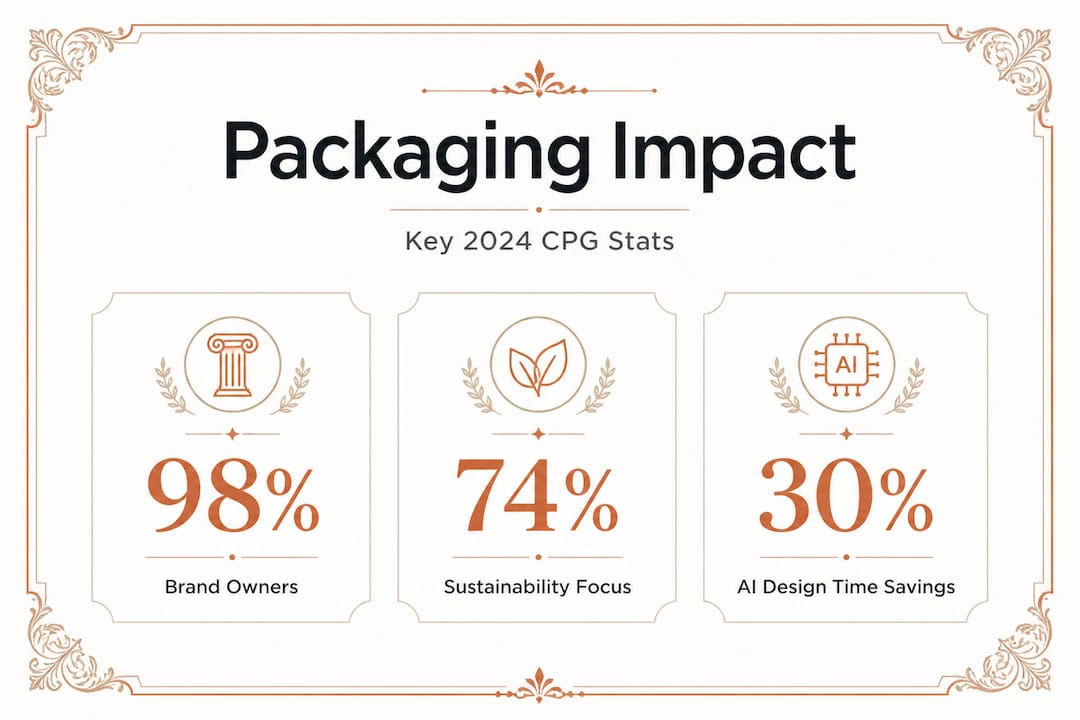
The numbers back this up. The LEK Consulting 2026 study found that 99% of brand owners plan packaging changes within the next three years, with the top drivers being sustainability, shelf appeal, and cost reduction. These aren't just feel-good priorities. They reflect a structural shift in how consumers evaluate products before they ever read a label.
Here's what modern brands are focusing on when they redesign:
- Sustainability signals like recycled content, reduced material weight, and compostable packaging that communicate values at a glance
- Shelf differentiation through unique shapes, bold color blocking, and typography that pops against competitors
- Cost efficiency by eliminating unnecessary packaging layers, consolidating SKU designs, and choosing materials that print cleanly at scale
- Aesthetic consistency across a product family that builds brand recognition over time
"Packaging is no longer just protection. It's the first conversation your brand has with a buyer, and that conversation needs to happen in under three seconds."
Understanding visual impact in packaging isn't just a design conversation. It's a revenue conversation. Brands that get this right see measurable improvements in both trial rates and repeat purchase behavior.
| Packaging priority | % of brands citing as top driver |
|---|---|
| Sustainability improvements | 74% |
| Improved shelf presence | 68% |
| Cost reduction | 61% |
| Extended shelf life | 47% |
| Consumer appeal refresh | 55% |
The data is clear: shelf presence and sustainability are not competing goals. The strongest 2026 packaging design trends show that brands achieving both simultaneously are the ones gaining the most ground in retail environments.
With packaging so vital, let's explore how brands approach the design process.
The three-round design testing framework
Most CPG brands either skip packaging testing entirely or run one consumer survey and call it done. Both approaches leave real insight on the table. The research-backed model that consistently produces shelf-ready, consumer-validated designs is built on three distinct rounds of testing, each with a specific purpose.
According to packaging design testing research, isolated testing assesses communication clarity, while contextual shelf testing reveals attention and differentiation. Neither one alone tells the full story. You need both, and you need them in sequence.
Here's how the three rounds break down:
- Round one: Direction setting. Present 3 to 4 distinct concepts to consumers. The goal isn't to pick a winner yet. It's to understand which design directions resonate emotionally, communicate the right product cues, and feel authentic to the brand. Keep the consumer feedback broad and qualitative at this stage.
- Round two: Refinement. Take the top 2 designs from round one and push them further. This is where you test specific elements: color combinations, font legibility, hierarchy of information, and messaging clarity. Isolated testing works well here because you want focused feedback without the noise of competitive context.
- Round three: Validation. Put the leading design into a simulated or real shelf context. This is the moment of truth. Does the design stand out when surrounded by competitors? Can a shopper read the brand name and key benefit from three feet away? Apply the three-second rule here: if a shopper can't grasp the brand, product, and key claim in three seconds, the design needs more work.
| Testing type | What it reveals | Best used in |
|---|---|---|
| Isolated testing | Communication clarity, messaging comprehension | Round 2: refinement |
| Contextual shelf testing | Attention, differentiation, shelf standout | Round 3: validation |
| Concept screening | Emotional resonance, design direction | Round 1: direction setting |
The shelf-back test is a simple but powerful technique. Print your design at actual size, place it on a shelf with 4 to 5 competitor products, and step back three feet. If your eye doesn't go to it within three seconds, something isn't working. This test costs nothing and catches problems that expensive consumer panels often miss.
Pro Tip: Bring consumer feedback into round one, not round three. Most brands wait too long to get real input, then end up making expensive late-stage changes. Earlier feedback means cheaper course corrections.
Following a clear step-by-step packaging design process ensures that each round builds on the last without wasted effort. Pair this with a structured designer portfolio workflow and you'll move from concept to validated design faster and with far more confidence.
Smart cost-saving strategies for packaging innovation
Once designs are validated, it's time to optimize for cost and sustainability. The good news is that modern packaging optimization doesn't require choosing between looking great and saving money. The two goals are more aligned than most founders realize.
Research from Packaging Digest confirms that CPG brands are actively reducing layers, using custom sizes, incorporating recycled materials, leveraging digital printing, and applying VR testing to balance cost and sustainability goals simultaneously. These aren't theoretical approaches. They're live practices at brands across food, beverage, personal care, and household goods categories.
Here are the most impactful cost-saving tactics you can apply right now:
- Reduce material layers. Every extra laminate layer, coating, or barrier film adds cost. Work with your packaging supplier to identify which layers are genuinely functional and which are legacy decisions from an earlier design iteration.
- Right-size your packaging. Custom sizing your packaging to fit actual product dimensions reduces material use, cuts shipping cube waste, and often improves shelf presence because the product doesn't rattle around inside oversized packaging.
- Use recycled or recyclable materials. Beyond the sustainability story, post-consumer recycled (PCR) content materials have become more price-competitive as supply chains mature. In many categories, they now cost the same or less than virgin materials.
- Switch to digital printing for short runs. Traditional flexo printing carries high plate costs that hurt small brands running limited SKUs. Digital printing eliminates plate costs entirely and allows for faster design iteration without expensive changeovers.
- Leverage VR shelf simulation before physical prototypes. Building physical prototypes for every design iteration is expensive. VR simulation tools now allow brands to evaluate shelf presence and consumer reaction before committing to print, saving significant pre-production budget.
Packaging cost reduction is not about cutting corners. It's about removing waste while keeping everything that earns attention on shelf.
Pro Tip: Template adaptation is one of the most underused cost-saving tools for growing CPG brands. Instead of designing each SKU from scratch, build a master template with defined zones for photography, brand marks, and copy, then adapt it across flavors, sizes, or product lines. You get design consistency and a fraction of the development cost.
Studying proven packaging workflow strategies can help you build the internal systems that make cost optimization repeatable rather than a one-time scramble. And if you're managing a growing product line, a structured approach to packaging template adaptation will save you thousands per SKU launch.
The rise of AI and VR tools in packaging design
Technology is fundamentally changing what's possible in packaging design, and the brands paying attention are seeing real competitive advantages. AI tools, automation platforms, and VR simulation are no longer luxuries for enterprise brands. They're accessible, affordable, and delivering measurable returns.
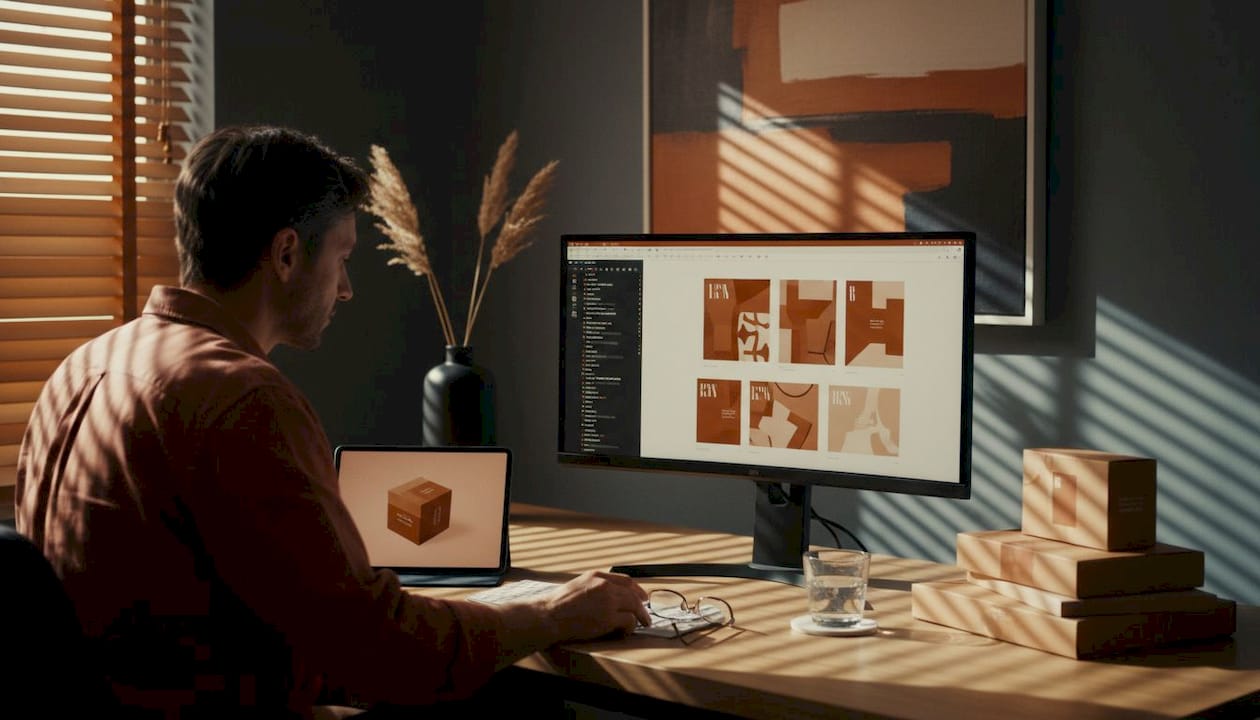
The evidence from recent case studies is compelling: AI-assisted design tools reduce design time by 30%, save between $8,000 and $25,000 per project, and correlate with sales uplift in over 80% of documented cases. One snack brand using AI-driven design and shelf simulation tools reported a 12% sales lift after relaunching with an AI-optimized label. That's not a marginal improvement. That's a category-changing result.
Here's what these tools actually do in practice:
- AI concept generation uses brand input parameters, competitor analysis, and consumer trend data to produce initial design directions in hours rather than weeks
- Automated color and typography testing runs hundreds of variations against readability and aesthetic benchmarks without manual iteration
- VR shelf simulation places digital prototypes in a realistic store environment, allowing brands to see exactly how a design competes for attention before spending on physical samples
- Predictive performance modeling uses historical sales data and design element analysis to forecast which packaging features correlate most strongly with purchase intent
| Tool type | Time saved | Estimated cost savings | Sales impact |
|---|---|---|---|
| AI concept generation | Up to 30% faster | $8K to $25K per project | Correlated >80% with uplift |
| VR shelf simulation | Eliminates prototype rounds | $3K to $10K in sampling costs | Reduces launch risk significantly |
| Automated testing | Faster iteration cycles | $5K to $15K in agency revision fees | Improves concept validation speed |
The practical takeaway for CPG founders is that you don't need to rebuild your entire design process around these tools immediately. Start with VR simulation for shelf testing in your next design round. It's one of the highest-ROI technology upgrades available, and it directly addresses the single biggest weakness in most small brand design processes: lack of real-world context testing.
Browsing AI-driven design examples can help you see what well-executed, technology-assisted packaging looks like across multiple CPG categories before you invest in any specific tool.
What most CPG brands miss when redesigning packaging
Here's the uncomfortable reality: most CPG brands approach packaging redesign with the wrong question. They ask "does this look good?" when they should be asking "does this win on shelf?"
Looking good in a mood board, an agency presentation, or a Zoom call is not the same as winning in a real retail environment surrounded by 40 competing products and a shopper who is moving fast. The aesthetic trap catches founders constantly. They fall in love with a beautifully crafted design that photographs brilliantly but disappears when placed next to louder, simpler competitors at retail.
The data doesn't always capture this. Consumer surveys often reward safe, familiar design because respondents rate things they recognize positively. But recognition isn't the same as standout, and standout is what drives trial from new customers. You need design that disrupts, then rewards. Disrupts to get attention, then rewards with clarity once you have it.
The second thing most brands miss is skipping contextual testing. Isolated testing of a design against a white background tells you whether it communicates correctly. It tells you nothing about whether it actually grabs attention in a busy aisle. That's a very different question, and it requires a very different testing approach.
We've seen this pattern repeatedly when brands come to us after avoiding packaging mistakes the hard way. They've spent significant money on a beautiful, award-worthy design that performs poorly at retail. The fix usually isn't a full redesign. It's a targeted intervention on contrast, scale, or visual hierarchy.
The best CPG founders we work with do one thing consistently: they test in real context early and often, and they don't protect their original creative vision at the expense of shelf performance. Ego is expensive in this business. Shelf reality is cheap feedback if you seek it out. Looking at cost-effective branding inspiration can reset your expectations about how much impact a well-executed, strategically smart design can deliver without a massive budget.
Unlock next-level packaging ideas with OffCut
You've now got the frameworks, the cost strategies, and the technology tools. The next question is: where do you find the actual design concepts that bring all of this to life without spending $15,000 on an agency retainer?
That's exactly what Offcut was built for. Offcut is where great packaging designs go instead of a hard drive. When designers complete speculative work, pitch concepts, or create unused ideas for client projects, those designs typically disappear forever. Offcut gives them a second life. CPG founders get access to exclusive, print-ready packaging concepts at a fraction of agency cost, all created by professional designers who understand shelf reality. You can also browse packaging designs by category to find concepts that match your specific product type, whether you're in food, beverage, beauty, or household goods. Real design. Real savings. No wasted creative work.
Frequently asked questions
How can a small CPG brand test packaging before launch cost-effectively?
Use the three-round testing framework that moves from concept direction to refinement to shelf-back validation, incorporating consumer feedback at each stage to catch expensive problems early.
What are the most effective ways to cut packaging costs without sacrificing shelf appeal?
Reduce material layers, customize sizes to fit actual product dimensions, use recycled content materials, and switch to digital printing for smaller production runs to cut costs without compromising visual impact.
How much can AI and VR tools save in packaging design budgets?
AI design tools reduce design time by 30% and save $8,000 to $25,000 per project, with over 80% of documented cases correlating to measurable sales uplift after implementation.
Why do most CPG brands plan packaging changes in the next three years?
Brands plan changes primarily to improve sustainability credentials, extend shelf life, and refresh visual appeal, driven by growing consumer expectations and intensifying retail competition according to the LEK Consulting 2026 study.