
Launching a CPG product is exciting, but here's a harsh reality: 80-95% of new products fail within two years, and most failures stem from branding issues, not product quality. Many founders confuse branding with logo design or pretty packaging, missing the strategic framework that separates shelf success from obscurity. This guide breaks down what branding actually means for CPG founders, reveals the phased approach experts use, and shows you how to balance founder authenticity with scalable product identity to beat those brutal odds.
Table of Contents
- Understanding Branding: What It Really Means For Founders
- Why Branding Matters: The Impact On CPG Success And Failure Rates
- Founder Personal Branding Versus Product Branding: Finding The Right Balance
- Practical Steps And Testing To Build A Winning CPG Brand
- Elevate Your CPG Brand With Expert Packaging Design
- Frequently Asked Questions About Branding For Founders
Key takeaways
| Point | Details |
|---|---|
| Branding is multi-phase | Effective branding involves discovery, brand platform, identity design, packaging, and activation, not just visuals. |
| Founder vs product branding | Personal branding drives early traction, but product branding builds the scalability and exit value you need. |
| Shelf-first testing matters | Testing packaging in real retail contexts reduces failure risk by revealing shopper response before full launch. |
| Most launches fail from branding | Poor branding, not inferior products, causes the majority of CPG failures in the first two years. |
| Balance drives success | Combining founder authenticity with strong product identity optimizes trust, growth, and long-term value. |
Understanding branding: what it really means for founders
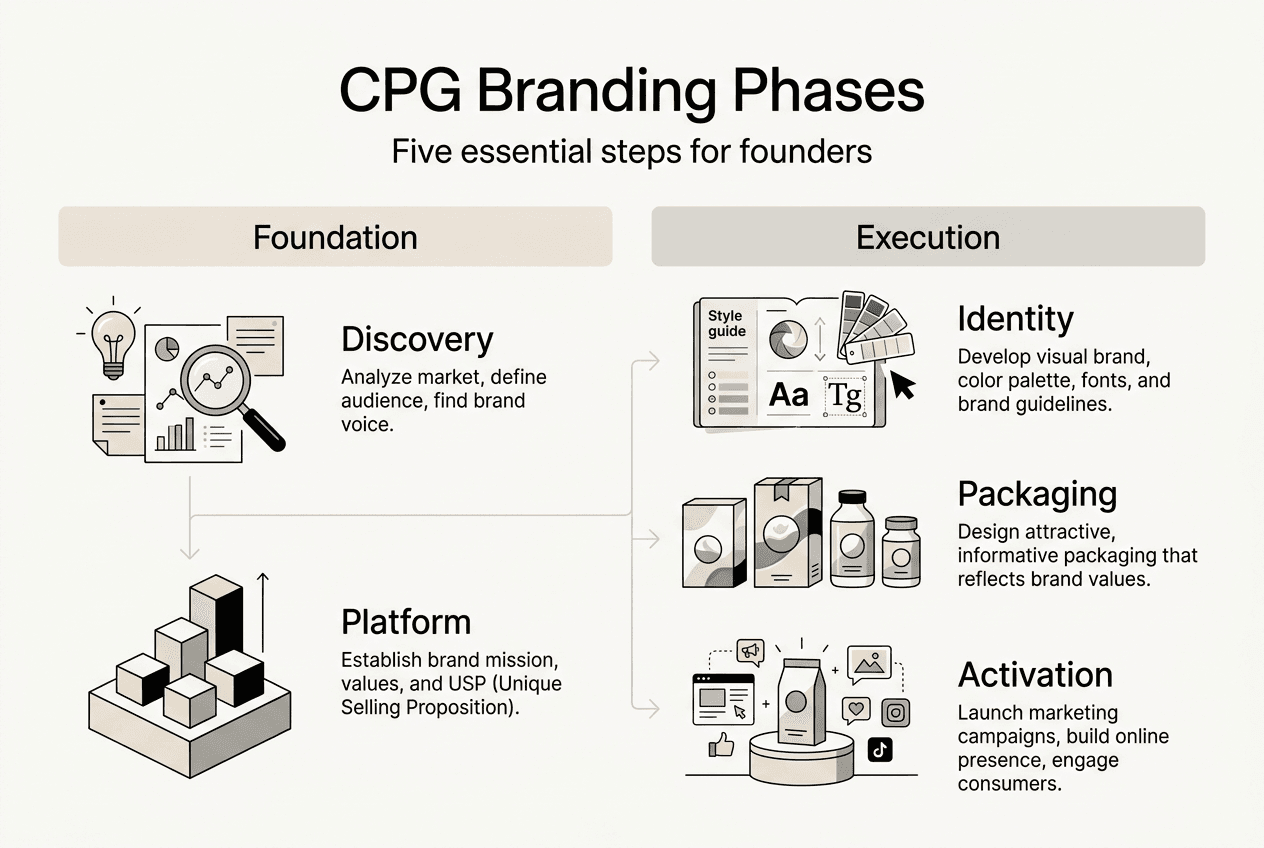
Branding isn't about hiring a designer to create a logo and calling it done. It's a comprehensive, phased process that starts with deep market immersion and ends with consistent activation across every customer touchpoint. Too many founders skip straight to aesthetics, then wonder why their beautifully designed product sits untouched on shelves.
Effective CPG branding follows five core phases: discovery, brand platform, identity design, packaging, and activation. Discovery involves understanding your target shopper's needs, preferences, and pain points through research and competitive analysis. The brand platform defines your positioning, personality, values, and messaging architecture. Identity design translates that strategy into visual elements like logos, colors, and typography. Packaging applies those elements to shelf-ready designs that communicate value at a glance. Activation brings your brand to life through marketing, social media, and retail execution.
Market immersion and consumer insights form the foundation of this process. You can't position your brand effectively without understanding who you're serving and what makes them choose one product over another. This means conducting shopper interviews, analyzing purchase behavior, and studying how competitors occupy mental real estate in your category.
Here's what founders often get wrong:
- Treating branding as a one-time project instead of an ongoing strategic process
- Focusing solely on aesthetics without defining positioning or personality first
- Skipping shopper research and relying on personal taste or assumptions
- Ignoring the activation phase, leaving great design work invisible to target customers
Start with these practical first steps:
- Define your brand positioning by identifying your unique value proposition and target audience
- Establish brand personality traits that will guide tone, visuals, and customer interactions
- Articulate core values that differentiate you and resonate with your ideal shopper
- Document these elements in a brand platform guide that keeps everyone aligned
Pro Tip: Before investing in packaging design for startups, complete your brand platform. Design decisions become faster and more confident when you have clear strategic guardrails.
The confusion many founders experience comes from ignoring this phased methodology. They jump to packaging design without positioning clarity, then struggle to explain why their product deserves shelf space. Branding creates the strategic foundation that makes every downstream decision easier and more effective.
Why branding matters: the impact on CPG success and failure rates
The statistics are brutal. 85% of new CPG products fail primarily due to poor branding, not inferior formulations or quality issues. Your product might be objectively better than competitors, but if shoppers don't understand its value in three seconds of shelf scanning, it doesn't matter.
Failure rates vary significantly by brand size and category maturity. Smaller brands launching without established distribution or brand equity face the highest risk. Established brands with loyal followings can launch extensions more successfully because they've already built trust and recognition. The difference comes down to how well the brand communicates value and creates emotional connections.
Here's how marketing investment correlates with success:
| Brand Type | Brand Building | Performance Marketing | Typical Outcome | | --- | --- | --- | | Top CPG Brands | 60% | 40% | Sustained growth and loyalty | | Struggling Brands | 20% | 80% | Short-term spikes, long-term decline | | Balanced Approach | 50% | 50% | Steady growth with efficiency |
Top brands invest approximately 60% on brand building versus 40% on performance marketing, recognizing that long-term equity drives sustainable growth. Performance marketing delivers immediate sales but doesn't create the mental availability that keeps shoppers choosing your product over time. Brand building establishes the emotional and rational reasons customers prefer you, even when competitors offer promotions.
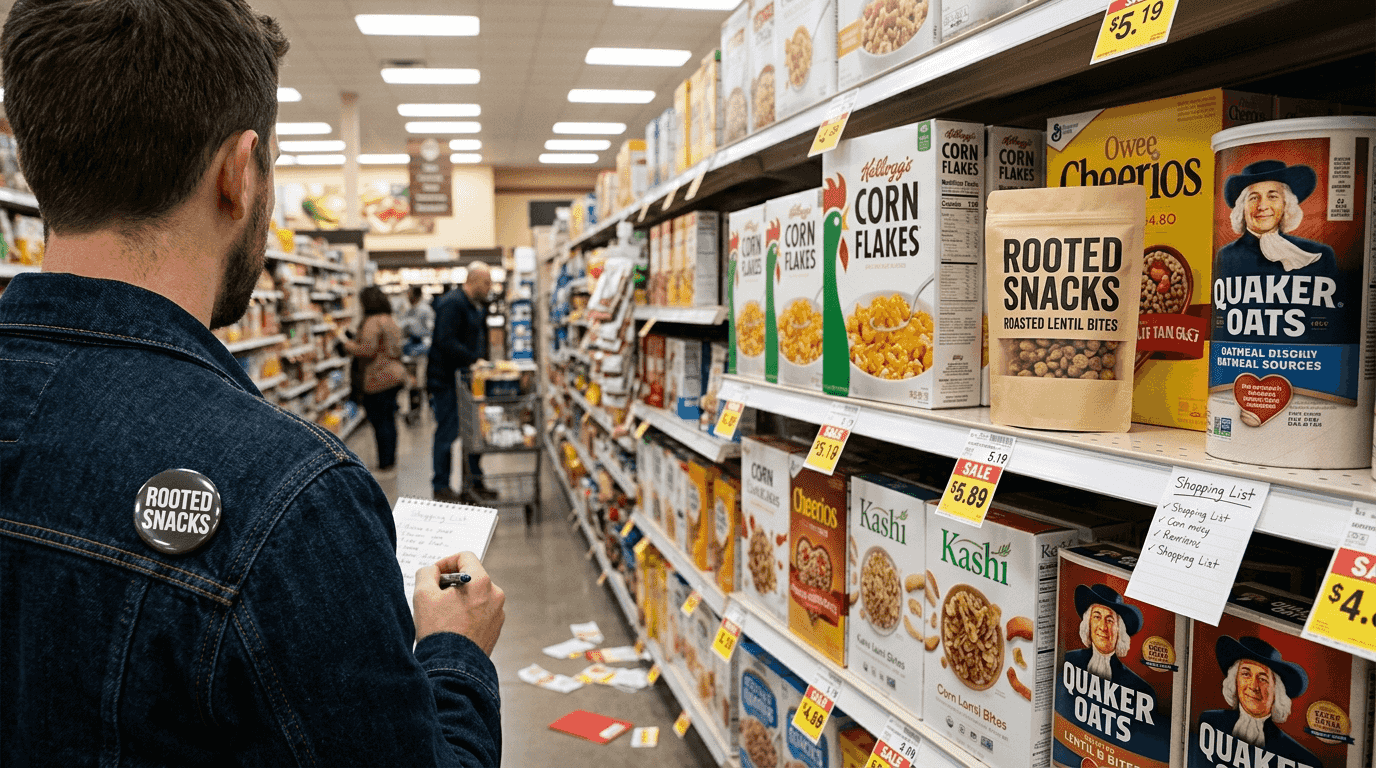
Shelf-first testing represents a superior alternative to purely aesthetic design approaches. Instead of designing packaging in isolation and hoping it works, shelf-first methodology tests designs in simulated or actual retail environments. This reveals how your package performs against competitors in real shopping contexts, where attention is scarce and decisions happen in seconds.
Data-driven branding lowers path-to-purchase barriers by identifying and removing friction points. Maybe your messaging is too complex for quick comprehension. Perhaps your packaging doesn't clearly communicate the product benefit. Shopper insights research uncovers these issues before launch, when fixes are cheap and easy.
Critical Insight: Branding failure often looks like a sales problem. Founders blame distribution, pricing, or promotion when the real issue is that shoppers don't understand or trust the product enough to try it. Strong branding solves this by creating instant clarity and appeal.
The brands that break through share common traits. They invest in understanding their target shopper deeply. They test packaging concepts before committing to production. They build brand equity through consistent messaging and quality delivery. They balance short-term performance tactics with long-term brand building. Most importantly, they recognize that packaging design tips to boost appeal must be grounded in strategic positioning, not just visual trends.
Founder personal branding versus product branding: finding the right balance
Should you build your personal brand as a founder or focus entirely on product branding? This question sparks heated debate in CPG circles, but the answer isn't binary. The right approach depends on your growth stage, category, and exit strategy.
Founder branding delivers powerful early-stage benefits. 82% of consumers trust companies more when CEOs are active on social media, giving founder-led brands an immediate trust advantage. Your personal story, expertise, and authenticity create emotional connections that generic corporate messaging can't match. This approach works especially well for niche products, premium positioning, and direct-to-consumer models where storytelling drives purchase decisions.
Product branding ensures broader market scalability and simplifies eventual exits. Investors and acquirers prefer brands that can grow beyond the founder's personal involvement. If your entire brand equity lives in your personal profile, you create key-person dependency that limits valuation and growth potential. Product-focused branding builds transferable assets that increase company value.
Here's how the two approaches compare:
| Aspect | Founder Branding | Product Branding |
|---|---|---|
| Early traction | Fast, leverages personal network | Slower, requires broader awareness |
| Scalability | Limited by founder capacity | Unlimited, systems-driven |
| Exit value | Lower, key-person risk | Higher, transferable equity |
| Authenticity | High, direct connection | Variable, depends on execution |
| Resource needs | Lower initial cost | Higher upfront investment |
The risks of pure founder branding include burnout, limited scale, and difficult succession planning. If you're the brand, you can't step back without damaging equity. Your personal life becomes intertwined with business performance. Category expansion becomes harder because everything filters through your personal identity.
A hybrid approach combining founder authenticity and product scalability offers the best of both worlds. Use your founder story to launch and build initial traction, but invest simultaneously in product brand identity that can stand alone. Share your journey and expertise while developing brand assets, messaging, and visual identity that transcend any individual.
Pro Tip: Effective packaging can reflect both your founder story and product identity. Include a brief founder note or origin story on secondary packaging while keeping primary shelf presence focused on product benefits and brand identity. This balances authenticity with scalability.
Consider your category dynamics when choosing your approach. In crowded categories where differentiation is hard, founder branding can create immediate distinctiveness. In categories where trust and expertise matter deeply, your personal credibility accelerates adoption. But in mass-market categories where scale drives profitability, product branding becomes essential earlier.
The designer's role in packaging concept creation includes helping you visualize this balance. Great designers understand how to incorporate founder authenticity without making the package feel like a personal blog. They know when to feature founder imagery and when to let product benefits dominate.
Start founder-led if you're bootstrapping and need rapid traction. Transition toward product-focused branding as you scale and prepare for institutional growth or exit. Build both simultaneously if resources allow, using founder branding for community building and product branding for retail expansion.
Practical steps and testing to build a winning CPG brand
Theory matters, but execution determines success. Here's your actionable roadmap for building a CPG brand that beats the failure statistics and creates lasting market value.
Start with a 12-step pre-launch checklist covering trademarks, audience, and packaging fundamentals. This systematic approach prevents costly mistakes and ensures you've addressed critical elements before investing in production. The checklist should include trademark searches, target audience definition, competitive analysis, positioning strategy, messaging framework, visual identity basics, packaging concepts, regulatory compliance, pricing strategy, distribution planning, marketing activation plan, and success metrics.
Shopper insights research forms the foundation of effective branding. Shopper insights boost path-to-purchase and differentiation by revealing what actually drives purchase decisions in your category. This goes beyond demographics to understand shopping motivations, decision criteria, and emotional triggers.
Conduct shopper insights research through these methods:
- In-depth interviews with 10-15 target shoppers about category preferences and pain points
- Observational research watching how people shop your category in actual stores
- Survey research quantifying preferences, willingness to pay, and message resonance
- Competitive shopping trips analyzing how competitors position and package products
Apply shelf-first packaging tests to optimize visual impact before committing to production. Create mockups of your packaging concepts and place them on actual retail shelves alongside competitors. Photograph the shelf set from typical shopping distances and angles. This reveals whether your package achieves sufficient visibility, communicates key benefits clearly, and creates enough distinction to earn consideration.
Test messaging and brand personality for market resonance using these approaches:
- Create multiple positioning statements emphasizing different benefits or emotional appeals
- Test concepts with target shoppers through surveys or interviews to identify strongest resonance
- Refine based on feedback, ensuring clarity and differentiation from competitors
- Validate final messaging through small-scale market tests before full launch
Pro Tip: The process to buy packaging designs should include iteration based on testing feedback. Don't treat packaging as a one-and-done project. Plan for refinement cycles that incorporate real shopper responses.
Iterative brand building feeds results back into design and activation. Launch with your best hypothesis, measure performance through sales data and customer feedback, identify improvement opportunities, refine messaging or design elements, and repeat the cycle. Brands that treat launch as the beginning of optimization outperform those that launch and hope.
Know how to brief designers for CPG brands effectively by providing clear positioning, target audience insights, competitive context, brand personality traits, and specific design objectives. Vague briefs produce generic work. Detailed briefs grounded in research produce distinctive, strategic designs.
Track these early indicators of branding success:
- Shelf velocity compared to category averages
- Repeat purchase rates indicating satisfaction and loyalty
- Unprompted brand awareness in target audience surveys
- Social media engagement and organic mentions
- Retailer feedback on consumer interest and reorder patterns
Adjust your approach based on what the data reveals. If awareness is high but trial is low, your messaging might not be converting consideration into purchase. If trial is strong but repeat is weak, you have a product or expectation-setting issue. If both awareness and trial are low, you need stronger activation and possibly packaging redesign.
Building a winning CPG brand requires systematic execution of these steps, not hoping that great product quality will speak for itself. The brands that succeed combine strategic thinking, shopper insights, rigorous testing, and iterative refinement into a disciplined process.
Elevate your CPG brand with expert packaging design
You now understand the strategic framework for CPG branding, but translating strategy into shelf-ready packaging requires specialized design expertise. Most founders lack the time or skills to create professional packaging that captures attention and communicates value in three seconds.
Offcut connects you with packaging design services for CPG founders who understand retail dynamics, shopper psychology, and production requirements. Instead of paying agency rates for custom work, you access exclusive, print-ready concepts created by experienced designers at a fraction of typical costs. These aren't generic templates but thoughtful designs that would otherwise sit unused on hard drives.
The platform works because it solves problems for both founders and designers. You get professional packaging that reflects your brand strategy and stands out on shelves. Designers earn income from quality work that deserves to see daylight. Everyone wins when great design finds the right home.
Apply the branding principles from this guide by starting with clear positioning and target audience insights, then working with Offcut designers to translate strategy into compelling visual execution. Your packaging becomes the physical manifestation of your brand platform, creating the shelf impact that drives trial and builds equity.
Frequently asked questions about branding for founders
What is the biggest branding mistake founders make?
Skipping the discovery and brand platform phases to jump straight into design work represents the most common and costly mistake. Without clear positioning, personality, and messaging strategy, even beautiful packaging fails to communicate value or differentiate effectively. Strategic foundation must precede creative execution.
How should founders balance personal and product branding?
Use founder branding to launch and build early traction through authenticity and personal connection, while simultaneously investing in product brand identity that can scale independently. Feature your story in content and community building, but ensure packaging and core messaging focus on product benefits and brand personality that transcend any individual.
Why is shelf-first testing important for CPG brands?
Shelf-first testing reveals how packaging performs in actual shopping contexts where attention is scarce and decisions happen in seconds. Designs that look great in isolation often fail on crowded shelves. Testing against competitors in realistic retail environments identifies visibility, clarity, and differentiation issues before expensive production commitments.
What are early indicators of branding success?
Strong branding shows up in above-average shelf velocity, healthy repeat purchase rates, growing unprompted brand awareness, positive retailer feedback, and organic social media mentions. Track these metrics from launch to identify whether your branding creates the clarity, appeal, and trust needed for sustainable growth.
How can founders leverage personal brand without risking scalability?
Share your expertise and story through content, social media, and community engagement while keeping product packaging and core marketing focused on transferable brand assets. Use founder presence to build initial audience and credibility, then transition emphasis toward product benefits and brand identity as you scale. This preserves authenticity while building equity that can grow beyond your personal involvement.
When should a CPG founder invest in professional branding?
Invest in professional branding before finalizing packaging and launching to market. The cost of strategic brand development and quality design is minimal compared to the expense of failed launches, inventory write-offs, and lost retail relationships. Early investment in getting branding right dramatically improves odds of success and accelerates path to profitability.