
TL;DR:
- Proper packaging reduces damage rates, shipping costs, and enhances customer experience.
- Systematic testing, right-sizing, and material choice are key to cost-effective, protective packaging.
- Continuous auditing and innovation in materials and design improve sustainability and profitability.
The box your customer receives is often the only physical thing your brand ever puts in their hands. No storefront, no salesperson, just cardboard and tape. And yet, up to 4% of shipments arrive damaged, not because of what's inside, but because of what's outside. Optimized packaging can push that rate down to 1-2.5%, which sounds small until you do the math across thousands of orders. Packaging decisions directly shape your return rates, your shipping costs, and whether a customer buys from you again. This article breaks down every layer of that equation.
Table of Contents
- Why packaging matters: More than just protection
- Core strategies for damage prevention and cost savings
- Innovative materials and smart packaging systems
- Tailoring packaging for unique products and channels
- Overpackaging, sustainability, and balancing priorities
- Perspective: The real edge in e-commerce packaging most overlook
- Next steps: Design smarter packaging for your brand
- Frequently asked questions
Key Takeaways
| Point | Details |
|---|---|
| Optimize for product protection | Right-sizing and proper cushioning can reduce damage rates by up to 85%. |
| Cut costs and boost experience | Smart packaging lowers DIM fees and elevates the customer unboxing moment. |
| Innovate with smart materials | Adopting bioplastics, intelligent packing, and sustainability builds loyalty and efficiency. |
| Continuously audit and adapt | Regular packaging reviews uncover savings and maintain quality as your business grows. |
Why packaging matters: More than just protection
Most brand owners think about packaging twice: when they launch and when something breaks in transit. That's a costly mistake. Packaging touches every part of your business, from warehouse costs to customer lifetime value, and the data backs this up hard.
Start with the numbers. The median packaging cost sits at $1.80 per order, but damage-related losses run into billions annually across the industry. A 3-4% damage rate sounds manageable until you realize that's roughly one in every 25 packages. For a brand shipping 10,000 orders a month, that's 300 to 400 damaged deliveries, each one a potential chargeback, replacement shipment, or lost customer.
But protection is only half the story. Packaging is your first physical brand touchpoint, and customers notice. A positive unboxing experience drives 50% more repeat purchases. That's not a small lift. That's the difference between a one-time buyer and a loyal customer who refers friends.
"Packaging is not a cost center. It's a customer experience investment that compounds over every order you ship."
Here's where most brands quietly bleed money without realizing it:
- Void space: Empty air inside a box inflates dimensional weight (DIM) fees charged by carriers
- Overpackaging: Too much material raises per-unit costs and frustrates customers who have to fight through layers of filler
- Wrong material selection: Using generic poly mailers for fragile items or heavy corrugated for lightweight goods both cost you more than necessary
- Missed brand moments: Plain brown boxes are a missed opportunity to reinforce identity at the moment of highest customer excitement
The good news is that cost-effective packaging branding doesn't require a massive budget. Smart design choices can protect your product, reduce costs, and create a memorable experience simultaneously. But first, you need to understand where your current packaging is failing, and that starts with knowing what to fix. Brands that avoid packaging mistakes early save significantly more than those who iterate after damage complaints pile up.
Core strategies for damage prevention and cost savings
Every brand wants fewer damaged orders and lower shipping bills. The path there is more systematic than most realize. Right-sizing, smart cushioning, and regular testing can cut damage by up to 85%, which is a number worth taking seriously.
Start with a product vulnerability assessment. Before choosing any box or filler, ask: How fragile is this item? What's its weight and center of gravity? Does it have sharp edges that could puncture packaging from the inside? These answers determine your baseline requirements.
Right-sizing is the single highest-leverage move most brands skip. Stocking 3-5 standardized box sizes that cover your product range minimizes void space, reduces DIM fees, and lowers the chance of items shifting during transit. Carriers calculate DIM weight based on box volume, so a box that's 20% too large can cost you real money on every single shipment.
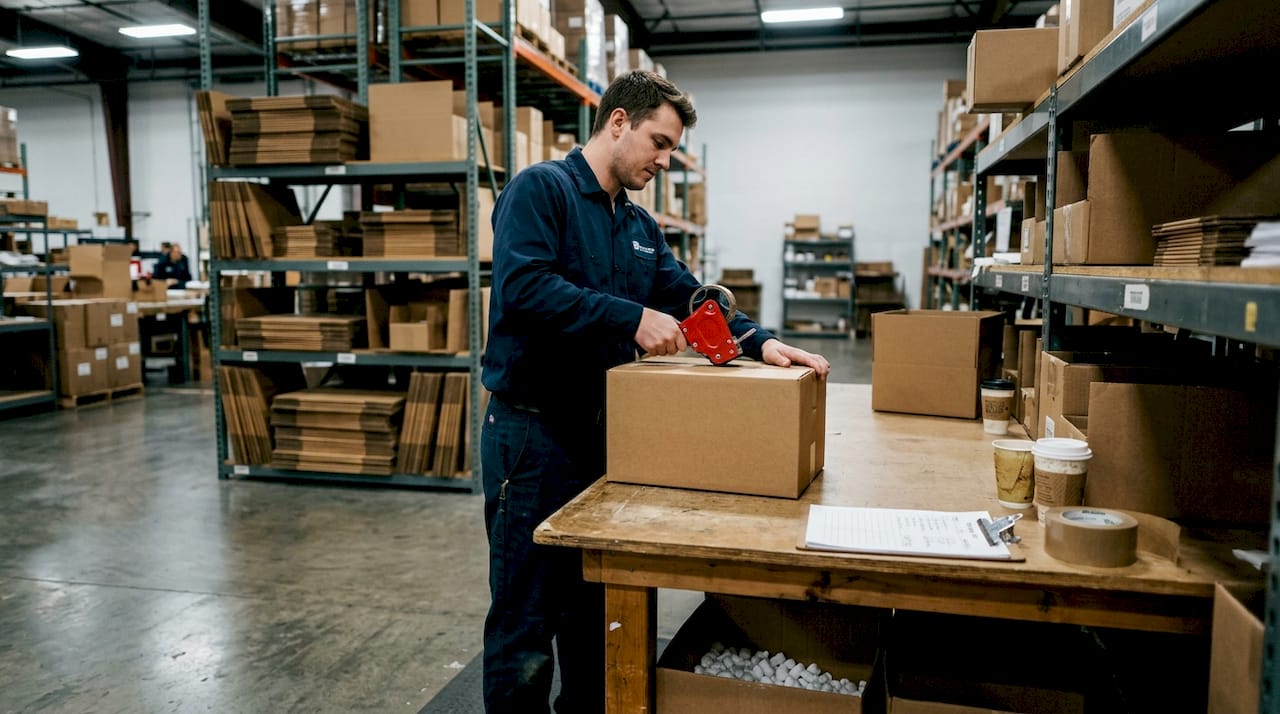
Here's how the main cushioning options compare:
| Material | Protection level | Weight | Cost | Compostable |
|---|---|---|---|---|
| Air cushions | High | Very low | Low | No |
| Molded pulp | Medium-high | Medium | Medium | Yes |
| Polyurethane foam | Very high | Medium | High | No |
| Kraft paper fill | Medium | Low | Low | Yes |
For testing, the ISTA 3A protocol simulates real-world transit conditions including drops, vibration, and compression. If your packaging hasn't been tested under these conditions, you're guessing. Most brands that run ISTA testing find at least one failure mode they didn't expect.
Here's a sequential approach to implementation:
- Audit your current damage rate by SKU
- Map each product's fragility and shipping profile
- Select 3-5 right-sized box formats
- Choose cushioning based on product type and sustainability goals
- Run ISTA 3A or equivalent drop and crush tests
- Review seal integrity and label placement for every box format
- Track damage rates post-implementation and adjust quarterly
Pro Tip: Don't test your packaging in ideal conditions. Drop boxes from waist height onto concrete, stack weight on top, and shake them. If something shifts or breaks in your hands, it will break in a carrier's truck.
Brands looking at innovative design trends for 2026 will find that protection and aesthetics are increasingly solved together, not separately. And if you're building from scratch, a step-by-step packaging design process keeps decisions structured and cost-controlled.
Innovative materials and smart packaging systems
Foundational tactics get you most of the way there. But the brands pulling ahead in 2026 are also investing in materials and systems that weren't viable even three years ago.
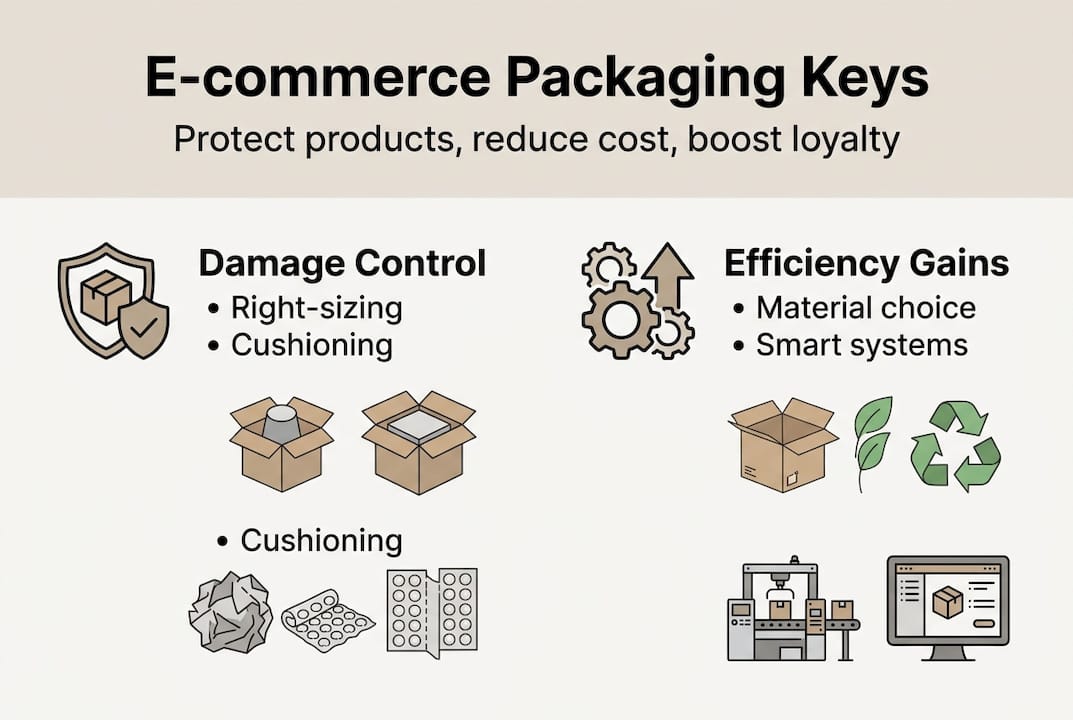
Plant-based bioplastics, molded pulp, and air cushions can reduce damage by up to 70% while cutting emissions substantially compared to traditional packaging. Mushroom-based foam (mycelium packaging) is now commercially available and fully compostable within 30 days. It offers comparable cushioning to expanded polystyrene at a similar cost, with none of the landfill permanence.
Here's a quick comparison of newer materials:
| Material | Compostable | Weight | Relative cost | Best for |
|---|---|---|---|---|
| Mycelium foam | Yes (30 days) | Low | Medium-high | Fragile, premium products |
| Molded pulp | Yes | Medium | Medium | Electronics, cosmetics |
| Bioplastic film | Partial | Very low | Low-medium | Soft goods, apparel |
| Corrugated honeycomb | Yes | Low | Low | Heavy, irregular items |
On the systems side, AI-driven cartonization is doubling adoption rates for on-demand packaging optimization. These tools analyze order data in real time and select the optimal box size and fill configuration before the item even reaches the packing station. The result is less void space, lower DIM fees, and fewer damaged goods.
Key benefits of smart packaging systems:
- Reduce average box size by 15-30% through automated right-sizing
- Cut filler material usage by up to 40%
- Lower labor time per pack by standardizing decisions
- Provide data trails for continuous improvement
Brands exploring eco-friendly materials will find that sustainability and performance are no longer in tension. The best new materials outperform their conventional counterparts on protection metrics while meeting consumer expectations for environmental responsibility.
Pro Tip: Pilot any new material or system on one SKU or product category before scaling. Run it for 60 days, track damage rates and customer feedback, then expand if the numbers hold.
For teams managing complex workflows, an AI-driven workflow approach to packaging decisions can reduce decision fatigue and catch cost inefficiencies that manual processes miss.
Tailoring packaging for unique products and channels
Innovation is powerful, but even the best materials fail when they're mismatched to the product or channel. Fragile, light, or heavy items require specialized approaches to avoid much higher damage rates than average goods.
Fragile items like glassware, ceramics, or electronics need custom-fitted inserts that prevent movement entirely. Suspension packaging, where the product is held between two layers of film stretched across a frame, eliminates contact with box walls altogether. For heavy items, double-boxing with a layer of cushioning between the inner and outer box distributes impact forces and prevents crush damage.
Lightweight items present a different challenge: static electricity. Electronics and certain textiles can be damaged by electrostatic discharge during transit. Anti-static bags and foam are non-negotiable for these SKUs, not optional upgrades.
Channel matters as much as product type. Consider these differences:
- D2C shipping: Prioritize unboxing experience, brand presentation, and protective inserts. Customers open these boxes themselves and remember the moment.
- Retail/wholesale: Prioritize stacking durability and barcode visibility. Boxes may sit in a warehouse for weeks under significant weight before reaching a shelf.
- Automated fulfillment: Packaging must be machine-compatible. Irregular shapes, flimsy closures, or non-standard sizes create bottlenecks and damage at the conveyor level.
Ultra-fast delivery increases damage rates by 27% because expedited shipments move through more handling points in less time. If you offer next-day or same-day delivery, your packaging needs to be built for that stress level, not standard ground shipping.
Pro Tip: Run a packaging audit using real returned or damaged items. Photograph where failures occur, whether it's a corner crush, a seal failure, or a puncture, and trace it back to a specific packaging decision. This is faster and more accurate than any simulation.
For step-by-step custom packaging guidance tailored to your product type, a structured design process prevents the overengineering trap that inflates costs without improving protection. Understanding packaging lifecycle stages also helps you anticipate where failures happen before they reach your customers.
Overpackaging, sustainability, and balancing priorities
More packaging is not safer packaging. This is one of the most persistent myths in e-commerce logistics, and it costs brands on multiple fronts simultaneously.
The average e-commerce box contains 40% void space, and 89% of customers report frustration with excess packaging. At the same time, 72% of consumers say they will pay more for sustainable packaging options. That's a triple problem: wasted materials, damaged customer sentiment, and a missed revenue opportunity.
"Overpackaging doesn't protect your product. It protects your anxiety about the product. Those are not the same thing."
Sustainable packaging does carry a cost premium, typically 8-15% higher than conventional options. But that premium is often offset by DIM fee reductions from right-sizing, lower material volume, and the brand equity built with environmentally conscious buyers. The real cost of overpackaging includes carrier surcharges, customer returns, and reputational damage that rarely shows up in a single line item.
Here's how to balance protection, sustainability, and cost effectively:
- Conduct a void space audit on your top 10 SKUs and identify which boxes can be downsized
- Survey customers post-purchase about packaging experience, specifically asking about excess material
- Set a target void space threshold (under 15% is achievable for most product categories)
- Switch filler materials to kraft paper or air cushions before committing to premium materials
- Evaluate sustainable design for CPG principles to align packaging choices with brand values
- Use whitespace packaging design thinking to reduce visual clutter and material use simultaneously
The brands winning on sustainability aren't sacrificing protection. They're just being more precise about what protection actually requires.
Perspective: The real edge in e-commerce packaging most overlook
Here's what the packaging industry rarely says out loud: the brands with the lowest damage rates and the highest customer satisfaction scores aren't using the flashiest materials. They're auditing obsessively.
68% of brands never audit their packaging, which means they're missing up to 22% in potential savings. That's not a small oversight. That's a recurring budget leak that compounds every quarter.
The real competitive edge is treating packaging as a living system. Not a one-time project you hand off to a supplier and forget. Top e-commerce operators put packaging on their monthly operations agenda. They track damage rates by SKU, by carrier, and by season. They collect customer feedback specifically about the opening experience. They adjust box sizes when product dimensions change even slightly.
Flashy innovations get coverage. Mycelium foam and AI cartonization make for great press releases. But the brand that quietly right-sizes its boxes twice a year and surveys customers every quarter will outperform the one that invested in a premium material once and never revisited the decision.
If you want to know where your packaging is actually failing, read the packaging design fails that brands repeat most often. The patterns are remarkably consistent, and most of them are fixable without a major budget.
Next steps: Design smarter packaging for your brand
You now have a clear picture of what separates packaging that costs you money from packaging that earns it back. The next move is finding design concepts that match your product, your channel, and your brand identity without starting from scratch.
Offcut is built for exactly this moment. It's where print-ready packaging concepts live instead of collecting dust on a designer's hard drive. If you're a brand owner, you get access to exclusive, tested concepts at a fraction of agency cost. If you're a designer with unused work, you get paid for it. Explore the OffCut platform to find concepts that fit your brief, or visit the designer portal to contribute your own packaging ideas and turn shelf-sitters into revenue.
Frequently asked questions
How does right-sizing packaging help reduce costs in e-commerce?
Right-sizing eliminates excess void space, which directly reduces DIM fees by $0.50 to $2.00 per shipment while also lowering material costs and improving product protection during transit.
What is the best packaging material to prevent damage during shipping?
Air cushions reduce damage by 70% and combined with right-sized boxes and proper cushioning, brands can prevent up to 85% of transit damage incidents across most product categories.
Why is sustainable packaging important for e-commerce brands?
Sustainable packaging reduces material waste, aligns with the values of 72% of consumers who will pay a premium for it, and often reduces carrier fees when right-sizing is part of the sustainability strategy.
How can e-commerce brands assess if their packaging is effective?
68% of brands skip packaging audits entirely, but regular reviews of damage rates, customer feedback, and void space can unlock up to 22% in cost savings without changing your core packaging format.
What challenges do fragile or heavy items pose for e-commerce packaging?
Fragile and heavy items need custom inserts, suspension packaging, or double-boxing to manage impact forces, and ultra-fast shipping increases damage rates by 27% for these categories specifically, making material selection even more critical.