
TL;DR:
- Print-ready packaging files are pre-formatted for immediate production, reducing delays and costs.
- Using print-ready concepts speeds up market entry by eliminating prepress fees and revision cycles.
- They ensure brand consistency, flexibility, and cost-effective scaling across product variations.
Launching a consumer packaged goods product is exciting right up until packaging enters the conversation. Suddenly you're buried in vendor requirements, revision cycles, and designer quotes that could fund a small expedition. Print-ready packaging concepts cut through that friction by delivering files that are built for production from day one, not after three rounds of back-and-forth with a prepress team. This article breaks down the real advantages of working with print-ready concepts, from faster market entry to tighter brand control, so you can make smarter decisions about your next CPG launch.
Table of Contents
- Print-ready concepts explained: What they are and why they matter
- Save time and money: The biggest wins for CPG launches
- Consistency, flexibility, and brand control: Key advantages for growing brands
- How print-ready concepts compare: Templates vs. custom design vs. DIY
- Why every CPG entrepreneur should prioritize print-ready workflows
- Access professional print-ready concepts for your next launch
- Frequently asked questions
Key Takeaways
| Point | Details |
|---|---|
| Faster launches | Print-ready concepts cut approval and production time, getting your products to market sooner. |
| Lower costs | They help save thousands on design and prepress fees, especially for startups and new products. |
| Consistent branding | Brands keep their visual identity intact across multiple SKUs and updates. |
| Adapt with ease | Print-ready files make it simple to iterate packaging for promotions or new regulations. |
| Growth-ready system | Using print-ready concepts sets your CPG brand up for scalable, flexible growth. |
Print-ready concepts explained: What they are and why they matter
With an understanding of what's at stake in CPG packaging, let's break down exactly what print-ready concepts are and what makes them essential.
A print-ready concept is not just a pretty mockup. It is a design file that has been pre-prepared to meet all the technical requirements a commercial printer needs to go straight to production. That means correct color profiles (usually CMYK with spot color callouts where relevant), accurate dielines, minimum 300 DPI image resolution, proper bleed and safe zone margins, and a well-balanced mix of vector and raster elements. Think of it as the difference between handing a contractor a rough sketch versus handing them stamped architectural drawings.
The key components that separate a print-ready file from a generic design file include:
- Bleed and trim marks: Ensures no white borders appear after cutting.
- Accurate dielines: The structural template that defines where the box or label folds, cuts, and scores.
- Color profiles: CMYK-converted files prevent unexpected color shifts on press.
- Vector artwork: Logos and text should be vector-based for infinite scalability without loss.
- Embedded or outlined fonts: Prevents font substitution errors at the printer.
- Resolution-correct raster images: Any photography or texture must be 300 DPI at final print size.
Understanding print-ready design basics is especially important for startups because mistakes at this stage are expensive. A file rejected by a printer means delays, rush fees, and sometimes a full redesign. Precision here directly controls your branding quality and your budget.
One particularly underrated advantage: benefits of vector graphics include the ability to scale artwork to any size, whether you're printing a 2-inch label or a 24-inch shipping box, without any quality loss. That flexibility is built into a well-crafted print-ready concept from the start.
For CPG startups specifically, print-ready concepts pair perfectly with short-run digital printing. Print-ready files support short runs, which directly reduces inventory risk and upfront costs, a critical advantage when you are still validating demand in the market.
Pro Tip: Before sending any file to a printer, request their prepress spec sheet and cross-check every technical requirement against your file. Print-ready concepts sourced from a professional marketplace will already meet most standard requirements, saving you this verification step.
Save time and money: The biggest wins for CPG launches
Now that you know the basics, let's see how having print-ready concepts directly impacts your timeline and bottom line.
Time is a resource most CPG entrepreneurs underestimate. From concept to shelf, packaging can become the single biggest bottleneck in your launch calendar. Custom design projects move through briefing, concepting, client review, revisions, prepress checks, and then print production. Each handoff costs time. With print-ready concepts already structured for production, you strip out several of those phases entirely.
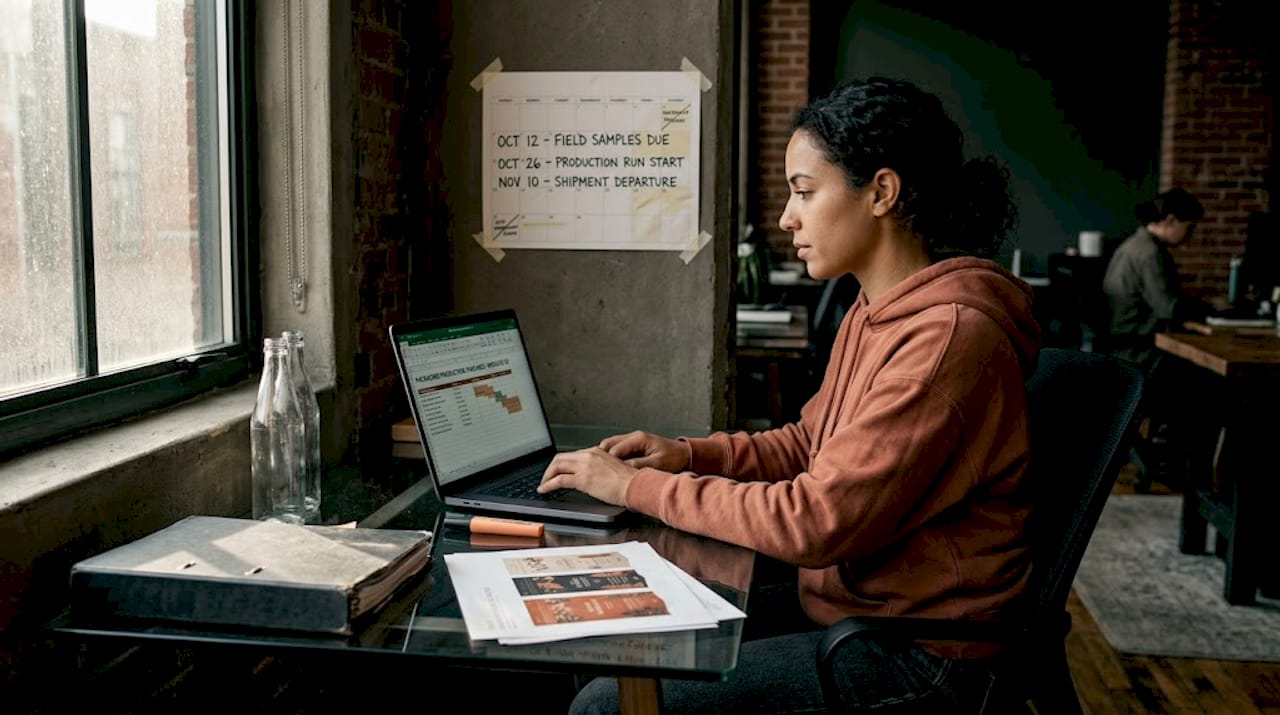
Real numbers illustrate why this matters. Case studies show efficiency gains including 30% faster time-to-market, approximately $8,000 saved on designer and prepress fees per launch, and a 12% sales lift attributed to faster shelf availability and more market-responsive packaging updates. That is not a marginal improvement. For a startup spending $40,000 to $60,000 getting a product to market, saving $8,000 on packaging alone represents a meaningful percentage of your runway.
Here is a straightforward look at where print-ready concepts create the most tangible savings:
- Prepress fees eliminated. A professional prepress check at a print house typically costs $300 to $800 per file. Print-ready concepts are already checked.
- Faster approval cycles. Because the file is technically complete, printer approval often takes hours instead of days.
- Rapid promotional updates. Need a limited-edition holiday version? Adapting an existing print-ready concept takes a fraction of the time of creating a new custom design.
- Short-run digital printing enabled. Ordering 500 units instead of 5,000 means lower cash tied up in inventory while you test the market.
- Fewer costly reprints. Technical errors are the leading cause of reprints. A file built to spec from the start means you print right the first time.
Improving your packaging workflow through print-ready assets also removes a common stressor for first-time brand founders. Instead of managing a designer through weeks of back-and-forth, you start with a production-ready asset and focus your energy on launch strategy, retail negotiations, and marketing.
One often-overlooked opportunity is repurposing packaging designs across multiple SKUs or seasonal campaigns. When a design is already production-ready, adapting it for a new flavor, size, or seasonal colorway is a matter of hours, not weeks. That agility directly translates to more market responsiveness and better sales performance over time.
Pro Tip: Build your launch calendar backwards from your target shelf date and add a two-week buffer for print production. If you're working with print-ready concepts, you can safely shorten the design phase from four to six weeks down to one to two weeks.
Consistency, flexibility, and brand control: Key advantages for growing brands
Reducing costs is a huge benefit, but brand owners also need reliability and flexibility, especially as you scale.
Brand consistency is one of those things that seems manageable when you have one SKU and becomes a serious operational challenge when you have twelve. Every time a new product variation, seasonal edition, or retailer-specific packaging run gets produced, the risk of color drift, font substitution, or layout inconsistency grows. Print-ready concepts solve this systematically rather than through hope and heroic effort.
Because the structural and color architecture of a print-ready file is locked and documented, your brand elements stay consistent across different print vendors, different run sizes, and different formats. Your hero red stays the same rich red whether you're running 500 units on a digital press or 50,000 on an offset line. That is not a small thing. Color inconsistency across packaging is one of the fastest ways to erode consumer trust at retail.
The advantages for growing brands specifically include:
- SKU adaptation without redesign. Swap a flavor name, change a color accent, update a regulatory claim. The structural integrity of the file stays intact.
- Vendor portability. A properly formatted print-ready file can go to any qualified printer, preventing vendor lock-in and enabling competitive bidding.
- Regulatory compliance updates. Nutrition facts panels, allergen warnings, and ingredient lists change. A clean print-ready file makes those updates surgical rather than traumatic.
- Seasonal and promotional flexibility. Print-ready files support rapid packaging iterations and flexibility for seasonal changes, meaning you can have a holiday variant ready without blowing your creative budget.
- Reduced error risk. File format issues and color inconsistencies are the two most common causes of expensive reprints. Print-ready files lock both down.
Working with a solid approach to template adaptation for packaging means you can build a small design system around your core packaging concept. Each new product or variation follows the same technical architecture, so your team and your vendors always know what to expect.
"Brands that maintain consistent packaging architecture across SKUs build stronger shelf presence and reduce costly production errors. Print-ready assets are the foundation of that consistency."
Smart use of design elements like using whitespace design within your print-ready concepts also helps ensure that your packaging looks clean and intentional across different sizes and formats. A concept designed with purpose from the start adapts more gracefully than one that was pieced together without structural thinking.
How print-ready concepts compare: Templates vs. custom design vs. DIY
Still not sure which path is right for your launch? Here's how the main packaging solutions stack up.
Every CPG entrepreneur faces a decision early in their launch process. Do you hire a design agency for a fully custom package? Do you buy or license a print-ready concept? Or do you cobble something together with an online tool? Each path has a real cost, timeline, and risk profile.
| Factor | Print-ready concepts | Custom design | DIY (Canva, etc.) |
|---|---|---|---|
| Cost | $200 to $1,500 | $5,000 to $25,000+ | Free to $50/month |
| Time to production | 1 to 2 weeks | 6 to 14 weeks | 1 to 4 weeks |
| Print quality | High (production-spec) | High | Low to medium |
| Vendor acceptance | Strong | Strong | Often rejected |
| Brand uniqueness | High (exclusive concepts) | Highest | Low |
| Adaptability | Excellent | Good | Poor |
| Regulatory compliance | Built-in with guidance | Built-in | User-dependent |
The comparison reveals a clear pattern. Print-ready concepts occupy a powerful middle ground that most CPG startups ignore because they assume professional-grade packaging means full custom agency work.
Here is a practical guide to choosing the right approach based on your stage:
- Pre-launch and MVP stage. Print-ready concepts are almost always the right call. You need speed, cost control, and production quality, and you get all three.
- Post-validation, scaling stage. If you've proven demand and are moving to retail distribution, consider a brand refresh built on your existing print-ready architecture.
- Established brand with significant marketing budget. Full custom design makes more sense once you have stable revenue and a clear brand strategy to brief against.
- Seasonal or limited editions at any stage. Print-ready adaptations are faster and cheaper than briefing a new custom project every quarter.
The DIY path carries a specific risk that many founders learn the hard way. Tools built for screen-first design do not output files that meet commercial print requirements. Avoid raster-limited tools like Canva for precision print because raster image limits lead to blurry output, color mismatches, and outright rejection from printers. The apparent cost savings evaporate fast when you factor in reprints and delays.
For CPG entrepreneurs who want to learn more about the technical backbone of packaging, understanding dielines for packaging is a great next step. Knowing how your packaging structure is built helps you ask better questions and make smarter decisions when evaluating print-ready concepts.
Why every CPG entrepreneur should prioritize print-ready workflows
Now that you see the evidence, here's a candid take from inside the CPG packaging world.
There is a persistent myth in the CPG space that custom design is inherently more professional or more likely to succeed at retail. That thinking sends founders down a path that costs them time, money, and sometimes their launch window entirely. The reality is that most successful CPG products you see on shelves today launched with adapted or off-the-shelf design concepts. The brand differentiation came from the product, the story, and the go-to-market strategy, not from bespoke design.
Print-ready workflows are not a compromise. They are a growth system. When your packaging can be updated in days instead of months, you can respond to market feedback, test new claims, and stay relevant across seasons without burning your budget on design every time. That responsiveness is a genuine competitive advantage.
The brands that scale fastest are the ones that treat packaging as a living asset rather than a one-time creative project. Building your launch on success with print-ready design means you start with a system that supports growth rather than one that needs to be rebuilt every time you want to make a change. Print-ready is not a shortcut. It is the smart starting point.
Access professional print-ready concepts for your next launch
Ready to put the advantages above to work? Offcut is exactly where to start.
Offcut exists because great packaging designs should not sit on a designer's hard drive collecting digital dust. At Offcut, CPG founders get access to exclusive, print-ready design concepts created by professional packaging designers, at a fraction of what a custom agency project would cost. Every concept is production-spec ready, which means you spend less time in prepress and more time building your brand. Whether you are launching your first SKU, refreshing a seasonal line, or scaling into new retail channels, affordable CPG packaging solutions are available right now. Browse the marketplace, find a concept that fits your brand vision, and get to market faster.
Frequently asked questions
What makes packaging 'print-ready'?
Print-ready files are pre-formatted for immediate production, meaning they include correct dimensions, color profiles, bleed margins, and are structured so no additional editing is needed before the printer runs them.
How do print-ready concepts lower packaging costs?
They eliminate multiple cost layers including designer fees, prepress checks, and expensive rework rounds. Case studies document $8K saved on fees and significantly faster market entry compared to custom design projects.
Are print-ready templates suitable for high-volume runs?
Yes, they work well across run sizes, but for very large production orders it makes sense to pair with flexo or offset printing after your initial validation runs to optimize cost per unit at scale.
Can I use Canva or similar online tools for print-ready packaging?
Online tools like Canva are not recommended for professional packaging because raster image limits lead to quality issues that printers routinely reject, costing you time and money in the process.