
TL;DR:
- Interactive packaging enhances consumer engagement through digital codes, AR, tactile features, and gamification.
- Effective campaigns show increased website traffic, repeat purchases, and longer interaction sessions.
- Design success depends on utility, scannability, content maintenance, and matching mechanics to target audiences.
A single QR code on a food package helped Atria achieve a 20% engagement increase and 40% more website traffic, all without changing the product inside. That result is not an anomaly. Interactive packaging is quietly reshaping how CPG brands connect with shoppers, yet most brands either ignore it entirely or implement it poorly. This guide cuts through the confusion. You will learn exactly what interactive packaging is, which technologies power it, what real campaigns have achieved, and how to design experiences that actually work instead of frustrating the people you are trying to win over.
Table of Contents
- Defining interactive packaging: Beyond the basics
- Key technologies and mechanics in interactive packaging
- Measuring impact: Real-world results from interactive packaging
- Best practices and pitfalls: Designing interactive experiences that work
- Perspective: Why utility—not novelty—matters most in interactive packaging
- Explore innovative interactive packaging concepts with Offcut
- Frequently asked questions
Key Takeaways
| Point | Details |
|---|---|
| Interactive packaging defined | It adds digital or tactile elements to packaging, transforming it into a channel for consumer engagement. |
| Technology powers engagement | QR, AR, tactile sliders, and gamification can dramatically increase user interaction and brand loyalty. |
| Measure real-world results | Campaigns have driven website traffic increases up to 40% and engagement rises of 20% or more. |
| Utility first, novelty second | The most effective interactive packaging serves a real purpose, giving value to consumers rather than just showcasing new tech. |
| Strategic execution is key | Long-term success depends on regular updates, analytics, and careful alignment with audience needs and regulatory standards. |
Defining interactive packaging: Beyond the basics
Traditional packaging does one job: protect and present a product. Interactive packaging does something more. It creates a two-way relationship between your brand and the consumer, using embedded digital or physical mechanisms that go beyond the static label.
Think of it this way. A standard cereal box tells you the nutrition facts. An interactive cereal box lets a kid scan a code, unlock a mini-game, and collect characters across multiple purchases. Same product. Completely different consumer experience.
The gap between traditional and interactive packaging is significant, and it shows up in measurable ways:
| Feature | Traditional packaging | Interactive packaging |
|---|---|---|
| Consumer action | Read, open, use | Scan, tap, reveal, play |
| Brand touchpoint | One-time, at shelf | Ongoing, post-purchase |
| Data collected | None | Scan rates, location, behavior |
| Content flexibility | Fixed at print | Updateable digitally |
| Engagement depth | Passive | Active and participatory |
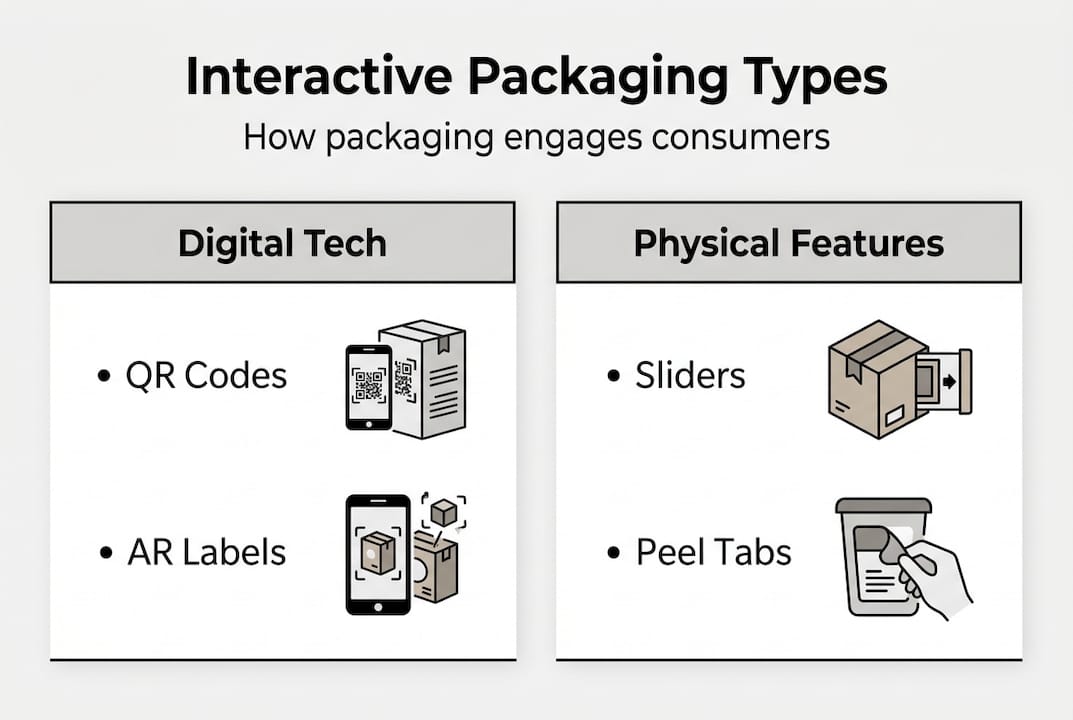
The core types of interactive packaging span both digital and physical formats. According to key mechanics used across the industry, the main categories include:
- QR codes and NFC tags that link to video content, recipes, tutorials, or loyalty programs
- Augmented reality (AR) that overlays 3D animations or product information when scanned with a phone
- Tactile features like sliders, twist mechanisms, and pop-up structures that engage through touch
- Peel-reveal layers that hide messages, discounts, or collectible art beneath the surface
- Gamification elements such as puzzles, scratch panels, and spin-to-win mechanics
- Printed electronics and OLED lighting that add visual movement or illumination to the pack
Each of these serves a distinct purpose. QR codes drive traffic and deliver education. AR builds brand theater. Tactile elements create premium unboxing moments. Gamification drives repeat purchase and shelf engagement. You choose based on what your brand needs to accomplish and who your consumer is.
Want a broader view of where the category is heading? The design trends for interactive packaging landscape in 2026 shows just how fast this space is moving.
Key technologies and mechanics in interactive packaging
Not every technology fits every product. The brands that get the best results are the ones that match the mechanic to the moment.
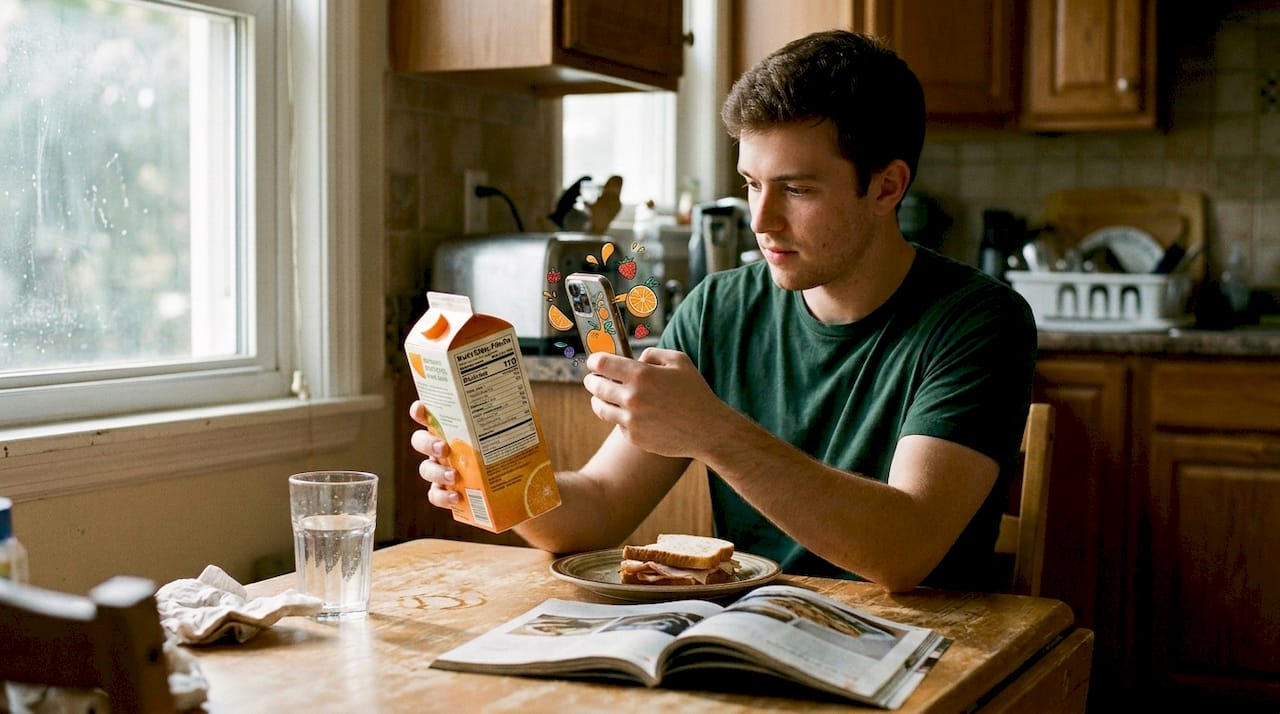
QR codes remain the most accessible entry point. They require no app, work on any modern smartphone, and can be updated without reprinting the pack. They are ideal for linking to how-to videos, ingredient sourcing stories, or time-limited promotions.
NFC (near-field communication) tags go a step further. A consumer taps their phone to the pack and is instantly directed to digital content. No camera required. NFC is increasingly used in premium spirits, beauty, and luxury food to signal sophistication and verify product authenticity.
AR experiences are the most visually dramatic option. Point a phone at the pack and the label comes alive with animation, a brand character appears, or a product tutorial plays in 3D. AR works especially well for cosmetics, beverages, and seasonal items where the visual spectacle justifies the added cost.
Here is how the main technologies compare across key variables:
| Technology | Cost level | Consumer friction | Best suited for |
|---|---|---|---|
| QR code | Low | Very low | Food, beverages, mass market |
| NFC tag | Medium | Low | Premium goods, authentication |
| AR experience | Medium to high | Medium | Beauty, spirits, seasonal |
| Tactile mechanics | Medium to high | None | Gifts, luxury, unboxing |
| Gamification layer | Variable | Low | Snacks, kids, loyalty programs |
The numbered approach to rolling out interactive mechanics follows a logical sequence:
- Define your consumer objective first (education, loyalty, entertainment, or verification)
- Select the mechanic that matches that objective with the least friction
- Map the experience to the physical constraints of your pack format
- Build and test the digital or physical component before committing to print
- Plan content updates and set an expiration or refresh schedule
Hybrid approaches are where things get especially interesting. Burgopak's slider mechanisms combined with a QR code, for example, deliver both tactile delight and a digital content gateway in a single package. That combination signals premium quality while also driving measurable digital engagement.
Pro Tip: Match your mechanic to your audience's actual behavior. A QR code tied to a recipe works brilliantly for a weeknight pasta sauce. It would feel out of place on an impulse-buy candy bar. Explore packaging design tips and consider repurposing packaging designs to stretch budget further when testing interactive formats.
Measuring impact: Real-world results from interactive packaging
The data on interactive packaging is compelling, but it is not uniform. Results vary sharply based on category, execution quality, and how well the experience matches the consumer's actual intent.
Here is what strong campaigns have actually achieved:
- Atria's QR-video packaging produced a 40% traffic increase, 20% engagement rise, and 300 total hours of consumer interaction during the campaign period
- NARS's AR campaign delivered 230% engagement growth and 41% repeat purchase rates among consumers who scanned the pack
- AR scan rates across campaigns range from 4% to 35%, with engagement sessions lasting anywhere from 40 seconds to 3 minutes
- Repeat scan rates reach as high as 23%, indicating genuine return interest rather than one-time curiosity
"The brands seeing the highest scan rates are not the ones with the flashiest AR. They are the ones offering content that genuinely helps the consumer use or enjoy the product better."
The categories that consistently benefit most include:
- Food and beverage: Recipe content, sourcing stories, and pairing suggestions drive meaningful session time
- Beauty and personal care: Tutorial videos and shade-matching AR features create real utility
- Premium and gifting products: Unboxing theater and collectible mechanics enhance perceived value
- Health and wellness: Dosage guidance, lifestyle content, and loyalty integrations support ongoing engagement
The limitations are real, too. For low-involvement, low-price products, the effort of scanning rarely feels worth it to the consumer. If your product is grabbed in three seconds and used in thirty, an AR experience is probably not the right investment. Match the complexity of the interaction to the time and attention your product naturally earns. Reviewing CPG packaging workflow strategies can help you assess where interactive elements fit within your broader production process.
Best practices and pitfalls: Designing interactive experiences that work
The case studies make interactive packaging look straightforward. The reality is that most campaigns that underperform do so because of execution problems, not concept problems.
Here is the sequence that separates successful launches from expensive missteps:
- Prioritize utility over spectacle. Effective methodologies balance novelty with genuine consumer value. If the experience does not help, entertain, or reward the consumer, it will be ignored after the first scan.
- Ensure scannability in real conditions. Test QR codes under store lighting, on curved surfaces, and at the size they will actually be printed. Small codes on glossy packs fail constantly.
- Plan content maintenance from day one. A broken link or expired promotion is worse than no interactive element at all. Build a calendar for updates before you print a single unit.
- Confirm legal and sustainable packaging compliance. Interactive claims, promotional content, and data collection via scans all carry regulatory obligations. Use a compliance checklist for CPG packaging as part of your pre-launch review.
- Test with actual consumers before committing. Run a small batch test with your target demographic. Watch how they interact. You will catch friction points no internal team would ever spot.
The pitfalls that kill otherwise good campaigns are predictable. Broken QR codes. AR experiences that only work in ideal lighting. Digital content that is never updated after launch. Gamification mechanics that confuse rather than delight. Post-launch analytics and consumer feedback are not optional extras. They are the only way to know whether your investment is actually landing.
Pro Tip: Before you finalize any interactive feature, ask two questions. First, can a consumer figure this out in under five seconds? Second, will the content still be relevant in six months? If the answer to either is no, redesign before you print. Looking at cost-effective packaging ideas and updating packaging for brand impact can sharpen your approach before committing to production.
Perspective: Why utility—not novelty—matters most in interactive packaging
We have seen a lot of interactive packaging concepts come through Offcut. The ones that generate genuine excitement from brand owners and designers alike share one trait: they solve something. They help a consumer cook a meal, understand an ingredient, or feel rewarded for choosing a product twice.
The ones that flop are almost always chasing novelty. A dancing logo is impressive once. It is irrelevant by the second scan. Utility-driven interactions, whether recipes, tutorials, or loyalty rewards, keep consumers coming back because they deliver something real each time.
The uncomfortable truth is that most brands add interactive features to signal modernity rather than to serve the consumer. That instinct leads to wasted production budgets and unmemorable experiences. The brands winning with interactive packaging are asking "What does my customer actually need right now?" not "What will look impressive at a trade show?"
Analytics, feedback loops, and iteration are what separate a one-season experiment from a long-term engagement driver. If you want to avoid the most expensive mistakes, why packaging design fails is worth reading before your next brief goes out.
Pro Tip: Ask "Will this actually help my customer?" before approving any new interactive feature. If the honest answer is no, cut it.
Explore innovative interactive packaging concepts with Offcut
Interactive packaging works best when the concept is sharp before production begins. Offcut gives CPG brand owners access to print-ready packaging concepts designed by professionals, available immediately and at a fraction of what agencies charge.
Whether you are exploring interactive packaging concepts for the first time or looking to refresh an existing line with a standout design, the OffCut design platform connects you directly with concepts built for real-world production. No briefs from scratch. No long agency timelines. Just packaging ideas that are ready to move forward, built by designers who understand the CPG shelf.
Frequently asked questions
How does interactive packaging increase consumer engagement?
Interactive packaging gives consumers a reason to spend more time with your product by offering digital content, games, or rewards through the pack itself. Atria's QR-video packaging produced a 20% engagement increase and 40% website traffic boost, showing how even a single mechanic can drive measurable results.
What types of technologies are used in interactive packaging?
Common technologies include QR codes, NFC tags, AR, tactile mechanisms like sliders, printed electronics, and peel-reveal layers. Key mechanics span from simple digital access points to full 3D animations and gamified experiences.
What are the main challenges of implementing interactive packaging?
The biggest challenges are keeping content maintained, ensuring device compatibility, and making the experience genuinely easy to use. Effective methodologies emphasize balancing novelty with usability, scannability, compliance, and ongoing content upkeep.
Can interactive packaging work for all consumer packaged goods?
Not equally. Categories like food, beauty, and premium goods see the strongest returns, while low-involvement or impulse products often lack the consumer attention needed for interactions to land. AR packaging performance varies widely depending on how well the mechanic matches the product and the audience.