
TL;DR:
- Structural packaging involves the physical form and engineering, not just visual design.
- Good structural decisions improve product protection, shelf presence, and consumer perception.
- Investing in early, strategic structural design reduces costs, damage, and enhances brand value.
Most CPG teams treat packaging as a graphic design problem. Pick the colors, finalize the logo placement, send to print. But that mindset leaves serious money on the table. Structural packaging, meaning the physical form, material, and architecture of your package, determines whether your product survives a 400-mile truck ride, stands out on a crowded shelf, and gets picked up by a consumer in the first place. This article breaks down what structural packaging actually is, how it works at a technical level, and how smart structural decisions translate directly into better margins, stronger brand perception, and fewer costly redesigns.
Table of Contents
- What is structural packaging?
- Core elements and materials in structural packaging
- The structural workflow: How designs move from concept to shelf
- How structural packaging drives consumer perception and product success
- Our perspective: Why structure is your brand's silent sales force
- Tap into expert packaging design resources
- Frequently asked questions
Key Takeaways
| Point | Details |
|---|---|
| Definition matters | Structural packaging is the foundation for both function and brand appeal. |
| Material choices impact outcomes | Selecting the right materials is critical for durability, cost, and perception. |
| Workflow is key | A connected structural workflow prevents costly failures and launch delays. |
| Impact on consumers | Structural features strongly influence shopper perceptions and product success. |
| Leverage expert insights | Investing in expert design creates safer, smarter, and more effective packaging. |
What is structural packaging?
Structural packaging is the physical design of a package: its shape, dimensions, material composition, and the engineering principles that hold it all together. It is not the label. It is not the color palette. It is the box itself, the tray, the bottle, the blister, the carton. While graphic design communicates brand identity on the surface, structural design determines what the package is and what it can do.
The distinction matters more than most brand managers realize. You can have the most beautiful label in your category and still lose on shelf because your package collapses under stacking pressure, cannot be efficiently palletized, or feels cheap in the consumer's hand. Structure is the foundation that graphic design sits on.
Here is what structural packaging actually covers:
- Physical protection: Preventing damage from impact, compression, moisture, and temperature shifts during transit and storage
- Manufacturability: Ensuring the design can be produced at scale without excessive waste or tooling cost
- Shelf performance: Standing upright, stacking cleanly, and occupying shelf space efficiently
- Consumer interaction: How the package opens, reseals, dispenses, and is ultimately disposed of
- Sustainability: Material choices that reduce weight, improve recyclability, or cut carbon in the supply chain
- Cost control: Wall thickness, material grade, and structural geometry all have direct cost implications
As noted in research on packaging concept creation, structural packaging incorporates material science and engineering alongside brand goals, making it a cross-functional discipline rather than a purely creative one.
"The best structural packaging is invisible to the consumer. They just know the product feels right, opens easily, and looks solid on the shelf. That feeling is engineered, not accidental."
Understanding dielines in packaging is one of the first practical steps in translating structural intent into manufacturable reality. A dieline is the flat template that defines how a package will be cut, scored, and folded. Get it wrong and every downstream step compounds the error. Research into structural strength factors confirms that geometry and material interact in complex ways that require engineering input from day one.
Core elements and materials in structural packaging
With a clear definition in place, it is essential to understand the building blocks structural packaging relies on. Every structural package is defined by six core elements working together:
- Shape and geometry: The overall form, including curves, angles, and panel configurations
- Closure system: How the package seals, whether that is a tuck flap, snap lid, heat seal, or magnetic closure
- Structural reinforcement: Internal supports, trays, dividers, or corner posts that add rigidity
- Wall construction: Single wall, double wall, or triple wall corrugated, each with different strength profiles
- Surface finish: Coatings or laminates that affect moisture resistance and printability
- Fitment and void fill: How the product sits inside the package and how movement is minimized
Material choice ties all six elements together. Here is a quick comparison of the most common structural materials:
| Material | Strengths | Weaknesses |
|---|---|---|
| Corrugated board | Lightweight, recyclable, strong | Moisture-sensitive, bulky |
| Molded pulp | Sustainable, custom-fit | Higher tooling cost, limited finish |
| Rigid plastic | Durable, clear, resealable | Recyclability concerns, heavier |
| Glass | Premium feel, inert | Heavy, fragile, costly to ship |
| Flexible film | Lightweight, low cost | Limited structure, hard to recycle |
| Aluminum | Barrier properties, recyclable | Cost, limited form flexibility |
One metric that separates informed structural decisions from guesswork is the Edge Crush Test (ECT). ECT measures how much force a corrugated board can withstand before collapsing. It feeds directly into the McKee formula, where box compression strength equals 5.87 multiplied by ECT, thickness, and perimeter. That formula tells you exactly how much stacking weight your carton can handle before it fails.

For teams exploring cost-effective packaging ideas, material optimization is often the fastest path to savings without sacrificing performance.
Pro Tip: Do not select your ECT rating based only on what looks good on a shelf. Model your full supply chain, including pallet height, warehouse humidity, and transit duration, before locking in your material spec. A box that performs in a climate-controlled showroom can fail in a summer distribution center.
The structural workflow: How designs move from concept to shelf
Understanding the basic elements is only half the story. Execution through a robust workflow is where success is sealed. Structural packaging does not move in a straight line from sketch to shelf. It moves through a series of interdependent stages where a missed step in one phase creates compounding problems in the next.
Here is how a well-run structural workflow looks:
- Brief and requirements gathering: Define product dimensions, weight, fragility, sustainability targets, and budget constraints before any design work begins
- Concept ideation: Generate structural forms that meet the brief, often using CAD software and physical mockups
- Dieline development: Translate the 3D concept into a flat, manufacturable template with accurate scores and cuts
- Prototype and testing: Build physical samples and run compression, drop, and vibration tests against real supply chain conditions
- Engineering review: Validate that the structure meets ECT requirements, pallet configuration specs, and regulatory standards
- Supplier qualification: Confirm that your chosen manufacturer can produce the design at volume with consistent quality
- Production run and QC: Monitor the first production run closely and establish quality checkpoints
- Distribution and shelf audit: Track performance through the supply chain and gather post-launch data
The biggest failure points are almost always at the handoff between design and engineering, and between engineering and supply chain. A connected carton-to-pallet workflow reduces downstream failures by ensuring that structural decisions made at the design stage are validated against real logistics constraints before tooling is committed.
For teams building or auditing their process, a solid packaging workflow guide can surface gaps quickly. Understanding common workflow failures is equally valuable, since most costly redesigns trace back to a skipped step or a siloed team.
Pro Tip: Map your workflow backwards from the shelf, not forwards from the design studio. Start with your retail display requirements, then your pallet configuration, then your carton spec, then your inner pack, and finally your primary structure. This reverse-engineering approach catches conflicts early, when they are cheap to fix.
How structural packaging drives consumer perception and product success
With the workflow mapped, it is time to see how structure decisions show up in market results. Consumers do not consciously analyze packaging engineering. But they feel it. A package that opens cleanly, holds its shape in hand, and closes securely communicates quality without a single word of copy.
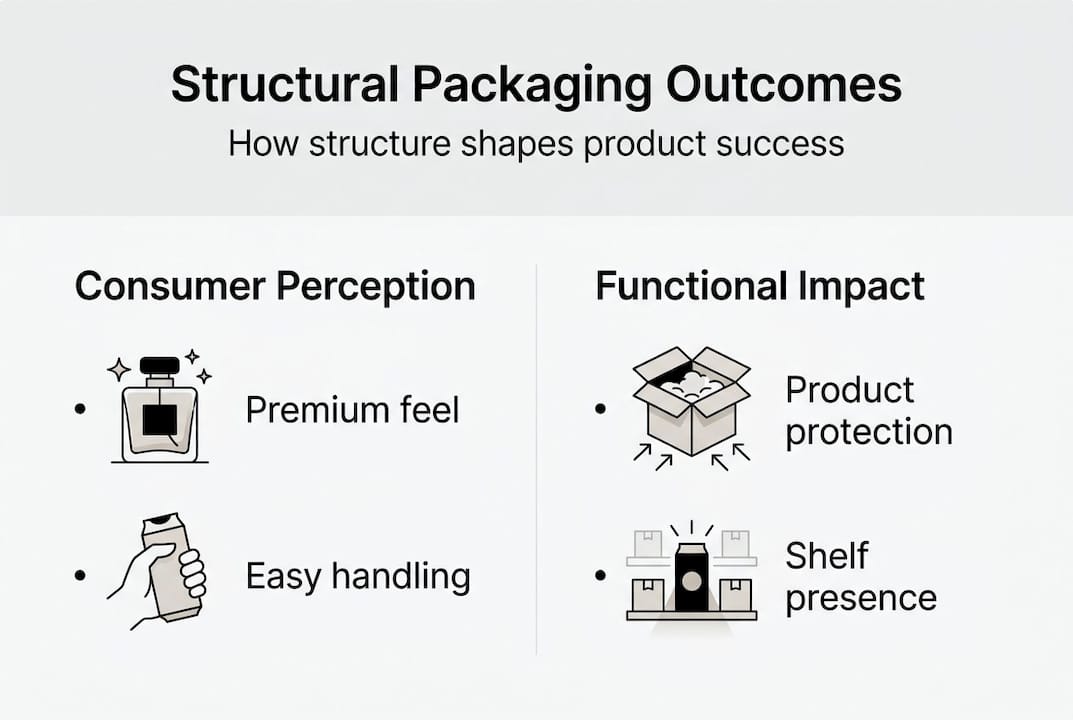
Here is how specific structural features translate into consumer perception:
| Structural feature | Consumer perception | Functional impact |
|---|---|---|
| Rigid sidewalls | Premium, durable product | Better stack performance |
| Easy-open perforation | Convenient, user-friendly brand | Reduced frustration at point of use |
| Resealable closure | Thoughtful, practical design | Extended product freshness |
| Sustainable material | Environmentally responsible brand | Reduced logistics weight |
| Precise interior fitment | High-quality, well-crafted product | Reduced damage in transit |
As explored in consumer perception packaging tips, structural decisions link directly to perceived quality and safety, which are two of the strongest purchase drivers in most CPG categories.
Five ways structure boosts shelf impact and usability:
- Distinctive silhouette: A unique structural form is recognizable from across the aisle before any graphics are read
- Tactile quality signals: Weight, rigidity, and texture communicate value before the consumer reads a single claim
- Efficient shelf blocking: Structures that stack and face cleanly maximize retail presence without additional SKUs
- Sustainability visibility: Packaging that visibly uses less material or uses recycled content builds brand trust with conscious consumers
- Functional differentiation: A structure that makes the product easier to use creates a daily brand touchpoint beyond the shelf
Brands that have invested in innovative packaging trends consistently report stronger repeat purchase rates, because the structural experience reinforces the brand promise every time the consumer interacts with the product. Research into packaging strength factors further confirms that structural integrity correlates with consumer-perceived product safety, a metric that is especially critical in food, beverage, and personal care categories.
Our perspective: Why structure is your brand's silent sales force
Most CPG teams overspend on graphic design and underinvest in structure. We have seen it repeatedly: a brand spends six figures on brand identity, then ships that identity in a box that collapses on the shelf or feels hollow in the consumer's hand. The graphics are perfect. The structure undermines everything.
Here is the uncomfortable truth. Structure is often more memorable than branding. A consumer may not remember your Pantone color, but they will remember that your package was a pain to open, or that it felt solid and satisfying. Physical experience encodes more deeply than visual impression.
The brands that get this right invest in structure at the brief stage, not as an afterthought after the visual identity is locked. They treat structural decisions as strategic choices, not logistical ones. Understanding how designers shape packaging concepts from the start is what separates brands that redesign every two years from brands that build lasting equity in their physical form.
Invest in structure early. It pays back in fewer recalls, lower damage rates, better retail relationships, and a product experience that earns repeat purchases without a single additional marketing dollar.
Tap into expert packaging design resources
If you are ready to put great structure into practice, Offcut is where to start. We connect product developers and brand managers with print-ready packaging concepts created by experienced designers, concepts that would otherwise sit unused on a hard drive.
Whether you need structural inspiration for a new launch or want to explore what is possible beyond your current format, discover unused packaging concepts from designers who understand both form and function. Structure is a strategic investment, and the right concept can cut your development timeline significantly. Explore Offcut resources and find packaging ideas built for real-world performance, not just portfolio shots.
Frequently asked questions
What's the difference between structural and graphic packaging design?
Structural design shapes the physical form and functionality of a package, while graphic design focuses on visual branding applied to the package surface. As covered in research on packaging concept creation, structural work incorporates material science and engineering that graphic design alone cannot address.
How do I choose the right packaging material for my product?
Consider product weight, fragility, sustainability goals, budget, and logistics before selecting a material. Box compression strength data ties your material choice directly to real-world performance outcomes under transit and storage conditions.
Why do many packaging designs fail after launch?
Most failures trace back to gaps in the structural workflow, particularly missed engineering reviews or poor coordination between design and supply chain teams. A continuous workflow from carton to pallet is the most reliable way to prevent downstream failures.
Does structural packaging affect sustainability?
Yes. Material selection, wall thickness, and structural geometry all directly impact recyclability, material waste, and logistics efficiency, making structure one of the highest-leverage points for sustainability improvement.
How does structural packaging influence consumer perception?
Well-engineered structures signal quality and care before a consumer reads a single word of copy. Research confirms that structural cues link directly to perceived product quality and safety, two of the strongest drivers of purchase intent in CPG categories.