
TL;DR:
- Testing packaging in real shelf context significantly improves launch success rates.
- Approaches like shelf simulations and eye-tracking provide accurate consumer behavior data.
- Holistic testing across visual, structural, and regulatory aspects is essential for brand growth.
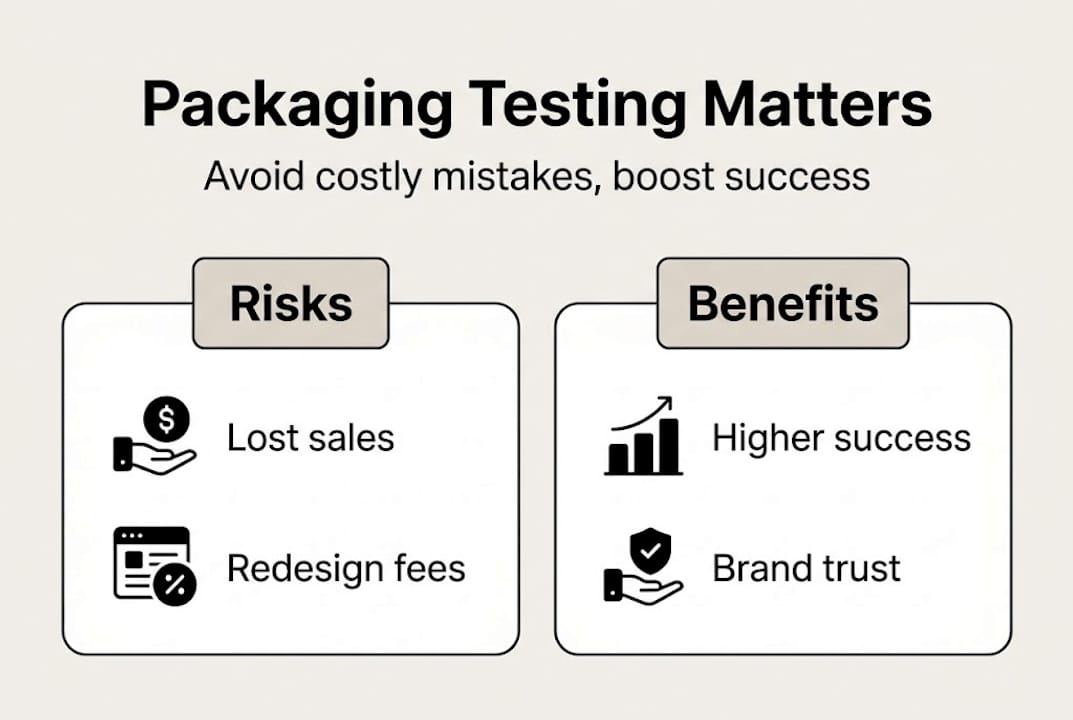
Packaging design can stop a shopper in their tracks or make them walk right past your product. Most founders put enormous energy into visual identity, color palettes, and typography, yet skip the one step that determines whether any of that effort actually converts: testing. Tropicana learned this the hard way when a 2024 redesign caused a 19% sales drop after skipping consumer testing, costing the brand roughly $19 million. For CPG founders and brand owners, this is not a cautionary tale about a corporate giant's blunder. It is a blueprint for what not to do.
Table of Contents
- The real cost of skipping packaging testing
- How packaging influences consumer decisions on the shelf
- Types of packaging tests: From shelf reactions to regulatory compliance
- A step-by-step approach: Iterative testing for market readiness
- Our perspective: Why holistic packaging tests are non-negotiable for brand growth
- Ready to unleash your packaging's full potential?
- Frequently asked questions
Key Takeaways
| Point | Details |
|---|---|
| Untested designs risk millions | Skipping packaging tests can lead to costly mistakes and lost sales, even for established brands. |
| Shelf context is critical | Testing in real-world retail scenarios is key, since most consumer purchase decisions happen at the shelf. |
| Compliance prevents recalls | Regulatory and safety tests protect against expensive recalls and unlock market access. |
| Iterative rounds work best | Leading brands use three rounds of consumer testing, simulations, and eye-tracking to refine packaging before launch. |
| Holistic testing drives success | Incorporating design, compliance, and physical integrity tests increases product launch success rates. |
The real cost of skipping packaging testing
Tropicana's loss is the most cited example in CPG circles, and for good reason. The brand changed its iconic orange image to a clean, minimalist look without running it through consumer validation first. Shoppers could not recognize the product on shelves. Sales cratered. The packaging was pulled within two months. What looked bold and modern in a design studio felt generic and unfamiliar at retail.
The financial math gets ugly fast. A packaging redesign alone can run $50,000 to $500,000 depending on scale, and that does not count lost revenue during the window when confused customers switch to competitors. Physical recalls tied to packaging failures add another layer of risk, and brand equity, once damaged, takes years to rebuild.
Here is what the data says about where buying decisions actually happen:
| Decision point | Share of purchase decisions |
|---|---|
| At the shelf (in-store) | 70–76% |
| Pre-planned purchases | 24–30% |
CPG purchase decisions at the shelf represent 70 to 76% of all buys, meaning your packaging is doing the selling, not your ad campaigns. If the design fails the shelf test, the product fails.
Common consequences of untested packaging include:
- Redesign costs that eat into launch budgets
- Lost revenue during the period shoppers reject or ignore the new pack
- Brand confusion when packaging no longer signals the product's core value
- Regulatory rejection if compliance elements were not validated
- Logistical failures when physical integrity breaks during shipping
Brands that integrate consumer testing before launch see 60–75% higher launch success rates compared to those that skip it. That is not a marginal improvement. That is the difference between a product that builds a category and one that clears the clearance shelf. For a deeper look at why even well-funded brands miss this, see these packaging design failures and the patterns behind them.
How packaging influences consumer decisions on the shelf
The shelf is not a passive backdrop. It is a competitive arena where your packaging fights for attention in under three seconds, surrounded by competitor products, promotional signage, and the mental noise of a shopper who just wants to grab something and go.
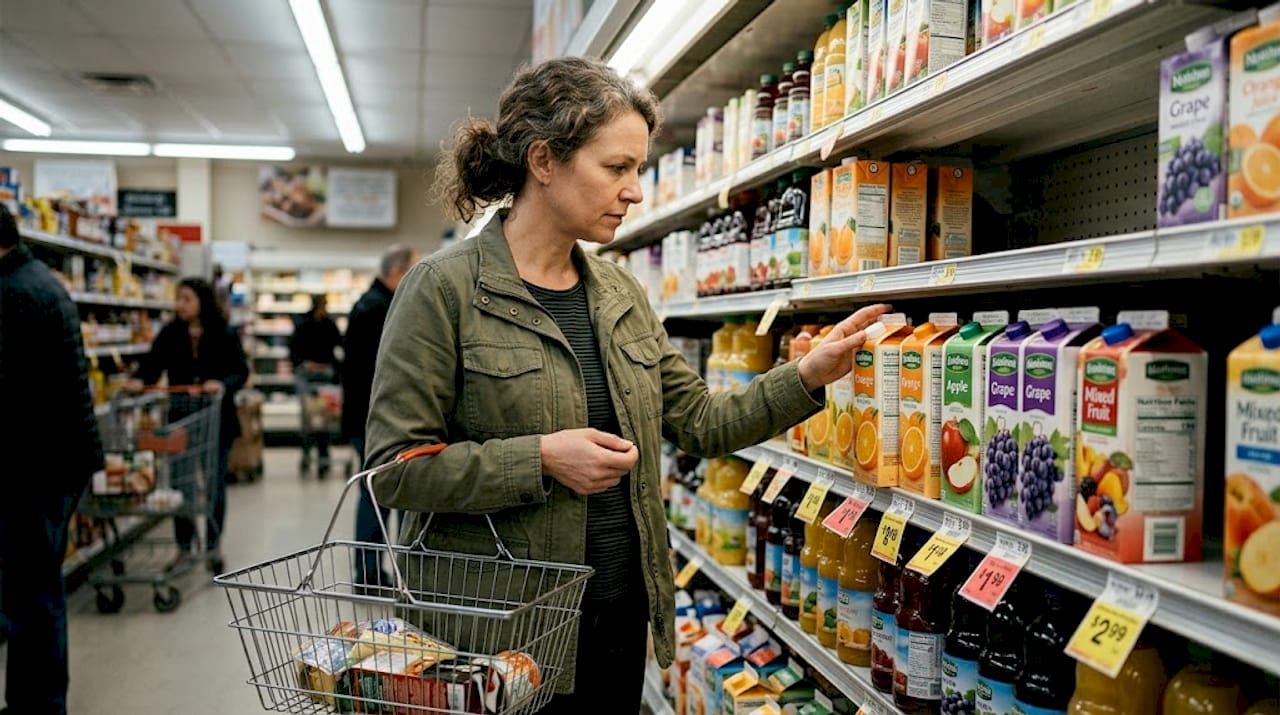
Isolated design tests, think online surveys or static mockup reviews, miss almost everything that matters in that moment. They remove the competitive context. There is no adjacent product crowding yours. There is no tactile feedback from picking up the box. There is no ambient lighting or shelf height variable. What looks stunning on a white background in a survey may become invisible next to three similar products using the same color family.
| Test method | Context accuracy | Competitive exposure | Tactile feedback |
|---|---|---|---|
| Online survey/mockup | Low | None | None |
| In-store prototype test | High | Full | Yes |
| Retail simulation lab | Medium-High | Partial | Yes |
| Eye-tracking study | Medium | Partial | No |
Retail simulations place your packaging among real competitor products, often in a controlled lab environment that mimics an actual store aisle. Eye-tracking technology maps exactly where shoppers look first, how long they linger, and what they ignore. These tools give you actionable data, not guesses.
"Packaging that wins in isolation often loses at retail. The shelf is where design assumptions meet real consumer behavior, and only shelf-context testing can bridge that gap."
For founders building brands from scratch, boosting packaging appeal requires understanding not just how your design looks, but how it performs in a crowd. Equally important is understanding the designer's role in concept creation, since strong shelf performance starts with concepts built for real-world conditions, not just portfolio presentations.
Pro Tip: When running a shelf simulation, include at least five to seven competitor SKUs in the same category. The more realistic the aisle context, the more reliable your data.
Types of packaging tests: From shelf reactions to regulatory compliance
Packaging tests fall into three broad categories. Each serves a different risk profile, and smart brands use all three before launch.
-
Consumer response tests. These include eye-tracking studies, shelf simulations, usability tests, and concept surveys. They answer one core question: does your target customer notice, understand, and want to pick up your product?
-
Compliance and regulatory tests. These confirm that your packaging meets the legal and safety standards for your target market. Standards like ASTM D4169 (distribution simulation) and ISTA protocols govern how packaging must perform under transit and storage conditions. Packaging safety standards differ by category, so knowing which apply to your product early saves significant time.
-
Physical integrity tests. Burst tests, compression tests, drop tests, and moisture resistance tests confirm that your packaging survives the supply chain. A beautiful design that arrives crushed or contaminated is worthless. Non-compliant packaging recalls average $10 million in costs, and that figure does not include reputational fallout.
For brands building products with unique structural requirements, understanding structural packaging benefits is a foundational step before selecting which physical tests apply.
Pro Tip: Do not treat compliance testing as a final checkpoint. Involve your regulatory consultant during the design phase so structural decisions, like seal type, material, and labeling space, are compliant from the start.
The interaction between these three test categories matters. A packaging format that passes consumer testing but fails a compression test is not launch-ready. A compliant package that shoppers find confusing will underperform regardless of how durable it is. True readiness means passing all three.
A step-by-step approach: Iterative testing for market readiness
The biggest testing mistake brands make is treating it as a single event. You run a focus group, get positive feedback, and ship. That process skips the refinement cycles that separate good packaging from great packaging.
Iterative testing across three rounds with 60 to 150 participants per round is the expert-backed standard for shelf-ready designs. Each round has a distinct purpose:
- Round 1: Direction setting. Test two to four packaging directions against each other. Measure initial attention, category fit, and emotional response. Goal: eliminate directions that do not resonate.
- Round 2: Refinement. Take the top one or two directions and test specific elements: color, typography hierarchy, imagery, and copy. Goal: optimize for clarity and purchase intent.
- Round 3: Validation. Test the near-final design in a realistic shelf context using eye-tracking and shelf simulations. Confirm it outperforms or holds parity against key competitors.
Physical testing runs in parallel. Ship prototypes through real distribution channels, or simulate the journey using ISTA-certified lab protocols. Palletization patterns affect compression strength, with columnar stacking consistently outperforming interlocked patterns for structural load. Edge cases like extreme temperature swings and humidity exposure should be tested even if your primary market seems straightforward.
Pro Tip: Film your round three shelf simulations. Watching real shoppers navigate the aisle reveals behavioral cues, like hesitation, double-takes, and reach-then-retract moments, that quantitative data alone cannot capture.
A disciplined workflow makes iterative testing manageable rather than exhausting. Resources on improving design workflow and strategies for repurposing packaging designs can help teams move faster between rounds without starting from zero each time.
Our perspective: Why holistic packaging tests are non-negotiable for brand growth
Conventional wisdom in CPG still tilts heavily toward visual appeal as the primary measure of packaging success. Brief a design agency, review the mockups, pick the one that looks best in the room, and ship. That process worked in an era with fewer SKUs, slower retail turnover, and less demanding consumers.
Today, it is a liability.
From what we see working across the brands that use Offcut, the founders who win consistently are the ones who treat packaging as a system, not a surface. They test the visual layer, the structural layer, and the compliance layer as interconnected variables, not separate boxes to check.
The expert nuance worth knowing: burst testing validates strength for regulatory purposes, but pairing it with integrity tests gives a fuller picture. In-house quality assurance handles routine checks efficiently, while third-party testing labs provide unbiased failure analysis for complex R&D scenarios. Outsourcing advanced physical testing is not an admission of weakness. It is a strategic move that removes internal bias from the equation.
The brands that treat testing as a cost center lose. The ones that treat it as a competitive advantage win shelf space. If you want to learn more about sourcing packaging design that is built with testability in mind, that mindset shift starts at the concept stage.
Ready to unleash your packaging's full potential?
Every round of testing you run needs strong concept options to compare. If your design pipeline is thin, or if you are spending agency rates just to generate initial directions, you are burning budget before the real work even starts.
Offcut gives CPG founders access to exclusive, print-ready packaging concepts created by professional designers, concepts that would otherwise sit unused on someone's hard drive. You get market-ready directions at a fraction of agency cost, so you can invest your budget where it matters: testing, refining, and validating. Designers who sell their unused packaging concepts on Offcut get paid for work that already exists. Everyone moves faster.
Frequently asked questions
Why can't packaging testing be skipped for small CPG brands?
Skipping testing exposes even small brands to redesign costs, regulatory rejection, and lost shelf sales. The Tropicana redesign proved that scale does not protect you from consumer backlash when validation is skipped.
What is the best way to test packaging for shelf appeal?
Shelf-context methods like retail simulations and eye-tracking studies are most effective because 70–76% of purchase decisions happen at the shelf, where competitive context and tactile experience both influence the buyer.
How can packaging reduce the chance of a product recall?
Compliance and physical integrity testing ensure packaging meets regulatory standards before launch. Non-compliant packaging recalls average $10 million in costs, making early testing far cheaper than reactive fixes.
How many consumer rounds are needed for effective packaging testing?
Three iterative rounds, covering direction setting, refinement, and final validation, are the recommended standard. Each round with 60–150 participants ensures the final design is genuinely shelf-ready, not just internally approved.
Recommended
- Why packaging design fails: avoid costly mistakes in 2026
- What is a mockup? A clear guide for packaging success
- 5 strategies to improve CPG packaging design workflow
- Master step by step packaging design for startups in 2026
- Cosmeticaverpakking Ontwerpen: Jouw Complete Gids voor Succes – Whitelabelcosmetica.nl
- Eco-Friendly Packaging: Impact on Sustainable Living – EcoVibe Roast