
TL;DR:
- Mockups significantly increase product launch success rates from 35-45% to 60-75%.
- They enable fast, affordable visual testing of packaging designs before costly prototypes.
- Using mockups improves brand clarity, reduces costs, and accelerates time-to-market for startups.
Products that go through mockup testing before launch succeed 60-75% of the time compared to just 35-45% for those that skip this step. That gap is enormous when you consider the cost of a failed launch. Yet most early-stage CPG founders still assume they need a fully functional prototype before they can validate anything meaningful. This guide will clear that up. You'll learn exactly what a mockup is, how it differs from wireframes and prototypes, and how to use it to make smarter, faster, cheaper packaging decisions before you commit a single dollar to production.
Table of Contents
- What is a mockup in packaging and branding?
- Why mockups matter: Sales impact and cost savings
- Best practices for creating and testing packaging mockups
- From mockup to market: Real-world application for start-ups
- The hidden ROI of static mockups: What most founders overlook
- Take the next step with Offcut: Affordable, effective mockups for your brand
- Frequently asked questions
Key Takeaways
| Point | Details |
|---|---|
| Mockups explained | A mockup is a static, realistic visual of your product's packaging used before production. |
| Drives sales success | Mockup testing is linked to over 80% correlation with sales uplift and reduces launch failure risk. |
| Proven cost benefits | Using mockups instead of prototypes can cut packaging costs and speed up proof-of-concept approvals. |
| Test before you invest | Three-round mockup testing captures attention, validates ideas, and optimizes design for target audiences. |
What is a mockup in packaging and branding?
A mockup is a realistic, non-functional visual representation of a product design used to preview packaging and branding before production. Think of it as a high-fidelity image of what your finished product will look like, without any of the physical or interactive elements. It lives entirely in the visual layer.
To understand where mockups fit, it helps to know the full spectrum of design tools. A wireframe is the skeleton. It shows layout and structure with no color, no imagery, and no real branding. A wireframe is the layout, a mockup is the visual skin, and a prototype is interactive or functional. In packaging, mockups focus almost entirely on aesthetics before any physical samples are made.
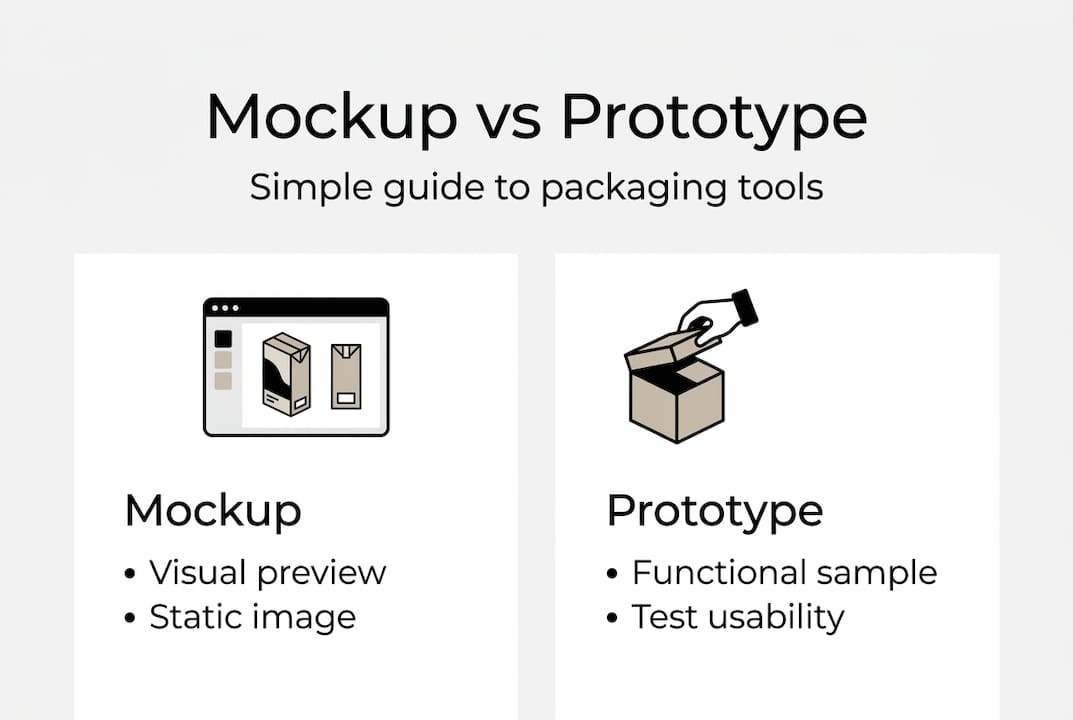
Here's a quick comparison to make it concrete:
| Tool | Purpose | Fidelity | Cost |
|---|---|---|---|
| Wireframe | Layout and structure | Low | Very low |
| Mockup | Visual design preview | High | Low to medium |
| Prototype | Functional or physical sample | Very high | High |
For CPG founders, the mockup stage is where the real creative decisions happen. Color, typography, hierarchy, imagery, and shelf presence all get tested here. The designer's role in concept creation at this stage is to translate brand strategy into a visual that a consumer could recognize and respond to in seconds.
When does each tool show up in the product development cycle?
- Wireframe: Early ideation, internal alignment on layout
- Mockup: Visual validation, stakeholder review, consumer testing
- Prototype: Pre-production testing, manufacturing prep, functional checks
Most start-ups jump straight from concept to prototype and skip the mockup stage entirely. That's a costly mistake. A mockup lets you test ten visual directions for the price of one prototype. You can iterate fast, get real feedback, and arrive at the prototype stage already knowing what works. The step-by-step packaging guide for start-ups shows how this sequencing saves both time and money in practice.
"A mockup is not a shortcut. It's a decision-making tool that prevents expensive mistakes downstream."
If you're managing a tight budget and need to make confident packaging decisions, the mockup is your most powerful asset.
Why mockups matter: Sales impact and cost savings
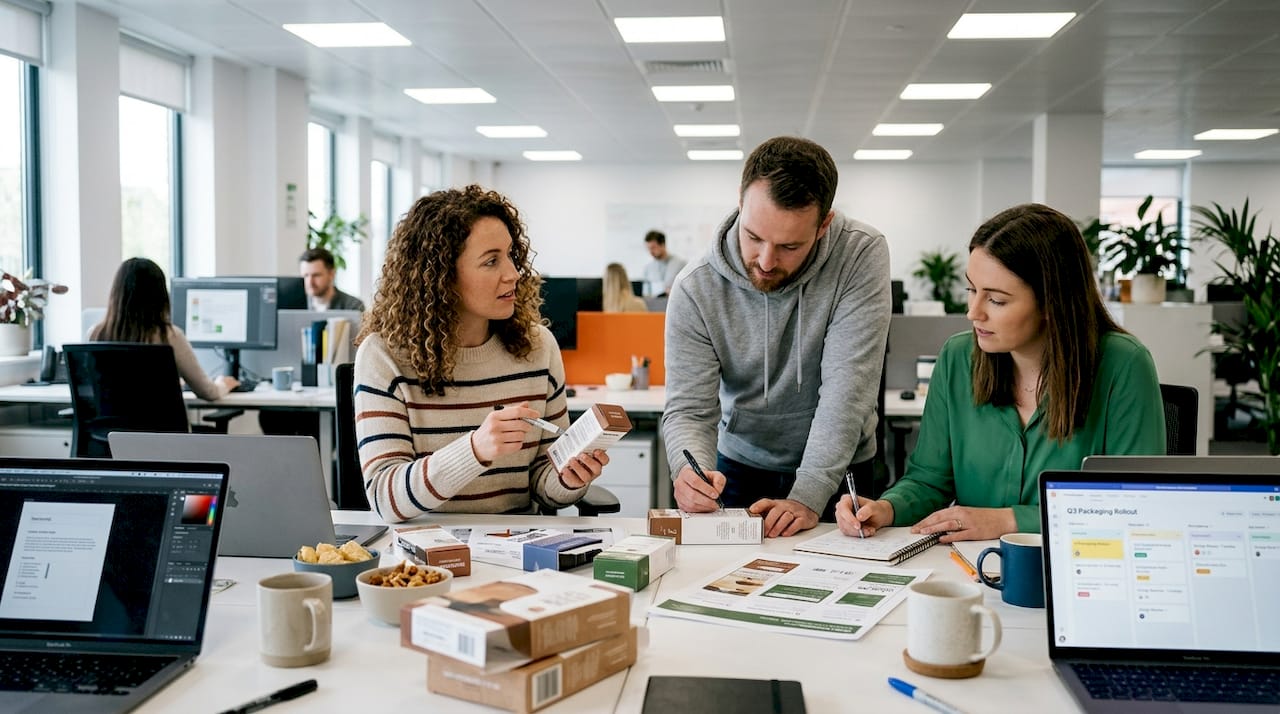
Let's talk numbers. CPG redesigns lift sales in 37% of cases, and when mockup testing is part of the process, that correlation with sales uplift climbs above 80%. Research-backed products consistently outperform those launched without visual validation, succeeding at rates of 60-75% versus 35-45% for untested designs.
Those aren't marginal gains. For a start-up with one or two SKUs, the difference between a 40% and 70% success rate can determine whether the company survives its first year.
Here's how the economics break down:
| Scenario | Cost range | Success rate |
|---|---|---|
| No mockup testing | Low upfront, high failure risk | 35-45% |
| Mockup testing only | Low to medium | 60-75% |
| Full prototype cycle | High | Variable |
Packaging costs between $1.20 and $3.80 per order for CPG brands. That might sound small, but at scale it adds up fast. Mockups let you lock in the right design before you commit to a production run, which means you're not reprinting labels or redesigning boxes after the fact.
There are different types of product mockups suited to different validation goals. Some are designed for shelf context testing, others for e-commerce thumbnails, and others for investor decks. Choosing the right format for your goal matters as much as the design itself.
The other advantage is speed. A static visual can be produced, reviewed, and iterated in days. A physical prototype can take weeks and cost multiples more. For a founder racing to market, that time difference is real leverage. You can also cut packaging design costs significantly by resolving design questions at the mockup stage rather than after samples are made.
Pro Tip: Run your mockup past five people who match your target buyer profile before you move to production. Ask them what they think the product does and who it's for. If their answers don't match your intent, the design needs work.
A well-executed mockup also helps you improve packaging workflow across your team. When everyone can see the same visual, alignment happens faster and feedback becomes more specific and useful.
Best practices for creating and testing packaging mockups
Knowing mockups matter is one thing. Knowing how to use them well is another. The most effective approach follows a three-round testing process that moves from broad concepts to shelf-ready validation.
Here's how the three stages work:
- Round one: Concept exploration. Present two to four distinct visual directions to a small group of target consumers. You're not testing which one is perfect yet. You're learning which visual language resonates and which falls flat. This round kills bad ideas cheaply.
- Round two: Shelf context testing. Take your top one or two concepts and place them in a realistic retail or e-commerce environment. Can your design grab attention in three seconds? Does it stand out next to competitors? Hierarchy and color do most of the heavy lifting here.
- Round three: Final validation. Refine based on round two feedback and test the near-final design with a broader group. This is where you confirm messaging clarity, brand fit, and purchase intent before going to production.
What should you prioritize within each mockup? Focus on these elements first:
- Color: The fastest signal your packaging sends. It communicates category, quality, and emotion before a word is read.
- Visual hierarchy: What does the eye land on first, second, third? Your brand name, product name, and key benefit should follow a clear order.
- Messaging: Is the core value proposition readable in under five seconds on shelf?
"Most packaging fails not because the design is ugly, but because it doesn't communicate anything useful in the first three seconds."
You can find tips to boost consumer appeal that go deeper on what drives purchase decisions at the shelf level. And if you're wondering whether your current packaging is working, the reasons to update packaging for brand impact are often visible at the mockup stage before you ever run a test.
Pro Tip: Always test your mockup against actual competitor packaging, not just in isolation. A design that looks great alone can disappear on a crowded shelf. Use cost-effective packaging ideas to iterate without blowing your budget between rounds.
From mockup to market: Real-world application for start-ups
You've validated your mockup. Now what? This is where many start-up teams lose momentum. The gap between a winning mockup and a production-ready file is real, but it's manageable if you know the steps.
Here's a practical path from validated mockup to shelf:
- Finalize your dieline. A dieline is the flat, unfolded template of your packaging structure. Your mockup needs to be mapped onto this before any printer will touch it. Get this from your manufacturer early.
- Convert to print-ready files. Your designer needs to deliver files in CMYK color mode at 300 DPI minimum. RGB files look great on screen but print differently. Catching this before production saves a reprint.
- Confirm material specifications. The finish (matte, gloss, soft-touch) and substrate (cardboard weight, film type) affect how your colors actually look in real life. Test a small run before committing to volume.
- Use your mockup for stakeholder buy-in. Retailers, investors, and co-manufacturers all respond better to a polished visual than to a verbal description. Your validated mockup is a sales tool, not just a design artifact.
- Brief your manufacturer with visual references. Attach your mockup to every manufacturing brief. It eliminates ambiguity and reduces back-and-forth.
The most common mistake at this stage is assuming the mockup and the production file are interchangeable. They're not. A mockup is a visual promise. The production file is the technical delivery of that promise. Packaging costs between $1.20 and $3.80 per order, and errors caught after production runs are far more expensive than those caught at the mockup stage.
Pro Tip: Lock your mockup before touching the production file. Any design changes after the dieline is set can cascade into structural problems. Treat the approved mockup as a frozen reference.
One thing that often gets overlooked is how typography shapes brand success at this stage. Fonts that look clean in a mockup can become unreadable at small sizes in print. Always check your type at actual production scale, not just on screen.
The hidden ROI of static mockups: What most founders overlook
Here's the part most packaging advice skips. The real value of a mockup isn't just cost savings on prototypes. It's the clarity it forces on your brand positioning before you've spent real money.
When you look at a realistic visual of your product, you're forced to answer questions that a spreadsheet or a brief can avoid. Does this look like us? Does this look like it belongs in the category? Would I buy this? Those questions surface brand confusion early, when it's still cheap to fix.
Most founders over-invest in complex prototypes because they want certainty. But a prototype gives you functional certainty. A mockup gives you brand certainty. And in CPG, brand clarity almost always drives purchase decisions more than product mechanics.
Waiting for a prototype to get feedback delays your learning cycle by weeks and burns runway. A static mockup can generate the same quality of visual feedback in a fraction of the time. The failure risks in packaging design are almost always visible at the mockup stage if you know what to look for.
If you can win the shelf visually, you buy yourself time to perfect the product behind the packaging. That's not cutting corners. That's smart sequencing.
Take the next step with Offcut: Affordable, effective mockups for your brand
If the strategies in this article resonated, the next move is finding design concepts that are already built and ready to validate. Most start-up teams don't have the runway to commission custom agency work from scratch for every iteration.
That's exactly the gap Offcut fills. Founders get access to exclusive, print-ready packaging concepts at a fraction of agency cost, while designers get paid for work that would otherwise sit unused. You can browse affordable packaging mockup concepts from real designers and find something that fits your brand direction today. No lengthy briefs, no agency retainers, no waiting months for a first draft. Just validated, shelf-ready concepts you can test, iterate, and take to market.
Frequently asked questions
What is the difference between a mockup and a prototype in packaging?
A mockup is a realistic visual preview of packaging, while a prototype is a functional or interactive early sample. Mockups test aesthetics; prototypes test function and physical form.
When should I use a mockup in the packaging design process?
Use a mockup early to validate look and feel before creating expensive physical prototypes. In packaging, mockups focus on aesthetics before any physical samples are produced.
How much does packaging design typically cost per order?
Packaging design costs for CPG brands typically range from $1.20 to $3.80 per order, making early mockup validation a smart way to avoid costly redesigns.
Does using a mockup really improve chances of a successful launch?
Yes. Products tested with mockups show a 60-75% success rate compared to 35-45% for those launched without visual validation, with mockup testing correlating above 80% with sales uplift.