
Your packaging has about three seconds to convince a shopper to pick it up. In a retail environment where thousands of SKUs compete for the same shelf space, that window is everything. Yet most CPG founders still treat packaging design as a solo sprint rather than a team sport, leaving speed, innovation, and market relevance on the table. The research is clear: structured design collaboration isn't a luxury reserved for big brands with bloated budgets. It's the operational edge that lets lean startups punch well above their weight class.
Table of Contents
- Why design collaboration matters for CPG startups
- 1. Faster speed to market and greater flexibility
- 2. Superior innovation and consumer relevance
- 3. Streamlined operations and cost efficiencies
- 4. Data-driven optimization and measurable results
- 5. Boosted sustainability and responsible innovation
- 6. The design thinking framework for successful collaboration
- Comparing collaborative design models: Which works best?
- How to put design collaboration to work for your CPG brand
- Frequently asked questions
Key Takeaways
| Point | Details |
|---|---|
| Accelerated speed to market | Collaborative design and local partnerships significantly reduce lead times for CPG packaging launches. |
| Innovation with consumer impact | Involving consumers and diverse teams in collaboration drives designs that boost real customer response and new buyers. |
| Operational efficiency gains | Partnerships improve communication, ensure standards adherence, and minimize costs for startups. |
| Sustainability advantages | Onshored and integrated collaboration models support eco-friendly packaging strategies from the start. |
| Measurable performance improvement | Collaboration and AI-driven optimization translate directly to shorter cycles and increased sales. |
Why design collaboration matters for CPG startups
The instinct to keep design in-house or hand it off to a single freelancer feels safe. It's familiar. But isolation kills momentum. 68% of CPG leaders cite silos as the primary barrier to effective marketing and sales integration, and packaging sits right at that intersection. When your design team doesn't talk to your operations team, and neither talks to your sales team, you end up with beautiful concepts that can't be printed at scale or don't resonate with the buyer.
Collaboration breaks those silos. It brings fresh perspectives into the room, compresses feedback loops, and forces alignment on what actually matters: shelf impact, brand story, and production feasibility. The designer's impact on packaging goes far beyond aesthetics when they're embedded in a collaborative process from day one.
When evaluating any design partnership, CPG founders should weigh five criteria:
- Speed: How fast can concepts move from brief to print-ready?
- Innovation: Does the model expose you to fresh ideas outside your category?
- Quality: Are production standards baked into the creative process?
- Market fit: Is consumer feedback part of the loop?
- Sustainability: Does the partnership support eco-conscious material choices?
"The best packaging doesn't just look good. It solves a business problem, and that requires more than one brain."
1. Faster speed to market and greater flexibility
Time is the one resource CPG startups can't manufacture more of. Every week a launch slips is a week competitors gain ground. Collaborative design partnerships, especially those with local or onshored production, dramatically compress timelines.
Onshoring packaging production delivers lead times of 3 to 6 weeks compared to 8 to 12 weeks for overseas alternatives, while also improving quality control, flexibility, and sustainability outcomes. For a startup managing unpredictable demand, that difference is the gap between catching a trend and missing it entirely.
| Approach | Lead time | Flexibility | Quality control |
|---|---|---|---|
| In-house solo | 6 to 10 weeks | Low | Variable |
| Overseas agency | 8 to 12 weeks | Low | Inconsistent |
| Local collaborative | 3 to 6 weeks | High | Strong |
| Crowd-vetted platform | 2 to 4 weeks | Very high | Curated |
Flexibility matters just as much as raw speed. When a retailer asks for a limited-edition colorway or a seasonal variant, a collaborative model lets you pivot without blowing up your entire production schedule. You can explore cost-effective packaging inspiration without starting from scratch every time.
Pro Tip: Build a "rapid response" brief template with your design collaborators before you need it. When a fast opportunity hits, you'll already have the framework to move in days, not weeks.
2. Superior innovation and consumer relevance
Collaboration doesn't just speed things up. It makes the output smarter. When designers, brand strategists, and consumers are all part of the process, the resulting packaging reflects real-world buying behavior rather than internal assumptions.
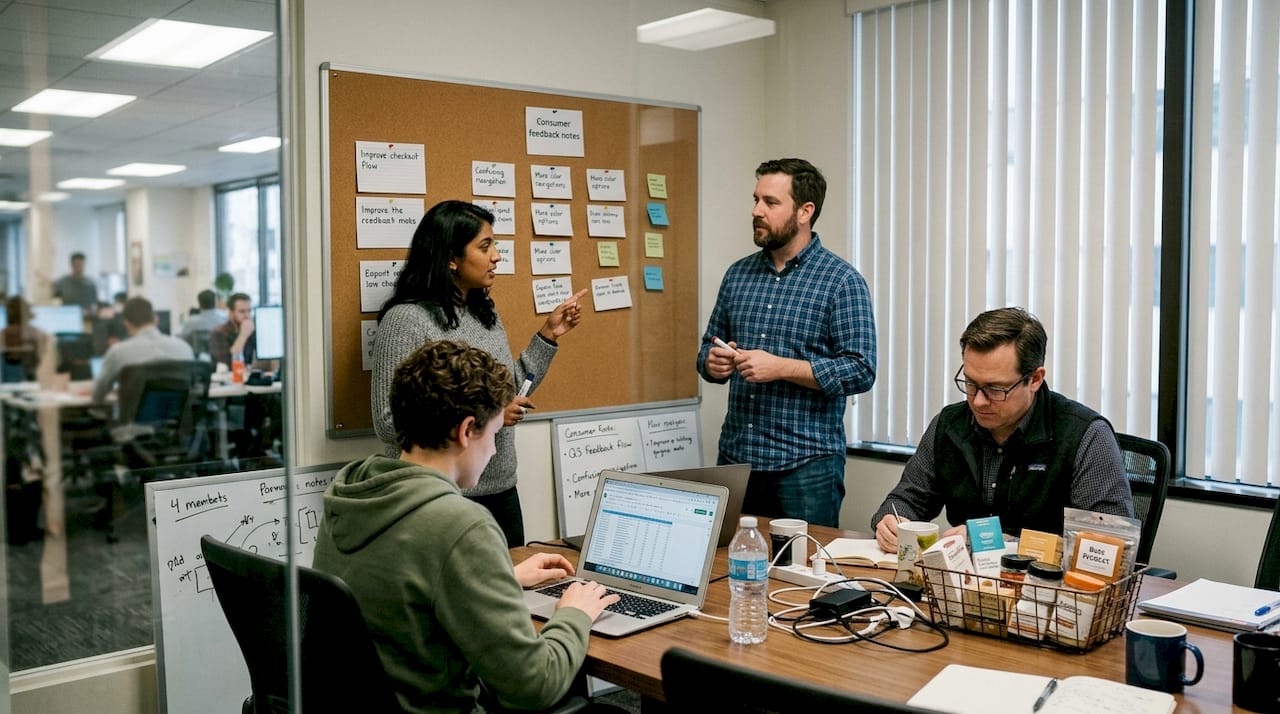
Co-creation with consumers validates both visual and textual packaging attributes, directly improving design effectiveness before a single unit goes to print. This isn't just theory. Milram, a CPG dairy brand, ran a creator co-creation campaign that achieved 47% new buyers in their category. That's not a marginal lift. That's a category-reshaping result.
Common methods for involving consumers in the design process include:
- Concept testing panels: Show 3 to 5 design directions to a target segment before committing
- Social media polls: Fast, low-cost validation for color, typography, and messaging
- Retail intercept studies: Real shoppers, real shelves, real reactions
- Online co-creation communities: Ongoing feedback loops with brand advocates
Cross-functional creative pods, where designers work alongside marketers and product developers, consistently surface ideas that no single discipline would reach alone. Tips for boosting consumer appeal become far more actionable when they're grounded in actual consumer input rather than gut instinct.
Pro Tip: Run a quick 48-hour social poll before finalizing any major packaging direction. The data is free, the insight is priceless, and it gives your team a shared reference point that removes subjective debate.
3. Streamlined operations and cost efficiencies
Creative wins get all the attention, but collaboration's operational benefits are just as significant. When designers, engineers, and suppliers work in sync from the start, the number of costly errors drops sharply.
Partnerships in packaging line startups improve communication, leverage shared expertise, ensure standards adherence, and boost overall operational efficiency. In plain terms: fewer reprints, fewer compliance surprises, and fewer last-minute scrambles before a launch.
The cost savings compound over time:
- Shared expertise means you're not paying to reinvent the wheel on every project
- Clear communication protocols reduce revision cycles and approval delays
- Standards alignment prevents expensive regulatory or retailer compliance failures
- Supplier relationships built through collaboration often unlock better pricing and priority production slots
"Operational efficiency in packaging isn't glamorous, but it's where startups quietly build a durable competitive advantage."
Understanding print-ready essentials becomes much easier when your design collaborators already know your production constraints. That shared knowledge base is one of the most underrated benefits of a long-term partnership.
4. Data-driven optimization and measurable results
Gut feel has its place, but data wins arguments and secures shelf space. The most effective collaborative design processes now integrate AI and analytics to measure impact in real time.
AI-powered packaging optimization through collaborative workflows reduced design cycles by 70%, with an 80% correlation to in-market sales uplift. That's not a marginal efficiency gain. That's a fundamental shift in how quickly a startup can learn, iterate, and win.
Key metrics to track in any collaborative design process:
| Metric | What it measures | Why it matters |
|---|---|---|
| Design cycle time | Speed from brief to final art | Reveals collaboration efficiency |
| Revision rounds | Alignment quality | Fewer rounds = better briefing |
| Sales lift post-launch | Market impact | Ties design to revenue |
| Shelf conversion rate | Shopper behavior | Validates visual effectiveness |
Integrating analytics into your design partnership doesn't require a data science team. Start by tracking two or three metrics consistently across every project. Over time, patterns emerge that tell you exactly which design decisions drive results. Techniques like whitespace design become measurable levers rather than aesthetic preferences.
5. Boosted sustainability and responsible innovation
Sustainability is no longer a differentiator. It's a baseline expectation from retailers, investors, and consumers alike. Collaborative design is one of the most practical ways to bake eco-conscious thinking into your packaging from the start.
Onshoring packaging collaborations deliver sustainability benefits alongside speed and quality, reducing transportation emissions and enabling tighter material sourcing oversight. When your design and production partners share your values, sustainable choices become the default rather than the exception.
Practical steps to build sustainability into your collaborative process:
- Material sourcing transparency: Require partners to document material origins and certifications
- Circular design principles: Brief designers to consider end-of-life from the first concept
- Waste reduction targets: Set measurable goals for packaging weight and material efficiency
- Supplier alignment: Choose production partners who share your environmental commitments
- Lifecycle thinking: Explore sustainable packaging design as a strategic brand asset, not just a compliance checkbox
Brands that lead on sustainability in their packaging tend to attract more loyal customers and better retail placement. It's good ethics and good business.
6. The design thinking framework for successful collaboration
Knowing collaboration works is one thing. Knowing how to run it is another. Design thinking gives founders a repeatable process to guide collaborative packaging projects from fuzzy brief to finished concept.
Design thinking in packaging co-creation operates across three phases: context, content, and confluence. Each phase manages both the rational and emotional dynamics of a team working through creative problems together.
Here's how to apply it in practice:
- Context: Define the problem clearly. Who is the shopper? What shelf environment will this live in? What does success look like in measurable terms?
- Content: Generate ideas without judgment. Bring in designers, marketers, and even consumers. Quantity before quality at this stage.
- Confluence: Converge on the strongest directions. Use data, consumer feedback, and production constraints to filter concepts down to a final recommendation.
- Iterate: Treat the first launch as a learning event, not a final answer. Build feedback loops into your partnership from the start.
This framework maps directly to the step-by-step packaging design process that successful CPG startups use to move fast without cutting corners. Understanding the packaging lifecycle stages helps you know exactly where collaboration adds the most value at each phase.
"Design thinking isn't a creative exercise. It's a decision-making framework that happens to produce better creative output."
Comparing collaborative design models: Which works best?
Not every collaboration model fits every stage of a CPG startup's growth. Here's a direct comparison to help you choose.
| Model | Best for | Speed | Cost | Innovation potential |
|---|---|---|---|---|
| In-house team | Scaling brands with volume | Medium | High fixed cost | Moderate |
| Traditional agency | Brand launches with big budgets | Slow | Very high | High but expensive |
| Freelance network | Lean startups, one-off projects | Variable | Low to medium | Variable |
| Crowd-vetted platform | Startups needing speed and variety | Very fast | Low | Very high |
Quick decision guide for founders:
- Pre-launch, tight budget: Crowd-vetted platform or freelance network
- First major retail listing: Hybrid model combining platform concepts with local production partner
- Scaling with consistent volume: Consider building a small in-house team supported by external collaborators
- Category expansion: Agency partnership for strategic positioning, platform for rapid concept exploration
The briefing designers guide is essential reading before you engage any model. A sharp brief is the single biggest factor in getting great collaborative output, regardless of which partnership structure you choose.
How to put design collaboration to work for your CPG brand
Every benefit covered in this article, from faster timelines to data-driven iteration to sustainability gains, depends on one thing: having the right design collaborators in your corner. That's exactly the problem Offcut was built to solve.
Offcut connects CPG founders with packaging designers who have already done the hard creative work. These are print-ready concepts developed by talented designers, available at a fraction of what a traditional agency charges. You get exclusive, production-ready packaging designs without the long agency timelines or the guesswork. Find design collaborators who specialize in CPG packaging and understand what it takes to win on shelf. If you want to understand exactly how the process works before diving in, see how collaborative design works and explore how Offcut fits into your packaging strategy from day one.
Frequently asked questions
How does co-creation with consumers improve CPG packaging design?
Consumer co-creation directly tests and validates visual and textual packaging features with real buyers, making the final design more relevant and significantly increasing the likelihood of commercial success.
What's the main difference between local and overseas packaging partnerships?
Local partnerships offer 3 to 6 week lead times versus 8 to 12 weeks overseas, along with stronger quality control and more sustainable sourcing options that are harder to manage across long supply chains.
How can CPG startups measure ROI from design collaboration?
Track design cycle time, revision rounds, and post-launch sales lift consistently across projects. AI-optimized collaboration has shown a 70% reduction in design cycles and an 80% correlation with in-market sales uplift, giving you a clear benchmark to aim for.
What's one potential pitfall of multisensory packaging design?
Overloading packaging with sensory elements can backfire. Excessive scent in packaging has been shown to reduce overall product liking, even when it initially creates a perception of luxury.