
TL;DR:
- Digital packaging workflows now compress development from nearly two years to about 100 days by integrating AI-driven tools and centralized collaboration. This approach enhances speed, accuracy, and stakeholder visibility, enabling brands to innovate faster and reduce errors throughout the process. Success depends on effective orchestration of teams and technology rather than just adopting new software solutions.
Packaging development used to be a brutal slog. Most CPG founders inherited a process where a single SKU could consume 18 to 24 months of calendar time before it ever touched a retail shelf. Agencies, printers, compliance teams, and supply chain leads worked in separate silos, passing files back and forth through email chains that nobody could fully reconstruct. Today, that entire arc has been compressed into weeks by a new generation of web and app tools built specifically for packaging teams. This guide breaks down exactly how those tools work, where they deliver real value, and what it takes to use them without stepping into the common traps.
Table of Contents
- Why website and app solutions now drive packaging innovation
- The digital packaging workflow: A step-by-step breakdown
- Digital vs. traditional packaging design: A side-by-side comparison
- Beyond the hype: Critical nuances and real-world challenges
- Actionable steps to unlock digital packaging value
- Why modern packaging success isn't just software—it's smart orchestration
- Accelerate your packaging innovation with OffCut
- Frequently asked questions
Key Takeaways
| Point | Details |
|---|---|
| Dramatic time savings | Website and app tools can reduce CPG packaging development timelines from years to a few months. |
| Objective design testing | AI-powered platforms let you measure consumer attention to packaging before launching. |
| Centralized workflows | Digital approval and compliance tools minimize errors and accelerate processes. |
| Integrated process is key | Combining creative, legal, and supply chain workflows unlocks sustainable packaging innovation. |
Why website and app solutions now drive packaging innovation
The shift did not happen gradually. It happened all at once when AI-driven platforms matured enough to handle the full packaging workflow from generative concepts through print-ready output. Development cycles have shrunk to roughly 100 days while costs fell across R&D, shipping, and administrative functions simultaneously. For a founder bootstrapping a first product line, that difference is not incremental. It is the gap between launching before a competitor locks up a category and watching someone else do it first.
Digital platforms achieve this speed by replacing handoffs with centralized collaboration. Instead of a designer emailing a flat PDF to a brand manager who forwards it to legal, every stakeholder interacts with a shared workspace. Comments are version-controlled. Approvals are timestamped. Nobody wastes a morning hunting for the "final final" file.
The data layer is equally important. Data-driven packaging testing delivers objective metrics for consumer visual attention that traditional focus groups and surveys simply cannot match at the same speed or cost. You learn which label element draws the eye first, which color combination stops the scroll, and which hierarchy makes the claim land, all before committing to a print run.
Here is what drives the measurable improvement for CPG brands that commit to this model:
- AI-accelerated ideation cuts the concept phase from weeks to hours
- Cloud-based dieline generation eliminates manual template errors
- Integrated review tools replace email threads with structured feedback loops
- Attention-testing software removes subjective guesswork from design decisions
- Real-time workflow dashboards give founders visibility into every bottleneck
These capabilities are available today, and they are accessible to independent founders, not just large CPG corporations with dedicated innovation labs. Exploring cost-effective CPG strategies built around these tools is now one of the highest-leverage moves a brand owner can make early in the product development cycle.
"The fastest-growing CPG brands treat their packaging process as a software problem, not a design problem. Tools are their infrastructure, not their crutch."
The digital packaging workflow: A step-by-step breakdown
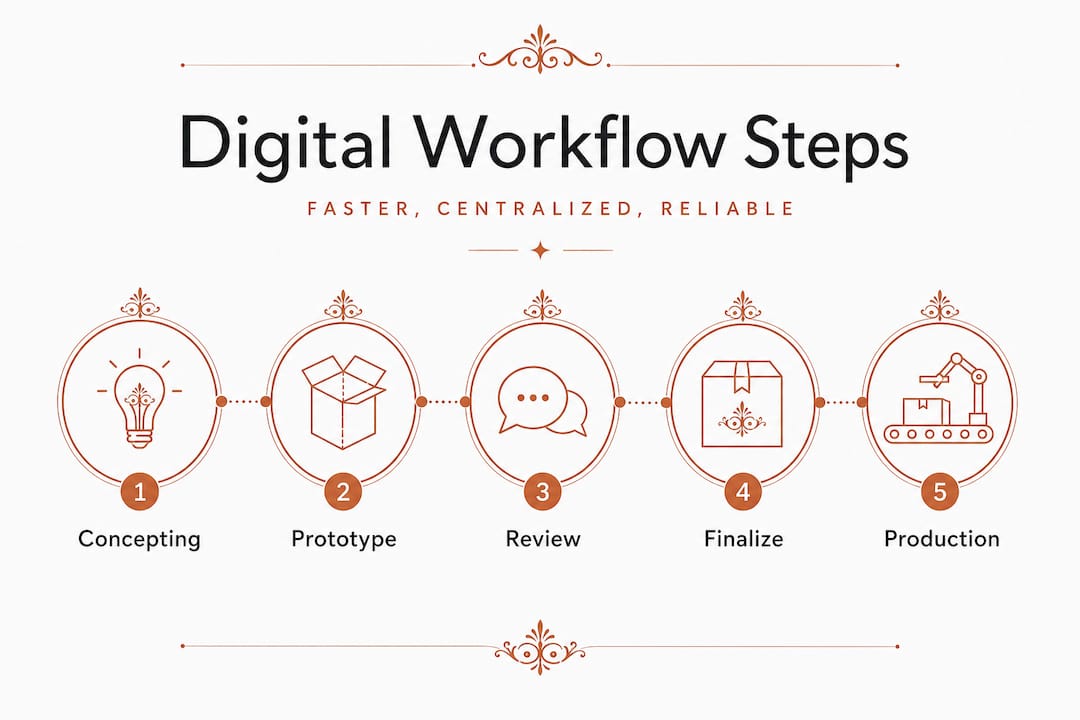
Understanding this stepwise process helps you see where each platform earns its keep and where stitching the wrong tools together creates friction instead of speed. A well-built digital workflow follows a logical sequence that mirrors how great packaging thinking actually develops.
-
Generative AI concepting. Start by feeding your brand brief, color palette, and competitive landscape into an AI concept tool. You get a dozen rough directions in under an hour. Most will be wrong. A few will be surprisingly close to something worth developing. This stage replaces three rounds of agency sketches.
-
Dieline generation. Once a concept direction earns approval, AI tools generate print-ready dielines as part of integrated digital workflows. No more downloading a template from a printer's FTP site and hoping it matches your structural specs. The dieline is created to your exact structural requirements and saved in a format your printer can use directly.
-
Design application and mockup. Your designer applies the approved concept to the generated dieline inside a cloud application. Stakeholders can comment in context, pinned to specific regions of the artwork. A legal reviewer can flag a claims issue on the front panel while a supply chain lead notes a barcode placement problem on the back. Simultaneously.
-
Attention and performance testing. Before any physical sample is produced, you run the design through AI-powered attention testing. This step quantifies exactly where the eye lands first, second, and third. You discover whether shoppers are reading the product name or the flavor descriptor, and you can adjust hierarchy before printing a single proof.
-
Approval and production handoff. Workflow apps generate a complete audit trail: every comment, every version, every sign-off. The production handoff includes all approved files, annotated specifications, and a documented approval record. Your printer receives exactly what they need.
Pro Tip: Map your existing tools before adding new ones. Packaging design workflow strategies that integrate your current Adobe CC setup with a workflow platform almost always outperform starting from scratch with an all-in-one tool you are not familiar with.
Combining generative concepting, manufacturable artifact generation, and pre-production evaluation creates a complete packaging innovation loop that legacy processes cannot replicate at any price.
| Workflow stage | Traditional approach | Digital approach |
|---|---|---|
| Concept generation | 2 to 4 weeks, agency-led | Hours, AI-assisted |
| Dieline creation | Manual templates, error-prone | Auto-generated, spec-accurate |
| Stakeholder review | Email threads | Version-controlled comments |
| Performance testing | Focus groups, slow | Real-time AI attention metrics |
| Production handoff | Compiled manually | Automated, complete audit trail |
The result is a process where efficient packaging dielines are no longer a technical bottleneck and AI-generated concept packaging is a practical starting point rather than a novelty.
Digital vs. traditional packaging design: A side-by-side comparison
With the benefits clear, founders and brand owners also need to navigate edge cases and real-world complexities. The comparison below is not meant to sell you on digital. It is meant to show you exactly where the gaps are largest so you can prioritize accordingly.
| Dimension | Traditional | Digital/Web/App |
|---|---|---|
| Development timeline | 18 to 24 months | As few as 100 days |
| Concept cost | $15,000 to $50,000 agency fees | Fraction of that with AI tools |
| Revision cycles | Days to weeks per round | Hours per round |
| Compliance integration | Separate step, often late | Embedded in workflow |
| Error rate | Higher with manual handoffs | Lower with version control |
| Cross-team visibility | Low, silo-dependent | High, centralized dashboard |
| Testing quality | Subjective focus groups | Objective AI attention metrics |
Development time and costs drop measurably and error rates fall when brands move to centralized digital workflows. The compliance and legal integration point deserves extra attention. In traditional workflows, compliance review happens near the end of the process, which means a single regulatory flag can roll back weeks of work. Digital platforms embed compliance checkpoints at every stage, so you catch problems while they are still cheap to fix.
Key advantages digital solutions provide that legacy processes cannot match:
- Parallel workstreams let design, legal, and supply chain review simultaneously instead of sequentially
- Automated version management eliminates the "which file is current?" problem entirely
- Instant structural mockups let everyone visualize the package in 3D before samples are ordered
- Integrated supplier communication connects your design platform directly to vendor portals
Streamlining artwork review through centralized platforms routinely saves CPG brands several weeks per launch cycle and substantially reduces the risk of printing an error.
Beyond the hype: Critical nuances and real-world challenges
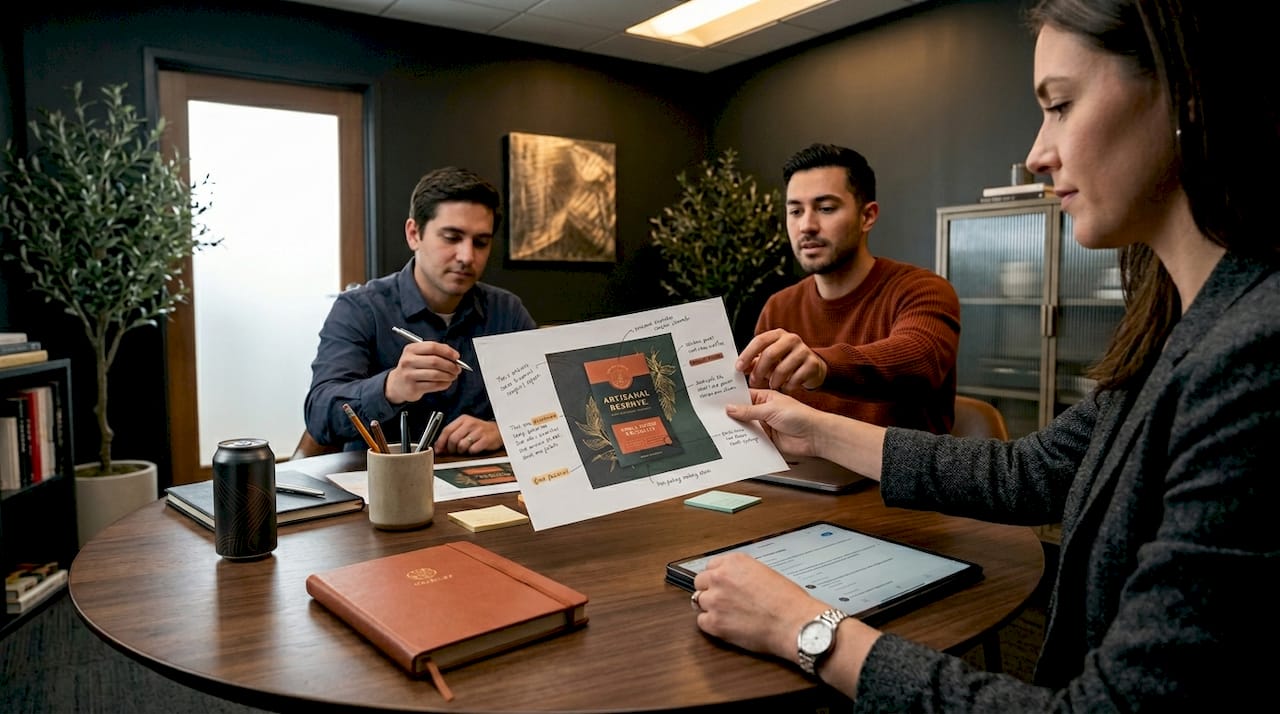
Armed with these insights and cautions, it is time to understand the friction points that cause digital packaging transitions to stall. Most founders who struggle with new tools do not fail because the software is bad. They fail because the organizational change around the software was undermanaged.
Barriers to adoption include data fragmentation, change management, and upfront investment. Fragmented data is the sneakiest problem. Your brand assets live in Dropbox. Your legal sign-offs are in email. Your printer's spec sheets are on a shared drive from 2019. When you introduce a new platform, all of that has to be consolidated, and nobody volunteers to do the consolidation work.
Change management is the second barrier. Designers and brand managers develop habits around their current tools. Even when a new workflow is objectively faster, the learning curve and the disruption to familiar routines creates real resistance. A platform rollout without a clear internal champion almost always stalls.
The investment concern is real but often overstated. The actual cost of a licensing fee for a good workflow platform is usually less than the cost of a single revision cycle with an external agency. The upfront number looks large in isolation. It looks small against the total cost of a slow, fragmented process.
Common pitfalls to avoid when going digital:
- Skipping stakeholder buy-in before choosing a platform creates adoption resistance
- Ignoring data migration leaves valuable brand assets locked in legacy formats
- Over-relying on AI concepts without human creative direction leads to generic output
- Neglecting compliance integration recreates the same late-stage review bottleneck digitally
- Choosing tools in isolation rather than as part of a connected workflow creates new silos
Pro Tip: Before committing to any new packaging platform, run one real project through a free trial with your actual team. Testing with a live brief reveals workflow gaps that a demo never will. A portfolio workflow for CPG approach can help you evaluate tool fit against real production requirements.
"The brands that struggle most with digital packaging tools are not the ones that choose the wrong software. They are the ones that treat software adoption as an IT project rather than a team transformation."
Actionable steps to unlock digital packaging value
Having laid out the actionable steps for digital packaging success, let us give you a concrete implementation framework you can start using this week. This is not theoretical. These are the operational moves that separate CPG brands that realize the full benefit of digital tools from those that pay for subscriptions and barely use them.
-
Audit your current process. Map every step from brief to final file approval. Note who is involved, how long each step takes, and where files get stuck. This baseline makes your future measurement meaningful.
-
Start with AI concepting on your next project. Do not wait for a full platform rollout. Use an AI tool to generate early concept directions on your next packaging brief and compare the output to your agency's first round. You will see the speed and coverage difference immediately.
-
Generate print-ready files digitally. Move your dieline creation to a platform that automates print-ready packaging files from your structural specs. Remove the manual template step from your workflow entirely.
-
Run attention testing before sampling. Before you order your first physical proof, run the approved design through an AI attention testing tool. The data you get will be more objective and faster than any feedback from a conference room review.
-
Centralize approvals and compliance in one platform. Move legal and compliance review into the same workspace as your design review. The goal is zero handoffs via email. Every stakeholder comments inside the same versioned file.
-
Measure and iterate. Careful workflow planning makes digital transition measurable. Track cycle time, revision rounds, and error rates per project. After three projects, you will have enough data to identify your remaining bottlenecks clearly.
Pro Tip: Treat step-by-step packaging workflow implementation as a product launch, not a software install. Assign an owner, set a go-live date, and run a pilot project with a small team before rolling out across your full brand portfolio.
Why modern packaging success isn't just software—it's smart orchestration
Here is the uncomfortable truth most software vendors will not tell you: the tool is the easy part. The real differentiator between CPG brands that dramatically shorten their packaging timelines and those that spend money on platforms and stay slow is orchestration, not technology.
Long-term winners are not the brands that find the best AI concepting app. They are the brands that figure out how to align their creative team, their compliance requirements, their supply chain constraints, and their consumer data inside a single coherent process. That alignment is a management decision, not a software feature.
We have watched founders buy into every new packaging platform that launches and still take 18 months to approve a label. The platform is not the bottleneck. The decision-making structure around the platform is. When nobody has clear authority to approve a direction, AI tools just generate faster rounds of disagreement.
The brands that get this right do something specific. They designate one person to own the packaging process end-to-end, including the digital infrastructure. That person's job is not to design. Their job is to make every other contributor faster by keeping the workflow clean and the tools connected.
Staying current with innovation trends in packaging is valuable. But applying those trends inside a well-orchestrated process is what turns awareness into competitive advantage. The future rewards founders who can align vision, people, and platforms around a shared way of working, not just those who keep up with the latest release notes.
Accelerate your packaging innovation with OffCut
Speed and quality do not have to be a trade-off when you have the right source for packaging concepts. OffCut was built specifically for CPG founders who need exclusive, print-ready packaging designs without the agency timeline or the agency invoice.
Every concept on OffCut is built by experienced packaging designers and ready to move straight into your digital workflow. You get the strategic head start of a fully developed design direction without starting from a blank brief. And if you are a designer sitting on concepts that never made it past a client's first round, sell unused packaging concepts on OffCut and get paid for work that deserves to see a shelf. Explore the full range of OffCut digital packaging solutions and find out how fast your next launch can actually move.
Frequently asked questions
How much time can digitized packaging workflows save on a typical CPG project?
Digitized platforms can reduce packaging development time from 18 to 24 months to as few as 100 days, depending on project complexity and team adoption.
What key features should CPG founders look for in packaging design software?
Look for integrated workflow tools with AI concept generation, print-ready file exports, and centralized review and approval capabilities built into a single platform.
Can AI accurately predict consumer attention on packaging designs?
Yes. AI-driven testing quantifies consumer attention across specific design elements, giving you objective data on visual hierarchy before any physical samples are produced.
What are common challenges with implementing web/app-driven packaging design?
The main barriers include data fragmentation, organizational change management, and upfront investment costs that require clear business case justification.
How do websites and apps support compliance in packaging projects?
Centralized workflow platforms embed compliance checkpoints throughout the design process, making approval cycles faster and reducing the risk of late-stage regulatory rollbacks.